
- danielfox
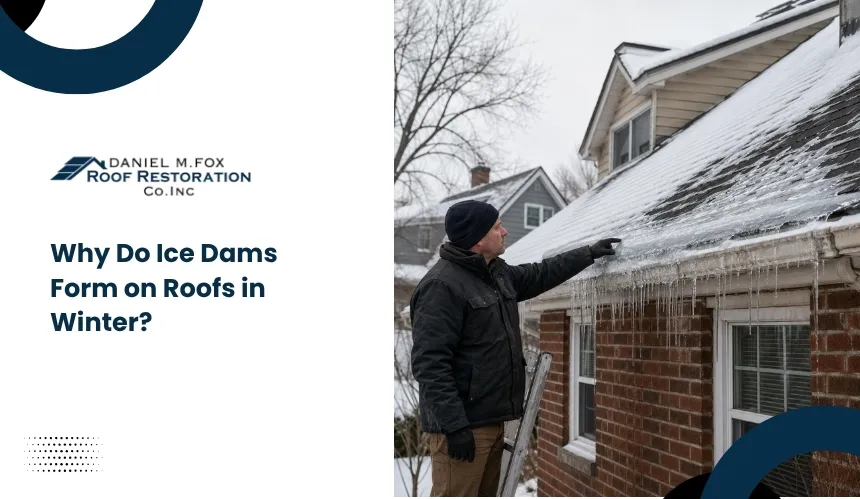
Why Do Ice Dams Form on Roofs in Winter?
Key Takeaways:
|
Winter roof leaks are often caused by ice dams, a problem that develops when melting snow refreezes along the roof edge and blocks proper drainage. Many homeowners assume snow alone is responsible, but temperature differences across the roof play a much larger role.
This article explains why ice dams develop in winter, the conditions that contribute to them, the risks they create, and the most effective prevention strategies.
How Does an Ice Dam Form on a Roof?
Ice dams develop through a sequence of melting and refreezing events caused by uneven roof temperatures. The process begins when sections of the roof become warm enough to melt snow while other areas remain below freezing.
Snow Melts on Warmer Areas of the Roof
Heat escaping from living spaces into the attic raises the temperature of portions of the roof above 32°F. As a result, accumulated snow begins to melt even though outdoor air temperatures may still be below freezing.
Common sources of excess heat include insufficient attic insulation, air leaks around ceiling penetrations, and inadequate ventilation that allows warm air to collect beneath the roof deck.
Meltwater Travels Toward the Roof Edge
Once snow melts, the water flows downward across the roof surface under the force of gravity. The roof edge and overhangs usually remain colder because they extend beyond the heated interior of the home.
This temperature difference causes meltwater to reach areas that are still below freezing.
Water Refreezes and Creates a Barrier
As the water reaches colder sections near the eaves, it freezes and forms a ridge of ice. Additional meltwater continues to flow from the upper roof and freezes against the existing ice buildup.
Over time, this repeated cycle creates a thick ice barrier that restricts normal drainage.
Trapped Water Backs Up Under Roofing Materials
When runoff can no longer escape, water begins to pool behind the ice dam. Standing water may work its way beneath shingles and other roofing materials through small gaps and joints.
Once moisture reaches the roof deck, it can enter the attic or interior spaces, creating conditions that lead to leaks and structural damage.
What Conditions Increase the Risk of Ice Dams?
Ice dams require more than snow accumulation to develop. Certain structural and weather-related conditions create an environment where repeated melting and refreezing become more likely.
1. Inadequate Attic Insulation
Attic insulation helps maintain a consistent temperature across the roof. When insulation levels are insufficient, heat from the living space escapes into the attic and warms the roof deck unevenly.
Older homes in Massachusetts often have insulation deficiencies or gaps around recessed lighting, attic hatches, and utility penetrations. These heat loss points increase the likelihood of winter roof problems.
2. Poor Roof Ventilation
Roof ventilation allows cold outdoor air to circulate through the attic and helps prevent excessive heat buildup beneath the roof deck. Restricted airflow can create temperature imbalances that contribute to ice dam development.
Blocked soffit vents, inadequate ridge ventilation, or poorly designed attic systems are common factors that affect roof performance during the winter season.
3. Heavy Snowfall Followed by Freezing Temperatures
Ice dams are most common when significant snowfall is followed by daytime warming and overnight freezing. This repeated freeze-thaw cycle continuously produces meltwater and refreezing along the roof edge.
Massachusetts experiences these weather patterns regularly throughout the winter. In communities such as Newton, MA, snowstorms are often followed by temperature fluctuations that create favorable conditions for ice accumulation on residential roofs.
4. Roof Design Features and Overhangs
Certain roof configurations naturally retain snow or create colder areas where water refreezes more quickly. Roof valleys, dormers, skylights, and extended overhangs can influence how snow melts and drains.
Many homes in Newton, MA, feature complex roof designs and mature tree coverage that create shaded sections. These colder areas may remain below freezing longer than sun-exposed portions of the roof, increasing the risk of localized ice buildup.
What Problems Can Ice Dams Cause?
Ice dams affect more than the roof surface. Once water becomes trapped behind an ice barrier, moisture can spread into multiple parts of the home and create damage that extends beyond the winter season.
1. Roof Leaks and Interior Water Damage
Water backed up by an ice dam can penetrate beneath shingles and reach the roof deck. From there, moisture may enter the attic and eventually appear as stains on ceilings or walls.
Persistent leaks can damage drywall, paint, flooring, and personal belongings. In severe cases, repeated exposure to moisture may weaken wooden framing components.
2. Damage to Shingles, Gutters, and Roof Components
The weight of accumulated ice places additional stress on roofing materials and drainage systems. Freeze-thaw cycles can also accelerate wear on shingles by lifting edges and allowing water infiltration.
Gutters and downspouts may become distorted or detached when heavy ice buildup increases the load along the roof edge. Flashing around chimneys, skylights, and roof penetrations can also become vulnerable to water intrusion.
3. Mold Growth and Insulation Problems
Moisture entering the attic creates conditions that support mold and mildew growth. Damp insulation loses its thermal performance, reducing its ability to resist heat transfer.
As insulation becomes less effective, additional heat escapes through the roof, creating conditions that can contribute to recurring winter moisture problems.
4. Increased Repair Costs Over Time
Ice dam damage often begins as a minor moisture issue but can expand into larger repairs when left unresolved. Replacing stained drywall or damaged shingles is typically less costly than addressing structural wood rot, mold remediation, or extensive roof reconstruction.
Early identification and corrective action can reduce long-term repair expenses and help preserve the overall performance of the roofing system.
How Can Homeowners Prevent Ice Dams?
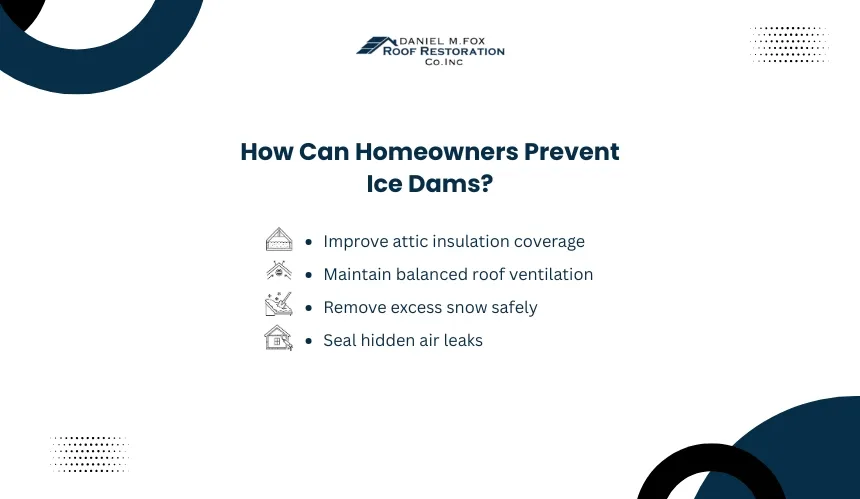
Preventing ice dams requires addressing the conditions that allow uneven roof temperatures to develop. Long-term prevention focuses on improving the building envelope rather than simply removing ice after it forms.
1. Improve Attic Insulation
Proper attic insulation reduces heat transfer from the living space to the roof deck. A well-insulated attic helps maintain more uniform roof temperatures and minimizes premature snow melting.
Insulation upgrades may include adding blown-in insulation, sealing gaps around penetrations, and improving coverage in areas where insulation has settled or deteriorated over time.
2. Maintain Proper Roof Ventilation
A balanced ventilation system allows outside air to circulate through the attic and helps regulate roof temperatures during winter. Ridge vents, soffit vents, and proper airflow pathways work together to reduce heat accumulation beneath the roof surface.
Ventilation improvements are especially beneficial in homes with finished attics or older roof assemblies where airflow may be restricted.
3. Remove Excess Snow Safely
Removing heavy snow accumulation can reduce the amount of meltwater available to form ice dams. A roof rake with an extended handle can help clear snow from the lower sections of the roof without requiring homeowners to climb onto icy surfaces.
Metal tools and aggressive snow removal methods should be avoided because they can damage shingles and flashing.
4. Seal Air Leaks Inside the Home
Warm air often escapes through recessed lights, plumbing penetrations, attic access panels, and duct openings. Air sealing these areas limits heat loss and improves the effectiveness of existing insulation.
Many homes in Newton, MA, were built decades ago and may have undergone multiple renovations over the years. These changes can leave hidden air leakage points within the attic system. Professional energy assessments can identify these areas and help homeowners address conditions that contribute to recurring ice dam problems.
Recurring ice dams and winter roof damage can lead to costly repairs if underlying issues are left unresolved. Daniel Fox Roofing provides professional roof installation and repair services in Newton, MA, and nearby communities throughout Greater Boston. Contact the team today to protect your home with reliable roofing solutions built for New England weather conditions.
Frequently Asked Questions
Are icicles on the roof always a sign of an ice dam?
Icicles do not always mean an ice dam is present, but they can signal poor drainage or refreezing near the roof edge. Large icicles combined with interior stains, gutter ice, or thick ice along the eaves should be inspected because trapped water may already be backing up beneath roofing materials.
Can a new roof still get ice dams in winter?
A new roof can still develop ice dams if attic insulation, air sealing, or ventilation issues remain unresolved. Roofing materials protect against weather exposure, but they do not control heat loss from inside the home. Proper attic performance is usually the key factor in preventing recurring winter ice buildup.
Should homeowners remove ice dams themselves?
Homeowners should avoid chopping, hammering, or using sharp tools on ice dams because these methods can damage shingles, flashing, gutters, and roof edges. Safe snow removal with a roof rake may reduce buildup, but active leaks, heavy ice, or roof access risks should be handled by roofing professionals.
Do heat cables prevent ice dams completely?
Heat cables can create drainage channels through ice, but they do not correct the root cause of ice dam formation. They may help in specific roof trouble spots, such as valleys or eaves, but long-term prevention usually requires better attic insulation, ventilation, and air leak control.
Can clogged gutters cause ice dams?
Clogged gutters can worsen ice buildup by slowing drainage, but they are rarely the only cause of an ice dam. Leaves, debris, and frozen downspouts trap water near the roof edge, increasing weight and refreezing risks. Clean gutters support drainage but must be combined with proper attic temperature control.
How quickly can ice dam damage show inside the home?
Interior damage may appear within hours or days once water moves beneath shingles and reaches the roof deck. Early signs include ceiling stains, peeling paint, damp insulation, or moisture near exterior walls. Some damage remains hidden in attic cavities until mold, odors, or drywall deterioration develops.