
- danielfox
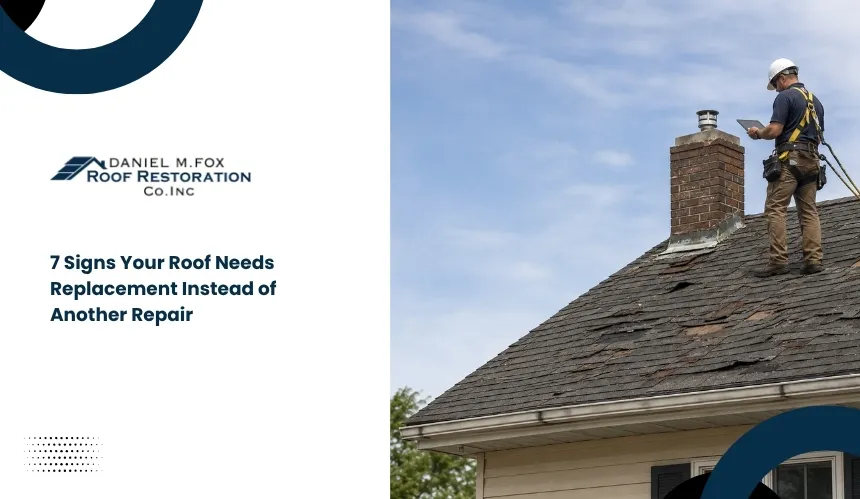
7 Signs Your Roof Needs Replacement Instead of Another Repair
Key Takeaways:
|
A roof can often be repaired after isolated damage, but repeated fixes are not always the most practical or cost-effective solution. As roofing materials age or deterioration spreads beyond a single area, another repair may only delay more serious structural problems and higher expenses. Knowing when a roof has reached that point allows homeowners to make informed decisions before leaks, moisture intrusion, or widespread damage escalate.
This guide explains seven clear signs that indicate a roof replacement may be the better long-term investment than scheduling another repair.
Why It Matters to Know When Repairs Are No Longer Enough
Small roof issues can often be resolved with targeted repairs, but every roofing system eventually reaches a point where individual fixes no longer restore its overall performance. Recognizing that transition early helps homeowners avoid spending money on temporary solutions that fail to address widespread deterioration.
A roof functions as an integrated system made up of shingles, underlayment, flashing, decking, ventilation, and drainage components. When deterioration affects multiple parts of that system, repairing one damaged area does not eliminate the underlying weaknesses elsewhere. As a result, new leaks, weather-related damage, and moisture intrusion may continue to appear even after recent repairs.
Waiting too long to replace a failing roof also increases the likelihood of secondary damage inside the home. Water infiltration can affect attic insulation, roof decking, ceilings, wall assemblies, and even structural framing if left unresolved. These additional repairs often exceed the cost difference between replacing the roof at the right time and continuing to patch recurring problems.
The most effective decision is based on the overall condition of the roofing system rather than the visibility of a single defect. Evaluating the roof as a whole allows homeowners to choose the option that offers greater long-term protection, predictable maintenance costs, and reliable performance during future weather events.
1. Your Roof Has Reached or Exceeded Its Expected Lifespan
Every roofing material is designed with a service life, not a permanent lifespan. Once a roof approaches or exceeds that range, the likelihood of widespread deterioration increases, making replacement a more reliable solution than continuing to repair isolated issues.
In Newton, MA, seasonal temperature swings, snow accumulation, ice dams, heavy rain, and UV exposure can accelerate wear beyond what is visible from the ground.
Average Lifespan of Common Roofing Materials
The expected lifespan of a roof depends largely on the material used, installation quality, ventilation, and local weather conditions. While regular maintenance can extend performance, age remains one of the strongest indicators that replacement should be considered.
Typical lifespan ranges include:
- Asphalt shingles: Approximately 20 to 30 years
- Architectural shingles: Around 25 to 35 years
- Metal roofing: Approximately 40 to 70 years
- Slate roofing: Often 75 years or more with proper maintenance
If your roof is nearing the upper end of its expected lifespan, even minor problems deserve a broader evaluation rather than another isolated repair. Aging materials become less resilient, reducing their ability to withstand wind, moisture, and repeated freeze-thaw cycles common in Newton, MA.
Why Aging Roofs Fail Even Without Obvious Leaks
A roof does not need an active leak to be nearing the end of its service life. Over time, shingles lose flexibility, protective granules wear away, sealants deteriorate, flashing expands and contracts, and underlayment gradually weakens. These changes reduce the roof’s ability to shed water effectively, even if the surface still appears intact.
Older roofs are also more vulnerable to hidden damage that develops beneath the visible roofing materials. Moisture can enter through weakened joints or aging flashing long before water stains appear indoors. Replacing an aging roof before widespread failures occur often prevents emergency repairs and protects the home’s structural components from avoidable damage.
2. Roof Damage Keeps Returning After Multiple Repairs
A repair should resolve the underlying problem, not create a cycle of recurring service calls. If leaks, missing shingles, or other roofing issues continue to reappear in different areas, the roof may no longer have enough overall integrity for isolated repairs to provide a lasting solution. This is especially relevant for older homes in Newton, MA, where aging roofing systems have often been exposed to decades of New England weather.
When Recurring Problems Point to Widespread Deterioration
Repeated repairs often indicate that the visible issue is only one symptom of broader roof system failure. While replacing a few shingles or resealing flashing may address immediate damage, it does not restore surrounding materials that have already begun to deteriorate.
Common warning patterns include:
- Leaks appearing in new locations after previous repairs
- Multiple repairs completed within a short period
- Wind repeatedly lifting shingles in different sections
- Flashing failures occurring around several roof penetrations
- Water intrusion returning after heavy rain or snowmelt
When these issues become recurring rather than isolated, the roof is typically experiencing age-related degradation instead of a single repairable defect.
Comparing Ongoing Repair Costs With Full Replacement
The decision should be based on long-term value rather than the cost of the next repair alone. Individual repairs may seem less expensive, but frequent service visits, emergency leak response, interior water damage, and repeated material replacement can significantly increase the total cost of ownership over time.
A roof replacement addresses the roofing system as a whole, providing consistent protection instead of treating one problem at a time. For many homeowners in Newton, MA, replacing an aging roof before recurring failures escalate reduces unexpected repair expenses and offers greater confidence during severe weather throughout the year.
Shingles Are Missing, Curling, Cracking, or Losing Granules Across Large Areas
Roof shingles are designed to create a continuous weather-resistant barrier. When deterioration affects large sections instead of a few isolated shingles, the roof’s ability to shed water and resist wind is significantly reduced. At that stage, replacing damaged sections may not restore the performance of the entire roofing system.
Signs of Advanced Shingle Wear
As shingles age, prolonged exposure to sunlight, moisture, and seasonal temperature changes gradually breaks down their protective properties. In Newton, MA, repeated freeze-thaw cycles and winter storms can accelerate this process, particularly on older asphalt roofs.
Common indicators of advanced wear include:
- Widespread curling or cupping along shingle edges
- Cracked or brittle shingles that break easily
- Large areas with missing shingles after wind events
- Excessive granules collecting in gutters or downspouts
- Uneven roof appearance caused by inconsistent aging
When these conditions appear across multiple roof slopes, they typically reflect system-wide deterioration rather than localized damage.
Why Widespread Surface Damage Affects Roof Performance
Shingles do more than cover the roof. They protect the underlayment from ultraviolet exposure, direct water toward drainage systems, and help resist wind uplift. As granules wear away and shingles lose their shape, they become less effective at performing these functions.
This decline increases the risk of water penetration beneath the roofing material, especially during heavy rain, melting snow, or ice dam formation. Even if active leaks have not yet developed, widespread shingle deterioration leaves the roof increasingly vulnerable to future weather events. In many cases, replacing the roof before these failures occur is more practical than attempting repairs across multiple aging sections.
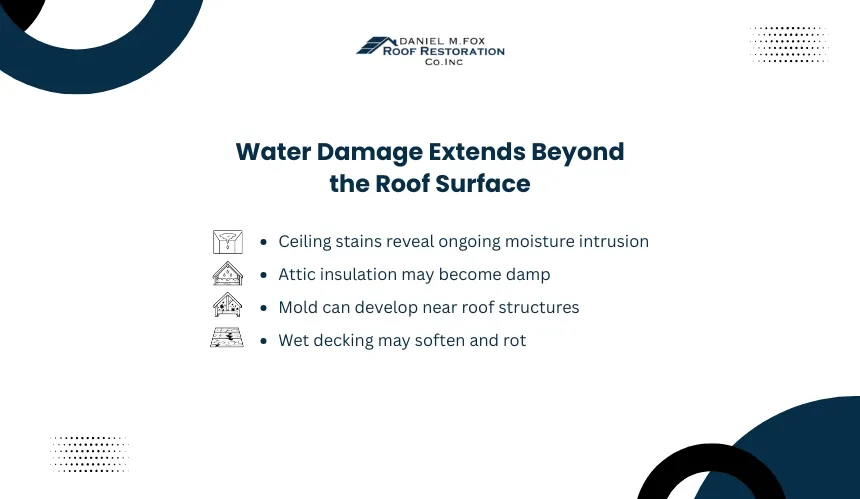
Water Damage Extends Beyond the Roof Surface
A roof leak is not always limited to the roofing materials themselves. Once water moves beneath the shingles, it can travel through multiple building components before becoming visible indoors. When moisture has spread beyond the roof surface, replacing the roofing system is often necessary to eliminate the source of intrusion rather than repeatedly repairing its symptoms.
Ceiling Stains, Attic Moisture, and Mold Growth
Interior signs of water damage typically appear after moisture has been entering the home for some time. A small stain on a ceiling may originate several feet away from the actual entry point, making isolated roof repairs less effective if the underlying problem is widespread.
Warning signs include:
- Brown or yellow stains on ceilings and walls
- Damp insulation or persistent attic moisture
- Visible mold or mildew near the roof structure
- Peeling paint or bubbling drywall caused by trapped moisture
- Musty odors following rainfall or snowmelt
In Newton, MA, melting snow and ice dams can allow water to back up beneath roofing materials, increasing the likelihood of hidden moisture accumulation during winter months.
Decking and Structural Damage Beneath the Shingles
The roof deck provides the structural foundation that supports the entire roofing system. When moisture repeatedly reaches this layer, wood can soften, warp, or begin to rot, reducing the roof’s ability to safely support roofing materials and withstand future weather conditions.
Damage at this level cannot be corrected by replacing a few shingles or resealing flashing alone. A roof replacement allows contractors to inspect the decking, remove compromised materials, and rebuild the roofing system on a stable foundation. Addressing structural moisture early also helps prevent more extensive repairs to framing, insulation, and interior finishes later.
The Roof Is Sagging or Shows Structural Deformation
A sagging roof is more than a cosmetic concern. It often indicates that structural components beneath the roofing materials have weakened due to prolonged moisture exposure, excessive loading, or material deterioration. Unlike surface damage, structural deformation cannot be corrected with routine maintenance or localized repairs and should be evaluated immediately.
Visible warning signs may include:
- A roofline that appears uneven or dips in the middle
- Noticeable low spots between roof supports
- Ridge lines that no longer appear straight
- Sections of the roof that hold standing water after rainfall
- Interior ceiling areas that show bowing or deformation
These conditions suggest that the roof deck, rafters, or supporting framework may no longer be performing as intended. In Newton, MA, years of snow loads combined with repeated freeze-thaw cycles can place additional stress on aging roof structures, making early inspection especially important.
While roof repair in Newton, MA, can effectively resolve isolated issues such as damaged shingles or flashing, structural sagging usually points to problems that extend well beyond the roof covering itself. Continuing to repair visible symptoms without addressing the compromised structure increases the risk of progressive damage and more expensive restoration work.
When a roof has lost its structural integrity, replacement provides the opportunity to remove damaged materials, inspect the supporting framework, and rebuild the roofing system on a stable foundation. Taking action before structural deformation worsens helps protect both the home and the investment made in future roofing work.
Storm Damage Has Affected Large Sections of the Roof
Storm-related roof damage is not always confined to a few missing shingles. When high winds, hail, falling tree limbs, or heavy snow affect multiple areas of the roof, the cumulative damage may compromise the entire roofing system. In these situations, replacing the roof often delivers a more dependable outcome than repairing scattered problem areas.
Widespread Storm Damage Versus Isolated Impact Damage
The extent of the damage is more important than the cause itself. A single damaged section caused by a fallen branch may be repairable, but widespread damage across several roof slopes can leave the roof vulnerable to future leaks and weather exposure.
Indicators that storm damage is extensive include:
- Shingle loss across multiple sections of the roof
- Numerous hail impacts causing fractured or bruised shingles
- Bent or displaced flashing in several locations
- Damage to roof vents, ridge caps, or valleys
- Multiple areas where the roof covering has been lifted by strong winds
In Newton, MA, nor’easters, strong wind events, and heavy winter storms can create damage that is not always visible from the ground. A professional inspection is often necessary to determine whether the roof can be safely repaired or has sustained system-wide deterioration.
When Insurance May Favor Roof Replacement
Insurance companies typically evaluate whether storm damage is localized or widespread. If the damage affects a significant portion of the roof or matching replacement materials are no longer available, a full roof replacement may be a more practical settlement than multiple isolated repairs.
Documenting damage promptly after a storm is essential. Inspection reports, photographs, and maintenance records can help demonstrate the extent of the loss and support an insurance claim. Even when coverage is available, the decision should prioritize restoring the roof’s long-term performance rather than choosing the least expensive short-term repair.
Repairs Are Becoming More Expensive Than Long-Term Replacement
Repair costs should be evaluated over time, not as individual expenses. When service calls become more frequent and each repair addresses only a temporary issue, the cumulative investment may exceed the value of installing a new roofing system. At that point, replacement often becomes the more financially sound decision.
Hidden Costs of Continual Repairs
The price of a roof repair extends beyond labor and materials. Repeated maintenance can create additional costs that are easy to overlook until they accumulate over several years.
These may include:
- Emergency service charges after severe weather
- Interior repairs caused by recurring leaks
- Replacement of insulation, drywall, or ceiling finishes
- Temporary protective measures to prevent further water intrusion
- Multiple inspections and repeat contractor visits
As these expenses continue to grow, homeowners often spend more maintaining an aging roof than they would by replacing it once with a modern roofing system.
Benefits of Replacing Before Major Failure Occurs
A planned roof replacement allows homeowners to make decisions on their own timeline instead of responding to an emergency. Scheduling the project before significant failure occurs reduces the likelihood of unexpected interior damage, temporary living disruptions, and urgent repair costs.
A new roof also provides long-term advantages that repeated repairs cannot offer, including:
- Consistent protection across the entire roofing system
- Improved resistance to wind, rain, snow, and ice
- Greater confidence during seasonal weather events in Newton, MA
- Lower maintenance requirements over the coming years
- Enhanced curb appeal and potential property value
When repair costs continue to rise while the roof’s overall condition continues to decline, replacement shifts the investment from short-term problem management to long-term performance and reliability.
Frequently Asked Questions
Can only part of a roof be replaced, or does the entire roof need to be redone?
Partial roof replacement may work when damage is confined to one clearly separated section and the remaining roofing materials are still in good condition. However, differences in shingle age, color, underlayment, and weathering can create performance inconsistencies. A full replacement is often more practical when multiple slopes share the same aging roof system.
Is it better to replace a roof before it starts leaking?
Replacing a roof before active leakage can reduce the risk of damaged decking, wet insulation, mold growth, and interior repairs. The decision should rely on inspection findings, material condition, installation history, and remaining service life. Preventive replacement is especially valuable when an older roof is already showing several early-stage failure indicators.
How do I know whether a roofing contractor is recommending replacement unnecessarily?
A trustworthy contractor should provide photographs, explain which components have failed, identify whether damage is localized or widespread, and compare repair and replacement options. Homeowners should request a written inspection report and, for major projects, obtain a second opinion from another licensed roofing professional before approving a full roof replacement.
Can a new roof be installed over existing shingles?
Building codes and roof conditions determine whether an overlay is permitted, but installing new shingles over old materials can conceal damaged decking, add weight, and reduce the ability to inspect the underlying roof structure. A complete tear-off generally provides better diagnostic access and allows the new roofing system to be installed on a sound surface.
How long does an asphalt shingle roof replacement usually take?
Roof replacement can be completed during several seasons, but spring through fall usually provides more predictable installation conditions in Newton, MA. Temperature, precipitation, wind, and material requirements all affect scheduling. Homeowners should avoid delaying an already failing roof solely to reach a preferred season, particularly before winter snow and ice arrive.
How long can I safely delay roof replacement after receiving a recommendation?
The safe delay depends on the severity of the findings. Cosmetic wear may allow time for budgeting and planning, while active moisture intrusion, structural movement, exposed underlayment, or extensive storm damage requires faster action. Ask the inspector to distinguish urgent safety concerns from conditions that can be monitored temporarily.