
- danielfox
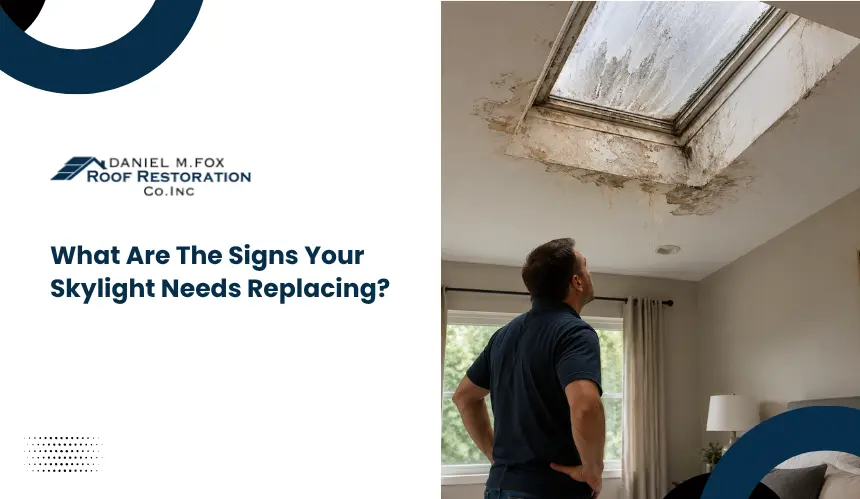
What Are The Signs Your Skylight Needs Replacing?
Key Takeaways:
|
Skylights are designed to enhance natural lighting and ventilation, but when they begin to fail, the impact is rarely subtle. Homeowners often notice recurring leaks, fogged glass, or unexplained temperature changes without immediately linking them to skylight deterioration.
This article breaks down the key warning signs, underlying causes, and decision factors to help determine when a skylight should be replaced.
What Problems Do Failing Skylights Typically Cause?
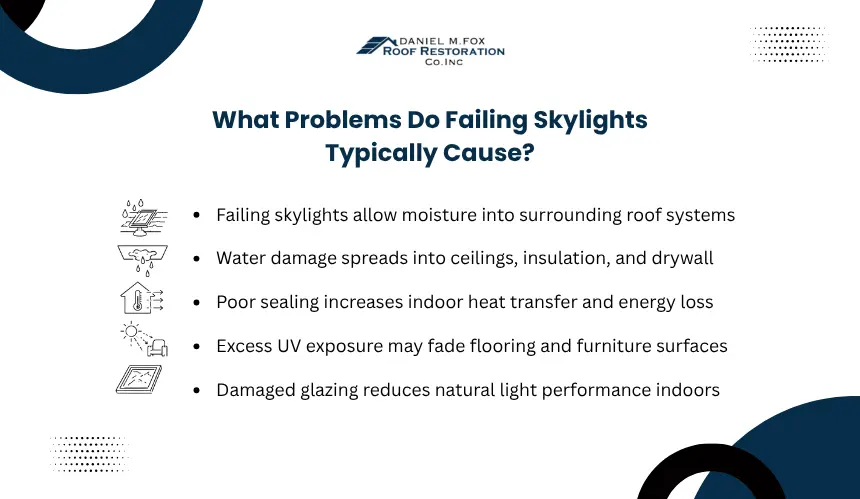
Even minor skylight defects rarely remain isolated. Once the unit begins to lose its structural or sealing integrity, multiple performance issues develop simultaneously, affecting both the roof system and interior environment.
A compromised skylight often becomes an entry point for water intrusion. Moisture bypasses damaged flashing or degraded seals, leading to ceiling stains, insulation saturation, and gradual weakening of surrounding roof components. Over time, this moisture migration can extend beyond the immediate area, affecting drywall, paint, and even framing.
Thermal performance also declines as the skylight loses its insulating capability. Gaps in sealing or failure of glazing layers allow uncontrolled heat transfer, creating noticeable indoor temperature imbalances. This forces HVAC systems to compensate more aggressively, increasing energy consumption and reducing overall efficiency.
Light control and interior comfort are also impacted. Damaged or aging skylights may allow excessive UV exposure, causing fading of furniture and flooring. In other cases, clouded or deteriorated glazing reduces natural light penetration, defeating the primary functional purpose of the installation.
These issues rarely occur in isolation. Once a skylight begins to fail, the interaction between moisture, air leakage, and material degradation accelerates the overall rate of damage, making early identification and action essential.
What Are the Most Common Signs Your Skylight Needs Replacing?
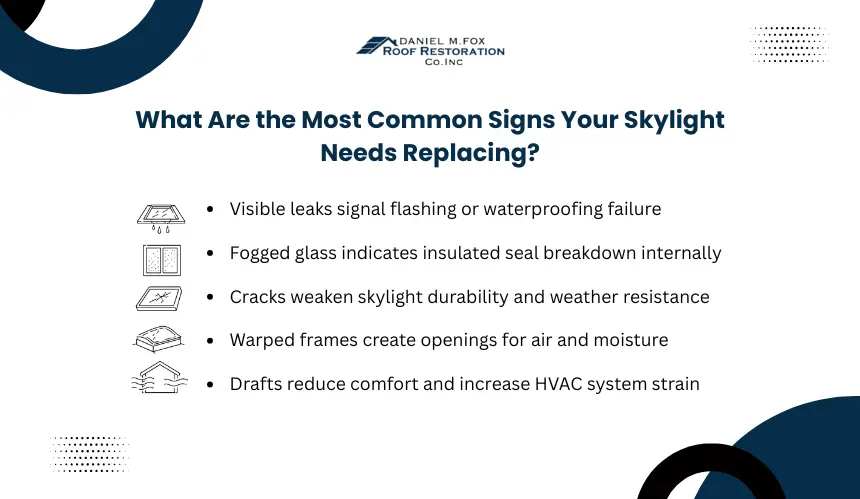
Identifying visible symptoms early prevents minor skylight defects from progressing into structural or energy-related problems. The following indicators point to performance failure that typically goes beyond simple repair.
1. Visible Water Leaks or Moisture Around the Frame
Water infiltration around the skylight frame signals a breakdown in sealing systems or flashing integration. This often appears as ceiling discoloration, bubbling paint, or damp drywall near the opening. Intermittent leaks during rain events usually indicate compromised waterproofing layers rather than surface-level issues, making recurring repairs ineffective.
2. Condensation or Fog Between Glass Layers
Moisture trapped between panes indicates failure of the insulated glass unit. Once the internal seal breaks, inert gas escapes and is replaced by humid air, leading to persistent fogging. This condition reduces thermal insulation, distorts visibility, and cannot be corrected without replacing the glazing or the entire unit.
3. Cracks, Warping, or Physical Damage
Structural damage to the skylight material directly affects durability and weather resistance. Acrylic domes may develop surface cracks due to UV degradation, while glass units can fracture from impact or stress. Frame warping from prolonged heat exposure can also create gaps, allowing water and air to penetrate the system.
4. Drafts or Noticeable Temperature Fluctuations
Air leakage around the skylight often goes unnoticed until it impacts indoor comfort. Poor sealing or outdated design allows external air to enter, creating localized drafts and uneven temperature zones. This not only reduces comfort but also increases the load on heating and cooling systems, signaling declining performance efficiency.
Why Do Skylights Fail Over Time?
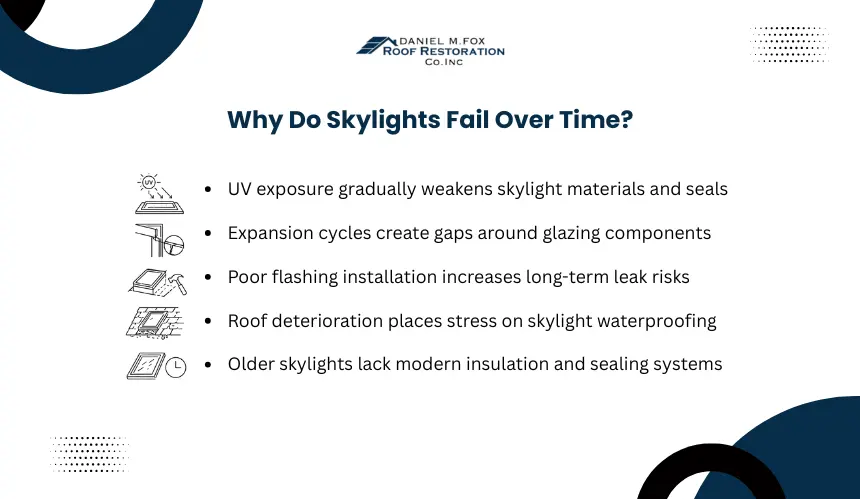
Skylight failure is rarely the result of a single issue. It typically develops through gradual degradation of materials, installation weaknesses, and external roof-related stressors that compromise the unit’s long-term performance.
1. Aging Materials and Seal Degradation
Continuous exposure to UV radiation, temperature fluctuations, and moisture cycles breaks down sealants and glazing components. Over time, expansion and contraction weaken bonding points, allowing micro-gaps to form. These gaps reduce waterproofing effectiveness and eventually lead to air and moisture infiltration.
2. Poor Installation or Flashing Issues
Installation quality directly determines how well a skylight integrates with the roofing system. Misaligned flashing, insufficient sealing layers, or incorrect pitch adaptation create pathways for water entry. Even if the skylight itself is structurally sound, improper installation can cause persistent leakage and premature failure.
3. Roof Damage Affecting Skylight Integrity
The skylight relies on surrounding roofing materials for structural and waterproof support. Damaged shingles, deteriorated underlayment, or shifting roof decking can redirect water toward the skylight opening. This increases pressure on seals and flashing, accelerating wear and creating vulnerabilities.
4. Outdated Skylight Design and Technology
Older skylight models often lack modern energy-efficient glazing and advanced sealing systems. Single-pane or poorly insulated units are more susceptible to condensation, heat transfer, and seal failure. As building standards evolve, outdated designs struggle to maintain performance under current environmental and efficiency expectations.
Repair or Replace Your Skylight: How Do You Decide the Right Option?
Once failure indicators appear, the critical decision is whether the skylight can be restored or if replacement provides a more reliable outcome. The right choice depends on the extent of damage, recurrence of issues, and the unit’s remaining service life.
When a Repair Is Still Effective
Targeted repairs are viable when the problem is isolated and the core structure remains intact. Minor flashing adjustments, resealing of perimeter joints, or correcting small installation defects can restore waterproofing if the glazing and frame are undamaged. This approach is typically suitable for newer skylights where material degradation has not yet progressed.
When Replacement Is the Better Investment
Replacement becomes necessary when defects are systemic rather than localized. Repeated leaks, failed insulated glass, visible structural damage, or persistent air leakage indicate that the unit can no longer maintain performance standards. In these cases, repairs only address symptoms while the underlying failure continues to progress.
Cost vs Long-Term Value Considerations
Short-term repair costs may appear lower, but recurring interventions often exceed the cost of a full replacement over time. A new skylight provides improved insulation, updated sealing systems, and reduced maintenance frequency. Evaluating lifecycle cost rather than immediate expense leads to more predictable performance and fewer disruptions.
What Happens If You Delay Skylight Replacement?
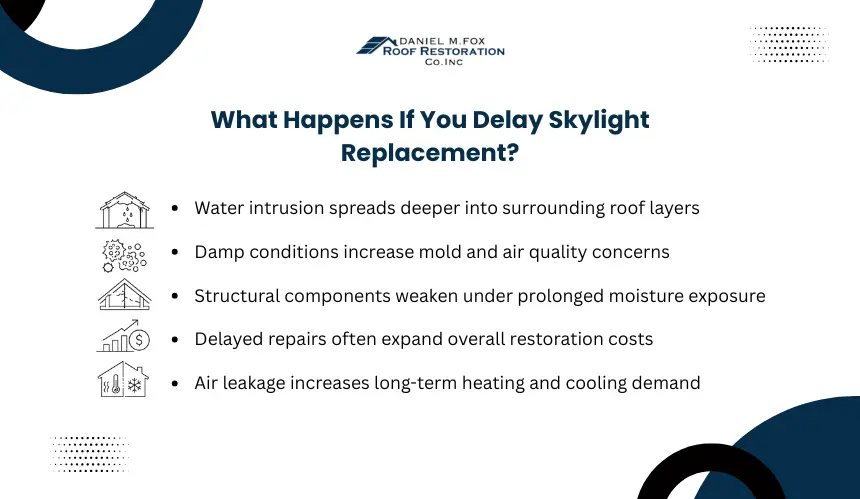
Postponing replacement allows minor defects to evolve into multi-layered structural and indoor environment issues. The longer the delay, the more extensive and costly the impact becomes.
- Progressive water intrusion: Moisture penetrates beyond the skylight opening into insulation, ceiling layers, and roof decking, expanding the damage zone with each weather cycle
- Mold and air quality risks: Persistent damp conditions create an environment for mold growth, affecting indoor air quality and increasing health-related concerns
- Structural weakening: Prolonged exposure to moisture compromises wood framing, drywall integrity, and roof support elements, reducing overall structural stability
- Escalating repair scope: What begins as a localized issue can extend into adjacent roofing systems, requiring broader and more expensive restoration work
- Energy inefficiency accumulation: Continuous air leakage and insulation failure increase heating and cooling demand, leading to sustained higher utility costs
Frequently Asked Questions
How long does a skylight usually last before replacement?
Most skylights last about 15 to 25 years, depending on material quality, installation, roof exposure, and maintenance history. Units exposed to intense sunlight, heavy rain, or repeated temperature swings may fail sooner because seals, flashing, and glazing components degrade faster under constant expansion and contraction.
Can a leaking skylight be fixed without replacing it?
A leaking skylight can often be repaired when the issue comes from loose flashing, minor seal gaps, or roofing material around the unit. Replacement becomes more practical when leaks return after repair, the frame is warped, the glass seal has failed, or the skylight is near the end of its service life.
Is it better to replace a skylight when replacing the roof?
Replacing a skylight during roof replacement is often more efficient because flashing, underlayment, shingles, and the skylight curb can be integrated at the same time. This reduces labor overlap, improves waterproofing continuity, and lowers the risk of disturbing new roofing materials later.
Why does my skylight only leak during heavy rain?
Leaks during heavy rain usually point to flashing weakness, poor roof-to-skylight integration, or water backing up around the opening. Wind-driven rain can push moisture beneath roofing layers that normally stay dry, revealing vulnerabilities that may not appear during light rainfall.
Can condensation on a skylight mean it needs replacing?
Condensation on the room-facing glass may come from indoor humidity, poor ventilation, or temperature differences. Moisture trapped between glass panes is more serious because it indicates insulated glass seal failure. That condition reduces energy performance and usually requires glazing replacement or full skylight replacement.
What type of skylight replacement is most energy efficient?
Energy-efficient skylights typically use double-pane or triple-pane insulated glass, Low-E coatings, argon gas fills, and thermally improved frames. Proper sizing, roof pitch compatibility, and professional flashing installation matter as much as the glass type because poor installation can cancel out efficiency gains.