
- danielfox
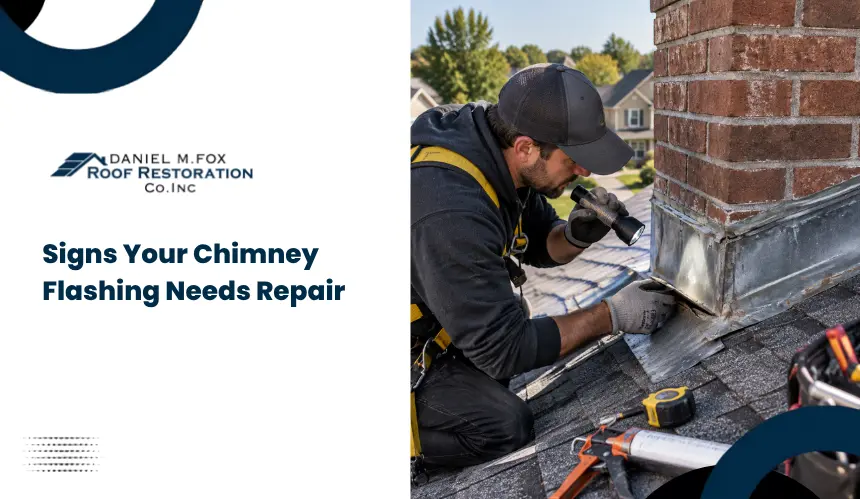
Signs Your Chimney Flashing Needs Repair
Key Takeaways:
|
Chimney flashing creates a watertight seal where the chimney meets the roof, but damage can allow rainwater to penetrate this vulnerable joint. Early problems are not always obvious, and a small flashing failure can first appear as moisture around the chimney, attic, ceiling, or nearby walls.
Recognizing the signs your chimney flashing needs repair can help you identify water intrusion before it affects roofing materials or interior finishes. This guide explains the key warning signs, common causes of flashing failure, and when the problem warrants professional attention.
What Are the Signs Your Chimney Flashing Needs Repair?
The clearest signs of chimney flashing failure involve moisture near the chimney or visible deterioration at the roof-to-masonry joint. In Newton, MA, repeated rain, snow, and seasonal freeze-thaw conditions can make an existing weakness more noticeable, particularly after periods of wet weather.
1. Water Stains Near the Chimney
Brown or yellow stains on ceilings and walls near the chimney can indicate water entering around the roof penetration. The staining may darken or spread after heavy rain as moisture travels along the chimney structure, roof framing, or nearby building materials.
A recurring stain is more significant than a one-time mark. If the affected area dries and reappears after rainfall or snowmelt, the pattern suggests an active water-entry point that needs to be located rather than simply covered with paint.
2. Visible Gaps, Cracks, or Loose Flashing
Flashing should remain securely integrated with the roofing and chimney masonry. Lifted metal edges, open seams, cracked sealant, loose counter flashing, or gaps along mortar joints can create pathways for water to move beneath the roofing system.
These defects are particularly concerning on the uphill side of a chimney, where roof runoff is directed toward the flashing assembly. Snow and ice accumulation common during Massachusetts winters can also expose existing separation as conditions change.
3. Dampness or Water Inside the Attic
Moisture in the attic near the chimney can reveal a flashing problem before water reaches a finished ceiling. Warning signs include damp roof decking, wet insulation, dark moisture marks, or visible water trails along rafters and framing.
The location of attic moisture can help narrow down the entry point. Water concentrated around the chimney penetration indicates that the flashing assembly and immediately surrounding roofing should be examined closely.
4. Peeling Paint or Damaged Interior Finishes
Bubbling paint, peeling wallpaper, softened drywall, or discolored plaster near a chimney can result from moisture repeatedly reaching interior surfaces. These symptoms may develop gradually when water intrusion is limited but persistent.
Repairing cosmetic damage does not address the moisture source. When interior deterioration repeatedly appears near the chimney, the roof-to-chimney connection should be evaluated before additional water damage develops.
What Does Damaged Chimney Flashing Look Like on the Roof?
Exterior flashing damage often appears as a physical change in the metal or its connection to the chimney and roofing system. On older homes in Newton, MA, inspecting these details can help distinguish normal surface aging from defects that may allow water beneath the roof covering.
Rust, Corrosion, and Deteriorated Metal
Metal flashing can gradually corrode as its protective surface wears down. Early oxidation may appear as discoloration, while advanced corrosion can produce flaking metal, pitting, thin sections, or small holes that compromise the flashing itself.
Surface staining alone does not always mean replacement is necessary. The greater concern is corrosion that has weakened the metal enough to affect its shape, overlap, or ability to remain intact through changing weather conditions.
Flashing Pulling Away From the Chimney
Counter flashing should remain firmly seated where it meets the chimney masonry. Sections that have shifted outward, become bent, or separated from mortar joints leave the flashing assembly unable to maintain its intended connection.
Failed roofing cement or deteriorated sealant may also be visible along these edges. Massachusetts temperature fluctuations can accelerate expansion and contraction in roofing and masonry materials, making existing separation progressively wider over time.
Damaged Shingles Around the Chimney
The condition of shingles immediately surrounding the chimney matters because step flashing and roofing materials function together. Cracked, curled, displaced, or missing shingles can expose flashing edges or disrupt the overlapping layers designed to direct runoff down the roof.
Look particularly closely at transitions beside and behind the chimney. Shingle deterioration concentrated in these areas may indicate that the surrounding roof assembly, rather than the exposed flashing metal alone, requires closer inspection.
Why Does Chimney Flashing Start to Fail?
Chimney flashing usually fails because movement, installation defects, or deterioration disrupt the layered connection between the roof and masonry. In Massachusetts, seasonal weather cycles can place repeated stress on these adjoining materials because metal, shingles, and masonry respond differently to temperature and moisture.
Age and Repeated Weather Exposure
Flashing systems experience years of rain, snow, ultraviolet exposure, and temperature changes. Metal may remain structurally sound for a long period, but sealants and surrounding roofing materials can deteriorate sooner, weakening joints and transitions within the assembly.
Freeze-thaw cycles add another source of stress. Moisture entering small openings can freeze, expand, and enlarge existing defects. For homes in Newton, MA, repeated winter cycles can turn minor deterioration into a more significant flashing problem over time.
Poor Flashing Installation
A properly installed system uses overlapping components to direct water onto the roof surface rather than relying primarily on sealant. Step flashing should integrate with successive shingle courses, while counter flashing protects the upper edges where the assembly meets the chimney.
Problems can develop when flashing pieces are too short, overlaps are inadequate, fasteners are placed incorrectly, or counter flashing is not properly secured into masonry joints. Heavy dependence on roofing cement or caulk can also create a temporary seal instead of a durable water-shedding system.
Chimney or Roof Movement
A chimney and roof are separate structural elements, so they do not always move at the same rate. Building settlement, thermal expansion, wood movement, and changes in masonry can gradually shift the junction between them.
Even small movements can distort metal flashing or place stress on sealed joints. Once the assembly can no longer accommodate that movement, previously tight connections may separate and create new points of vulnerability.
Nearby Roof or Masonry Deterioration
Flashing performance also depends on the materials it connects. Crumbling mortar joints can prevent counter flashing from remaining securely embedded, while deteriorated shingles can compromise the layered integration of step flashing along the roof.
For this reason, flashing failure is not always an isolated metal problem. The condition of the chimney masonry and adjacent roofing must be considered together when determining why the assembly has deteriorated and what needs to be corrected.
Is the Leak Really Coming From the Chimney Flashing?
Water appearing near a chimney does not automatically mean the flashing has failed. Several roofing and masonry defects can produce similar symptoms, so identifying the actual entry point is necessary before choosing the correct repair.
Chimney Flashing Leaks vs. Damaged Masonry
Flashing controls water at the junction between the chimney and roof, while masonry problems allow moisture to penetrate through deteriorated brick, mortar joints, or cracks higher on the chimney. Water absorbed above the roofline can travel through the masonry and create dampness that appears close to the flashing.
This distinction can be particularly relevant for Newton’s older housing stock, where masonry chimneys may have undergone decades of repairs, repointing, or roof replacements. Different materials and previous repair methods can create several possible moisture paths around the same chimney. When these conditions are present, chimney repair in Newton, MA, should begin with identifying whether water is entering through the masonry, flashing system, or both.
Chimney Flashing Leaks vs. Roof Leaks
A roofing defect above or beside the chimney can direct water toward the same interior area as a flashing leak. Damaged shingles, compromised underlayment, exposed fasteners, or another roof penetration may allow water to enter farther upslope and travel along the roof deck or framing.
This movement makes an interior stain an unreliable indicator of the exact entry point. Tracing moisture through the roof assembly is more accurate than assuming the defect sits directly above the visible damage.
Chimney Flashing Leaks vs. Chimney Cap Problems
A damaged or missing chimney cap can allow precipitation to enter from the top rather than through the roof-to-chimney joint. Deterioration in the chimney crown can create another entry route by allowing water into the masonry from above.
The resulting moisture can migrate downward and resemble a flashing leak indoors. Checking the cap, crown, masonry, roofing, and flashing separately helps isolate the source before repair work begins.
What Happens If Damaged Chimney Flashing Is Not Repaired?
Unrepaired chimney flashing can turn localized water entry into damage across multiple parts of the roof and interior. The extent of deterioration depends on how much water enters, where it travels, and how long surrounding materials remain exposed to moisture.
Water that reaches beneath the roof covering can saturate sheathing and insulation around the chimney. Repeated wetting may cause wood roof decking to swell, soften, or deteriorate, while damp insulation can lose thermal performance and hold moisture against nearby building materials.
Once water moves beyond the roof assembly, damage can extend to attic framing, drywall, plaster, ceilings, and interior finishes. Persistent damp conditions can also support mold growth, particularly in concealed attic or wall cavities where moisture may remain unnoticed between weather events.
Delayed repair can affect the chimney itself as well. Water reaching mortar joints and porous masonry can contribute to cracking, spalling, and surface deterioration as moisture repeatedly freezes and thaws. This is particularly relevant to Massachusetts homes exposed to prolonged winter conditions.
The practical consequence is that a flashing repair that initially involves a limited roof-to-chimney area can become a broader roofing, masonry, and interior restoration project. Addressing the source while damage remains localized generally reduces the number of building components that require repair or replacement.
When Should You Have Chimney Flashing Inspected or Repaired?
Chimney flashing should be inspected when there is evidence of active water entry, visible displacement, or deterioration that could compromise the roof-to-chimney connection. The goal is to determine the defect and its extent before deciding whether localized repair or more extensive work is appropriate.
Recurring moisture after rain or snowmelt warrants attention even when the affected area dries between weather events. Visible separation between flashing and masonry, severely corroded metal, displaced flashing sections, or deterioration in the surrounding roofing also indicates that the assembly should be professionally evaluated.
An inspection becomes especially useful when the source is uncertain. A roofer can assess step flashing, counter flashing, shingles, roof decking, sealant joints, and the surrounding chimney masonry to determine how water is entering and whether adjacent materials have been affected.
Not every flashing problem requires complete replacement. A limited defect may be repairable when the metal and surrounding roof remain serviceable. Extensive corrosion, improperly installed flashing, widespread separation, or deterioration involving nearby shingles or masonry may require partial or complete reconstruction of the flashing assembly.
Avoid treating recurring leaks with repeated applications of caulk or roofing cement without identifying the underlying defect. These materials may temporarily cover an opening, but they cannot correct improper flashing geometry, deteriorated metal, loose masonry connections, or failures within the layered roof system. The appropriate repair should address the actual water-entry mechanism rather than only the visible symptom.
Seeing signs of damaged flashing or moisture around your chimney? Daniel Fox Roofing provides professional chimney repair services in Newton, MA, and throughout the Greater Boston area. Get the source properly assessed and repaired before water damage spreads to your roof or home.
Frequently Asked Questions
How long does chimney flashing usually last?
Chimney flashing can last for decades when properly installed and maintained, but its service life often depends on the metal type, roof condition, sealant quality, masonry movement, and weather exposure. Flashing may fail earlier if surrounding shingles deteriorate or if previous repairs relied heavily on caulk or roofing cement.
Can chimney flashing be repaired without replacing the roof?
A localized flashing repair may be possible when the surrounding shingles, roof decking, and masonry remain in good condition. The roofer may reset, replace, or rework specific flashing components. If deterioration extends beneath nearby roofing materials, however, a broader repair may be necessary to restore proper water-shedding layers.
Should chimney flashing be replaced when getting a new roof?
Chimney flashing should be carefully evaluated during roof replacement because reroofing exposes the roof-to-chimney transition. Reusing old flashing may be appropriate only when it remains structurally sound and compatible with the new roofing system. Many projects benefit from installing new step flashing while the surrounding shingles are already being replaced.
Can chimney flashing leak only during heavy or wind-driven rain?
Intermittent leaks can occur when water reaches a vulnerable seam only under certain conditions. Wind-driven rain may force moisture beneath lifted flashing, while heavy runoff can overwhelm poorly overlapped sections behind the chimney. A leak that appears only during severe weather can still indicate a defect requiring inspection.
Does homeowners insurance cover chimney flashing repair?
Coverage depends on why the flashing failed and the terms of the policy. Sudden damage caused by a covered storm event may qualify, while deterioration from age, poor maintenance, corrosion, or installation defects is commonly treated differently. Homeowners should document visible damage and confirm coverage requirements with their insurer before repairs begin.
Can chimney flashing be repaired in winter in Massachusetts?
Some chimney flashing repairs can be performed during winter when roof conditions are safe and materials can be installed within manufacturer temperature requirements. Snow, ice, frozen masonry, or very low temperatures may limit certain sealants and roofing work. Active leaks should still be assessed promptly so temporary or permanent measures can be determined.