
- danielfox
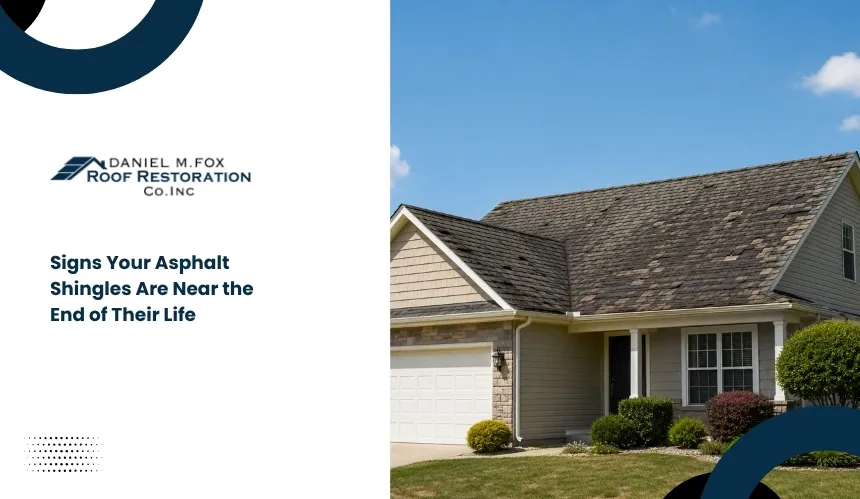
Signs Your Asphalt Shingles Are Near the End of Their Life
Key Takeaways
|
Asphalt shingles rarely fail all at once. Instead, they deteriorate gradually through years of exposure to sunlight, temperature changes, wind, rain, and moisture, making early warning signs easy to overlook. Recognizing these signs before leaks or structural damage develop allows homeowners to plan repairs or replacement on their own timeline instead of responding to an unexpected roofing emergency.
This guide explains how to identify the indicators of aging asphalt shingles, understand what they mean, and determine when replacement is the more practical solution.
How Long Do Asphalt Shingles Typically Last?
The lifespan of an asphalt shingle roof depends on both the roofing material and the conditions it experiences over time. While manufacturers provide general estimates, actual performance is influenced by installation quality, weather exposure, ventilation, and maintenance.
Three-tab asphalt shingles typically last 15 to 20 years, while architectural shingles often perform for 25 to 30 years. Premium asphalt shingles may last even longer when the roofing system is properly installed and maintained.
Local conditions play a significant role in how quickly shingles age. In the Greater Boston region, roofs are exposed to freezing winters, summer heat, coastal humidity, heavy rainfall, snow accumulation, and freeze-thaw cycles that gradually weaken roofing materials. Homes in Dedham, MA also experience seasonal storms and strong winds that can accelerate granule loss, loosen shingles, and increase overall roof wear.
Although roof age provides useful context, it should not be the only factor when evaluating replacement. The overall condition of the shingles and the presence of visible deterioration are far more reliable indicators that a roof is nearing the end of its service life.
What Are the Most Common Signs That Asphalt Shingles Are Wearing Out?
As asphalt shingles age, they begin to lose the physical properties that protect the roof from water, wind, and ultraviolet exposure. These changes are usually visible before major leaks develop, making routine visual inspections an effective way to identify whether the roof is approaching the end of its lifespan.
1. Curling, Cupping, and Lifting Shingles
Healthy asphalt shingles lie flat against the roof surface to create a continuous weather barrier. As they age, prolonged exposure to heat, sunlight, and moisture causes the material to lose flexibility. The edges may begin curling upward, the center may cup inward, or entire shingles may lift away from the roof deck.
These deformations create openings where wind-driven rain can penetrate beneath the shingles. They also reduce the roof’s resistance to strong winds, increasing the likelihood of shingles tearing off during storms.
2. Granule Loss and Exposed Asphalt
The mineral granules on asphalt shingles shield the underlying asphalt from ultraviolet radiation and weathering. As shingles deteriorate, these granules gradually loosen and wash into gutters or downspouts.
Small amounts of granule loss are normal on newer roofs, but widespread bald spots or excessive granule accumulation in gutters indicate the protective surface is wearing away. Once the asphalt layer is exposed, shingles absorb more heat, weather faster, and become increasingly vulnerable to cracking.
3. Cracked, Brittle, or Broken Shingles
Years of temperature fluctuations cause asphalt shingles to expand and contract repeatedly. Over time, this weakens the material, making shingles brittle and more likely to crack or fracture.
Even small cracks can allow moisture to reach the roofing underlayment, especially during heavy rain or melting snow. As the number of damaged shingles increases, isolated repairs often become less practical than evaluating the roof for replacement.
4. Widespread Discoloration, Algae, and Uneven Roof Appearance
Not every stain on a roof signals failure, but uneven aging across large sections deserves attention. Faded areas, widespread discoloration, or shingles that appear noticeably different from surrounding sections may indicate uneven weathering or material degradation.
Dark streaks caused by algae are primarily cosmetic, yet persistent moisture that encourages algae growth can also accelerate shingle aging. When discoloration appears alongside curling, cracking, or granule loss, it often points to a roof that is nearing the end of its service life.
What Roof Problems Often Indicate Aging Shingles Are No Longer Protecting Your Home?
Visible wear is only part of the picture. As asphalt shingles lose their ability to shed water and resist weather exposure, the roof begins to show performance-related problems that affect the entire roofing system. These issues indicate that the shingles are no longer providing reliable protection, even if some areas still appear intact.
Frequent Leaks After Rain
Occasional leaks can result from isolated flashing damage, but recurring leaks often indicate widespread shingle deterioration. Aging shingles become less effective at directing water away from the roof deck, allowing moisture to penetrate beneath the roofing surface.
In Massachusetts, repeated rain, melting snow, and ice dams can expose these weaknesses more quickly. If leaks continue to appear after individual repairs, the underlying issue may be an aging roof rather than a single damaged component.
Loose or Missing Shingles After Normal Weather
A properly functioning asphalt roof should withstand routine seasonal weather. When shingles begin loosening or blowing off during ordinary wind events, it often means the adhesive strips have weakened and the shingles have become brittle with age.
Homes throughout the Greater Boston area regularly experience strong coastal winds and seasonal storms that place additional stress on older roofing systems. If missing shingles become a recurring problem, the roof may have reached the point where localized repairs provide only temporary results.
Interior Moisture, Mold, or Attic Warning Signs
Roof deterioration is not always visible from the outside. Moisture stains on ceilings, damp attic insulation, mold growth, or signs of wood decay can indicate that water has been entering the roofing system over an extended period.
For homeowners in Dedham, MA, identifying these interior warning signs early is particularly valuable before winter weather arrives, as trapped moisture combined with freezing temperatures can accelerate damage to both the roof structure and insulation.
Increasing Repair Frequency
One repair after a storm is expected during the life of a roof. However, when new problems continue appearing every season or multiple sections require repeated attention, repair costs can quickly outweigh the value of extending the roof’s life.
A professional roof inspection can determine whether the damage is confined to a small area or reflects widespread shingle deterioration. When the latter is confirmed, investing in a full roof replacement often provides better long-term protection and reduces the likelihood of ongoing maintenance expenses.
When Is Roof Replacement a Better Choice Than Another Repair?
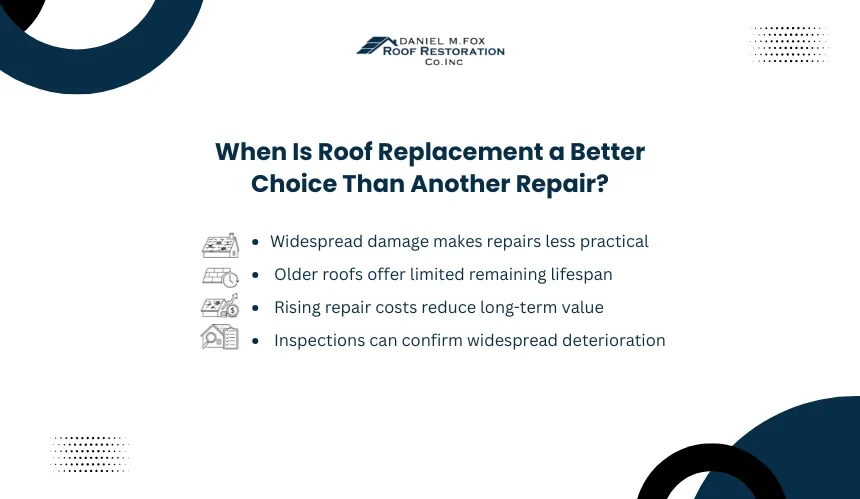
Not every aging roof needs immediate replacement, but there comes a point where repairing individual shingles no longer addresses the underlying condition of the roofing system. Evaluating the extent of deterioration, remaining service life, and long-term costs helps determine whether replacement is the more practical investment.
Damage Extends Across Multiple Areas of the Roof
Replacing a few damaged shingles is effective when problems are isolated. However, if curling, cracking, granule loss, or missing shingles are spread across multiple roof sections, the deterioration is no longer localized. Widespread wear indicates the roofing system is aging as a whole, making repeated spot repairs less effective at restoring long-term protection.
The Roof Is Near or Beyond Its Expected Lifespan
An asphalt roof that has reached the upper end of its expected service life is more likely to develop recurring issues, even after repairs. When visible signs of deterioration appear on a roof that is already approaching its typical lifespan, replacement often provides greater long-term value than continuing to address individual failures as they occur.
Repair Costs Continue to Increase
Frequent service calls, replacing shingles after multiple storms, and fixing recurring leaks can gradually become more expensive than installing a new roof. Instead of evaluating each repair separately, homeowners should consider the cumulative cost over several years. If maintenance expenses continue rising without improving overall roof performance, replacement is usually the more economical solution.
A Professional Inspection Reveals Widespread Deterioration
A roofing contractor evaluates more than the visible condition of shingles. A comprehensive inspection also assesses flashing, underlayment, roof ventilation, moisture intrusion, and the condition of the roof deck to determine whether the roofing system can continue performing safely.
For many homeowners considering asphalt shingles roof replacement in Dedham, MA, a professional inspection is especially valuable after multiple New England winters.
Freeze-thaw cycles can gradually weaken roofing materials and concealed components, even when exterior damage appears minor. Identifying widespread deterioration early allows replacement to be planned before hidden moisture damage leads to more extensive structural repairs.
What Should You Do If Your Asphalt Shingles Are Near the End of Their Life?
Once multiple signs of aging are present, delaying action increases the likelihood of leaks, moisture intrusion, and more extensive roof damage. Taking proactive steps allows homeowners to plan repairs or replacement before minor deterioration develops into a larger structural issue.
- Schedule a professional roof inspection to confirm the overall condition of the shingles and the underlying roofing system.
- Document visible changes such as curling, granule loss, or cracked shingles so future deterioration can be monitored accurately.
- Review replacement material options based on your home’s design, budget, and expected long-term performance.
- Plan replacement before failure occurs, rather than waiting for severe weather or a major leak to force an emergency roofing project.
Frequently Asked Questions
Can old asphalt shingles affect homeowners insurance coverage?
Insurers may limit coverage, require an inspection, or decline renewal when a roof exceeds a certain age or shows poor maintenance. Policies usually cover sudden damage from wind or hail, not deterioration caused by normal wear. Homeowners should review roof-age requirements before renewal and keep inspection, maintenance, and repair records.
Should I replace an aging roof before selling my home?
Replacement may strengthen buyer confidence when the roof has limited remaining life, active defects, or inspection concerns. A newer roof can reduce negotiation pressure and help prevent repair credits. However, sellers should compare replacement costs with local property value, buyer expectations, disclosure requirements, and the likely return on investment.
Can new shingles be installed over an old asphalt roof?
A second shingle layer may be permitted when the existing roof is flat, dry, structurally sound, and local building codes allow it. However, an overlay can conceal damaged decking, add weight, reduce ventilation assessment, and shorten the new roof’s performance. Full tear-off replacement provides better access to the underlying roof system.
Is it safe to replace asphalt shingles during a Massachusetts winter?
Winter roof replacement is possible when temperatures, precipitation, wind, and surface conditions remain suitable. Cold shingles can become brittle, while self-sealing adhesive strips may require additional hand-sealing. Contractors must also manage snow, ice, and shorter daylight hours. Planned spring or fall installation usually offers more predictable conditions.
Why do replacement shingles sometimes look different from the existing roof?
Color differences can result from fading, granule weathering, manufacturing batch variations, and discontinued shingle lines. Even the same product may not match an older roof precisely. Noticeable patchwork often becomes unavoidable when repairs cover several areas, which can affect curb appeal and make full replacement more visually consistent.