
- danielfox
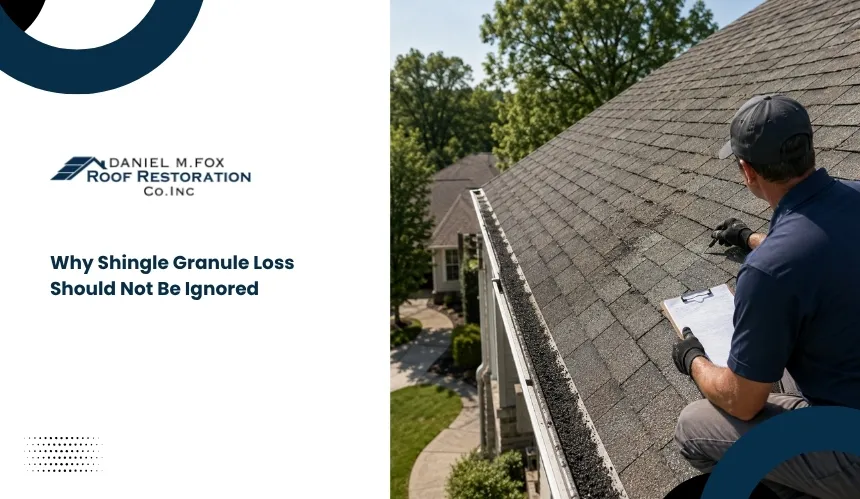
Why Shingle Granule Loss Should Not Be Ignored
Key Takeaways:
|
Granule loss on asphalt shingles is often dismissed as a normal sign of aging, but excessive granule loss can expose the roof to accelerated wear, moisture intrusion, and premature failure.
The challenge is knowing when a few loose granules are expected and when they signal a problem that requires attention. Delaying action can turn a manageable roofing issue into a more extensive and costly repair.
This article explains what shingle granule loss means, what causes it, why it should not be ignored, and when it is time to have your roof professionally evaluated
What Does Shingle Granule Loss Mean for Your Roof?
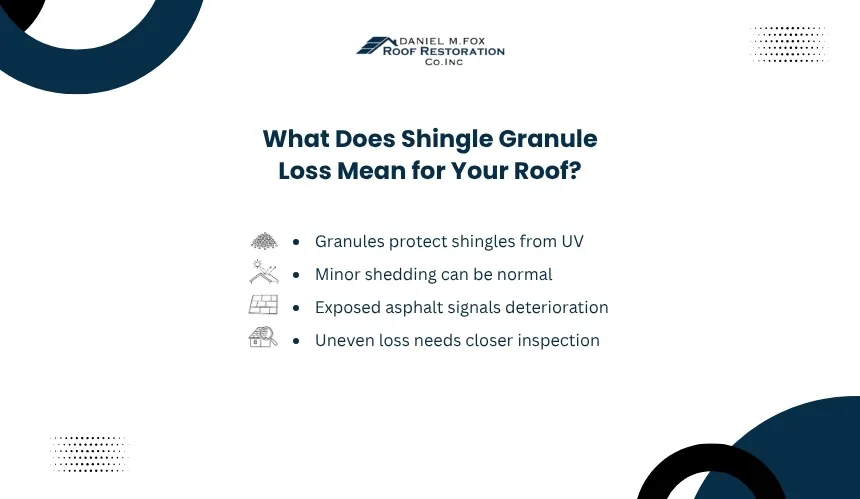
Granules are a critical part of an asphalt shingle’s protective surface. While some granule shedding is expected over a roof’s lifespan, excessive loss reduces the shingle’s ability to withstand weather exposure and often indicates that the roofing system is beginning to deteriorate.
What Do Roofing Granules Do and Why Do They Matter?
Roofing granules are mineral-coated particles embedded in the surface of asphalt shingles during manufacturing. They perform several essential functions beyond giving shingles their color.
Their primary role is to shield the asphalt layer from ultraviolet (UV) radiation. Without this protective layer, sunlight causes the asphalt to dry out more quickly, making shingles brittle and more susceptible to cracking. Granules also improve resistance to rain, wind, minor impacts, and everyday weathering while helping regulate heat absorption across the roof surface.
As granules wear away, the asphalt beneath becomes increasingly exposed to environmental stress. This accelerates material degradation and reduces the overall service life of the roofing system.
When Is Granule Loss Considered Normal?
Not all granule loss signals a roofing problem. New asphalt shingles commonly shed a small amount of excess granules left over from the manufacturing process, which often collect in gutters or at the base of downspouts during the first few heavy rains.
Over time, gradual granule loss is also a natural part of roof aging. Years of exposure to sunlight, precipitation, and seasonal temperature changes slowly wear down the protective surface. In regions like Cambridge, MA, where roofs experience freezing winters, snow, and warm summer conditions, this gradual weathering occurs as part of the normal aging process.
The key difference is that normal granule loss is slow and uniform rather than concentrated in specific areas.
What Are the Signs of Excessive Granule Loss?
Excessive granule loss usually appears alongside other indicators of shingle deterioration rather than as an isolated issue. Homeowners should look for signs such as:
- Large amounts of granules collecting in gutters or around downspouts long after a roof has been installed.
- Dark or shiny patches where the asphalt layer has become exposed.
- Uneven wear affecting specific roof slopes instead of the entire roof.
- Shingles that also show curling, cracking, blistering, or edge deterioration.
When these symptoms appear together, the roof’s protective surface is no longer performing as intended. A professional roof inspection can determine whether the damage is localized and repairable or reflects broader wear that may require more extensive roofing work.
What Causes Asphalt Shingles to Lose Their Granules?
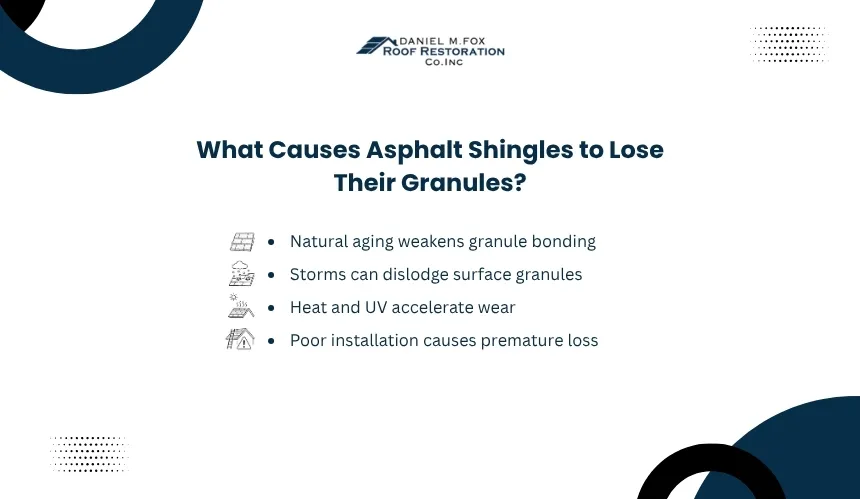
Granule loss is the result of physical wear, environmental exposure, or defects that weaken the bond between the granules and the asphalt mat. Identifying the cause helps determine whether the issue is part of normal roof aging or a condition that warrants prompt repair.
Natural Weathering and Roof Age
Every asphalt shingle has a finite service life. As years of exposure accumulate, the asphalt binder gradually loses flexibility, reducing its ability to hold protective granules in place. Wind-driven rain, seasonal temperature swings, and repeated thermal expansion and contraction slowly erode the shingle surface.
Older roofs typically experience more widespread and consistent granule loss because the entire roofing system has undergone long-term environmental stress. This type of wear is generally progressive rather than sudden.
Storm Damage, Hail, and High Winds
Severe weather can remove granules much faster than natural aging. Hail impacts can dislodge protective granules at the point of contact, leaving small exposed areas that continue to deteriorate after the storm has passed. High winds may lift shingle edges, increasing surface abrasion and weakening the bond between granules and the asphalt layer.
After significant storms, roofs should be inspected for localized damage, especially if granules begin accumulating in gutters shortly afterward. In communities such as Cambridge, MA, where nor’easters, strong wind events, and winter storms can place additional stress on roofing systems, post-storm inspections are a practical way to identify damage before it progresses.
Heat, UV Exposure, and Temperature Fluctuations
Continuous exposure to sunlight gradually breaks down the asphalt compounds that secure roofing granules. As ultraviolet radiation ages the shingle surface, the protective coating becomes less durable, allowing granules to loosen more easily.
Temperature extremes further accelerate this process. Daily heating and nighttime cooling cause shingles to expand and contract repeatedly, creating mechanical stress that contributes to long-term surface deterioration. Roofs exposed to intense sun with limited shade often experience this form of wear more rapidly.
Manufacturing Defects or Improper Installation
Although less common, premature granule loss can result from defects in the manufacturing process or installation errors. Poor adhesive bonding during production may cause shingles to shed granules well before their expected lifespan.
Installation practices also influence long-term performance. Incorrect fastening, inadequate roof ventilation, or installing shingles under unsuitable weather conditions can place unnecessary stress on the roofing system, increasing the likelihood of premature deterioration. When granule loss develops unusually early, a professional inspection can help determine whether workmanship or product quality contributed to the problem.
Why Ignoring Granule Loss Can Lead to Bigger Roofing Problems
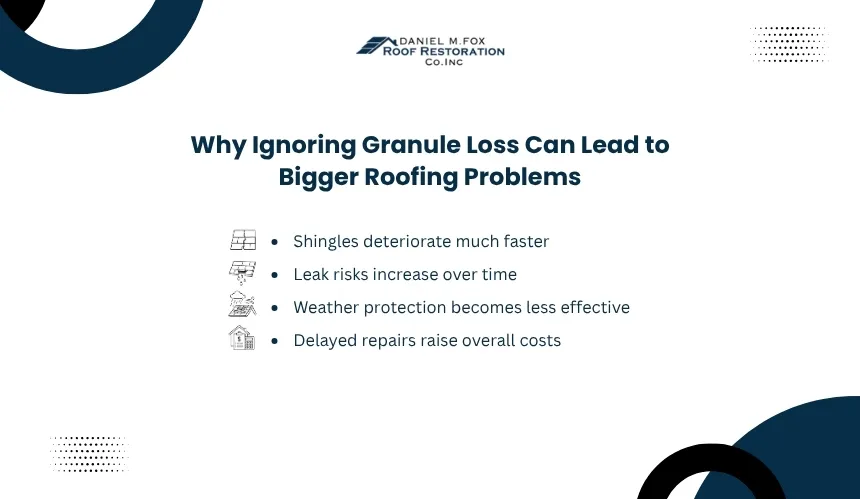
Granule loss is more than a cosmetic issue. Once the protective surface of asphalt shingles begins to wear away, the roof becomes increasingly vulnerable to environmental damage that can shorten its lifespan and compromise its ability to protect the home.
Faster Shingle Deterioration and Shorter Roof Lifespan
Roofing granules act as the first line of defense against sunlight and weather exposure. As this protective layer disappears, the underlying asphalt absorbs more ultraviolet radiation and heat, causing it to dry out and lose flexibility.
Over time, the shingles become brittle and less capable of withstanding normal expansion and contraction caused by changing temperatures. This accelerates surface cracking and material breakdown, reducing the roof’s expected service life well before its intended replacement timeline.
Increased Risk of Leaks and Moisture Intrusion
As shingles deteriorate, they become less effective at shedding water. Cracks, exposed asphalt, and weakened shingle surfaces create opportunities for rainwater to penetrate beneath the roofing material.
Even minor moisture intrusion can damage roof decking, insulation, and attic spaces if left unresolved. During periods of prolonged rainfall or melting snow, these vulnerabilities become more likely to develop into interior water damage that requires more extensive repairs.
Reduced Protection Against UV Exposure and Weather
Granules are engineered to withstand continuous exposure to sunlight, wind, and precipitation. Once that protective coating is significantly reduced, shingles absorb more environmental stress with every season.
This increased exposure speeds up weather-related deterioration and leaves the roof less resilient during severe storms. Instead of isolated surface wear, homeowners may begin to see widespread roofing issues that affect larger sections of the roof.
Higher Repair or Replacement Costs Over Time
Addressing excessive granule loss early often allows roofing professionals to correct localized problems before they spread across the roofing system. Waiting until leaks develop or shingles begin failing structurally usually increases both the scope and cost of the work required.
If a roof inspection reveals advanced deterioration, timely roof repair in Cambridge, MA, may prevent secondary damage to the home’s underlying structure. In cases where granule loss is widespread and accompanied by extensive shingle wear, a full roof replacement may ultimately provide the most reliable long-term solution.
How to Check for Granule Loss and Know When to Call a Roofing Professional
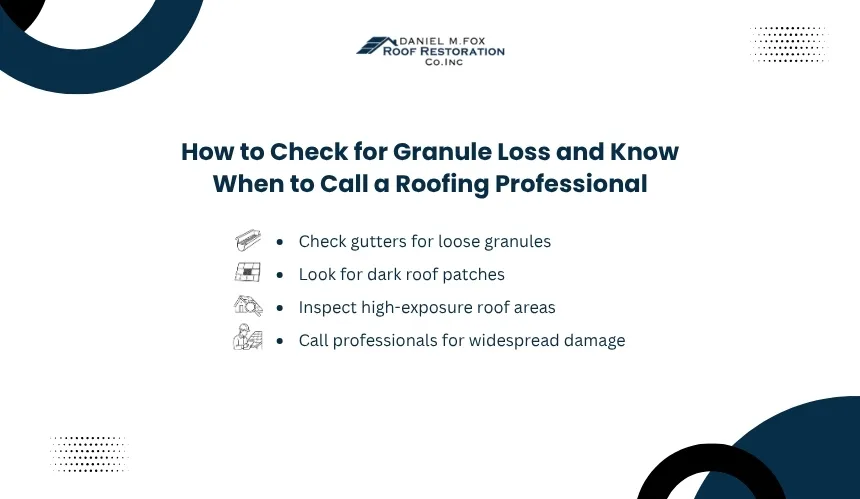
While granule loss can often be identified during a visual inspection, determining its severity requires looking at the condition of the roof as a whole. Knowing what to check and when to seek professional evaluation can help prevent small issues from developing into larger structural problems.
What Warning Signs Can Homeowners Spot?
Many indicators of granule loss are visible from the ground or during routine property maintenance. Rather than focusing on a single symptom, look for patterns that suggest the shingles are losing their protective surface.
Common warning signs include:
- Granules accumulating in gutters or near downspouts.
- Dark patches where the asphalt layer is visible.
- Uneven discoloration across sections of the roof.
- Shingles showing curling, cracking, or blistering alongside granule loss.
- Roof areas that appear noticeably more worn than surrounding sections.
These observations provide useful information but do not confirm the underlying cause or extent of the damage.
Which Areas of the Roof Deserve Closer Attention?
Certain sections of a roof experience greater environmental stress and should be monitored more carefully. South- and west-facing slopes typically receive the most direct sunlight, making them more susceptible to long-term UV degradation. Valleys, ridge lines, and roof edges are also exposed to increased water flow and wind forces that can accelerate surface wear.
After major weather events, inspect the ground around the home, gutters, and downspouts for an unusual buildup of granules. A sudden increase following a hailstorm or high-wind event may indicate recent damage that warrants further evaluation.
For safety reasons, inspections should be performed from the ground or with binoculars. Walking on asphalt shingles can damage the roofing material and increase the risk of falls.
When Is a Professional Roof Inspection the Best Next Step?
A professional inspection is recommended when granule loss is widespread, appears suddenly, or is accompanied by other signs of roof deterioration. Roofing contractors evaluate more than the visible surface, assessing the condition of the shingles, flashing, underlayment, ventilation, and other components that influence the roof’s overall performance.
Professional assessments are also valuable after severe storms, when buying or selling a home, or if the roof is approaching the end of its expected lifespan. Identifying deterioration early provides more options for repair and helps homeowners make informed decisions based on the actual condition of the roofing system rather than visible symptoms alone.
Can Granule Loss Be Repaired, or Is Roof Replacement the Better Option?
The right solution depends on the extent of the granule loss and the overall condition of the roofing system. A professional assessment considers the age of the roof, the distribution of the damage, and whether the shingles can still provide reliable weather protection.
When Are Roof Repairs Sufficient?
Repairs are often appropriate when granule loss is confined to a small section of the roof and the surrounding shingles remain structurally sound. Localized damage caused by a fallen branch, isolated wind damage, or a limited number of deteriorated shingles can frequently be addressed without replacing the entire roof.
During the repair process, roofing professionals also inspect adjacent materials such as flashing, sealants, and underlayment to ensure the affected area has not allowed water to penetrate beneath the shingles. Addressing these issues through roof maintenance services in Cambridge, MA, can help identify localized problems early, reducing the likelihood of more extensive deterioration over time.
When Does Granule Loss Point to Roof Replacement?
Replacement becomes the more practical option when granule loss is widespread and accompanied by significant shingle deterioration. If large sections of the roof show exposed asphalt, extensive cracking, curling, or repeated leaks, replacing isolated shingles will not restore the roof’s overall performance.
An aging roof that has reached or exceeded its expected lifespan may also be a better candidate for replacement. Installing a new roofing system addresses the underlying condition of the entire roof rather than treating individual symptoms as they continue to appear.
What Factors Influence the Repair Versus Replacement Decision?
Roofing contractors evaluate several factors before recommending a solution, including:
- The age of the existing roof.
- The percentage of shingles affected by granule loss.
- Evidence of water intrusion or structural damage.
- The condition of flashing, decking, and other roofing components.
- The expected remaining service life after repairs.
Considering these factors together leads to a more accurate recommendation than evaluating granule loss alone. A comprehensive inspection ensures homeowners invest in the solution that provides the greatest long-term value while maintaining the roof’s ability to protect the home.
Noticing excessive shingle granule loss? Don’t wait for minor roof wear to become a major repair. Daniel Fox Roofing provides expert roof repair, roof maintenance, asphalt shingle roof replacement, chimney repair, gutter services, slate and copper roofing, and more for homeowners throughout Greater Boston and the surrounding communities. Schedule a professional roof inspection today and protect your home with roofing solutions built to last.
Frequently Asked Questions
Does homeowners insurance cover shingle granule loss after a storm?
Coverage usually depends on whether the loss resulted from a sudden event, such as hail or wind, rather than age-related deterioration. Insurers may require photographs, a contractor’s inspection report, and evidence of the storm date. Normal wear, defective materials, and deferred maintenance are commonly excluded from roof damage claims.
Why are granules still appearing in my gutters after a new roof installation?
New asphalt shingles often release loose surface granules left from manufacturing, transportation, and installation. This shedding may continue through several rainstorms. The amount should gradually decrease. Persistent heavy accumulation, visible bare spots, or uneven color changes may indicate defective shingles, installation damage, or another condition requiring contractor review.
Can roof cleaning or pressure washing remove shingle granules?
High-pressure washing can strip protective granules, break adhesive bonds, and force water beneath overlapping shingles. Asphalt roofs should be cleaned with manufacturer-approved, low-pressure methods designed for algae, moss, and organic staining. Walking aggressively on the roof or using stiff brushes can also cause avoidable surface abrasion.
Can exposed shingle areas be sealed or coated instead of repaired?
Roof coatings and sealants generally cannot restore missing granules or reverse deterioration within an asphalt shingle. Applying incompatible products may trap moisture, alter heat performance, or void the manufacturer’s warranty. Localized shingle replacement is usually more reliable when the surrounding roof remains in serviceable condition.
Will granule loss affect a home sale or roof inspection?
Significant granule loss can influence a buyer’s inspection report, insurance eligibility, repair negotiations, and property valuation. Inspectors may flag exposed asphalt or uneven wear as evidence of reduced remaining service life. Obtaining a documented roofing assessment before listing can clarify whether maintenance, repairs, or replacement should be addressed.
Can solar panel installation contribute to shingle granule loss?
Roof foot traffic, dropped tools, dragged mounting equipment, and improper flashing can damage granules during solar panel installation. Installers should use protective walk paths and coordinate with a roofing contractor when shingles are aging. Existing roof condition should be assessed before panels are installed because later repairs may require temporary panel removal.