
- danielfox
What is the Difference Between Sectional and Seamless Gutters?
Key Takeaways
- Sectional gutters are made from multiple connected pieces, while seamless gutters are custom-formed in continuous runs with fewer joints.
- Sectional gutters usually cost less upfront and can work well for smaller structures, simple rooflines, or phased exterior projects.
- Seamless gutters reduce leak-prone connection points, making them a stronger choice for long rooflines, heavy rainfall, and long-term drainage performance.
- Maintenance needs are often higher with sectional gutters because seams can collect debris, loosen over time, or require resealing.
- In Cambridge, MA, seasonal leaf buildup and freeze-thaw cycles can make seamless gutters more practical for homeowners seeking durable water control.
Choosing between sectional and seamless gutters can affect how effectively a home manages rainwater, how often maintenance is required, and how much the system costs over time. Although both options serve the same purpose, their construction and performance characteristics differ significantly.
This guide explains how sectional and seamless gutters compare and when each option may be the better fit.
Understanding Sectional and Seamless Gutters

Both gutter systems are designed to collect and redirect rainwater away from the roof, foundation, and surrounding landscape. The primary difference lies in how the gutters are manufactured and assembled.
What Are Sectional Gutters?
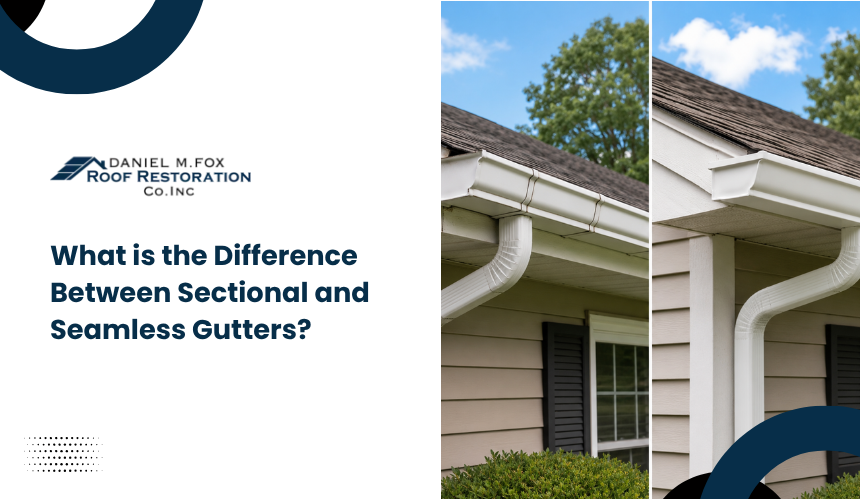
Sectional gutters are built from multiple pre-cut pieces joined together during installation. Individual sections are connected with fasteners, sealants, and connectors to create a continuous drainage path along the roofline.
Because the system contains several joints, each connection becomes a potential point for wear, separation, or water leakage over time. Sectional gutters are commonly available in vinyl, aluminum, and steel, making them a widely used option for standard residential projects and smaller structures.
What Are Seamless Gutters?
Seamless gutters are manufactured from a single continuous piece of material that is custom formed to match the dimensions of the home. The gutter runs are typically produced on-site using specialized equipment, reducing the number of connection points throughout the system.
Since seams are generally present only at corners and downspout locations, seamless gutters provide a more uniform water channel. Aluminum is one of the most common materials used for seamless systems because it combines corrosion resistance with custom fabrication capabilities.
What Are the Key Differences Between Sectional and Seamless Gutters?

After understanding how each system is constructed, the next step is evaluating how those design differences affect performance, appearance, and installation requirements.
How Do Joints Affect Leak Potential?
The number of seams is one of the biggest distinctions between the two systems. Sectional gutters contain multiple connection points where separate pieces meet. Over time, sealants can deteriorate and joints may loosen, increasing the likelihood of water escaping from the system.
Seamless gutters have far fewer joints, which reduces the number of locations where leaks can develop. The continuous design creates a more consistent pathway for rainwater movement.
How Does the Installation Process Differ?
Sectional gutters are assembled from standardized pieces and can often be installed using readily available components. Their modular design allows sections to be connected individually during the installation process.
Seamless gutters are custom measured and fabricated specifically for the dimensions of the property. Specialized forming equipment creates continuous gutter runs, allowing the finished system to match the roofline more precisely.
How Does Appearance Compare?
Visible connectors and seams can create interruptions along the gutter line of a sectional system. While functional, these connection points may be more noticeable from the ground.
Seamless gutters provide a cleaner and more uniform appearance because long sections are formed without repeated joints. This custom fit often creates a more integrated look with the exterior of the home.
How Do Initial Costs Compare?
Sectional gutters generally have a lower upfront cost because they use standardized materials and do not require custom fabrication equipment.
Seamless gutters usually involve a higher initial investment due to on-site manufacturing and professional installation requirements. However, the increased cost reflects the customized construction of the system rather than additional drainage capacity.
How Performance and Maintenance Compare

Long-term ownership experience often depends on how a gutter system handles debris, aging components, and routine maintenance demands. Structural design directly influences these factors.
Which System Is More Prone to Debris Buildup?
Leaves, twigs, and roof granules naturally move through gutter channels during rainfall. In sectional gutters, seams and connectors can create small interruptions where debris is more likely to collect. As buildup increases, water flow efficiency may decline.
Seamless gutters have fewer internal connection points, allowing debris to travel more freely toward downspouts. This continuous channel can reduce the number of areas where obstructions begin to form.
How Do Repairs Differ Between the Two Systems?
Sectional gutters use individual pieces, making it possible to replace damaged sections without removing the entire system. This modular design can simplify localized repairs.
Seamless gutters typically require professional repair methods because larger continuous sections are involved. While damage is often less concentrated around joints, repairs may require specialized equipment to maintain the original fit.
Which Option Offers Better Long-Term Durability?
Joint failure is one of the most common reasons sectional gutters require ongoing maintenance. Repeated expansion, contraction, and exposure to moisture can gradually weaken sealants and connection points.
Because seamless gutters contain fewer seams, they generally experience fewer joint-related failures over time. In areas such as Cambridge, MA, where older neighborhoods around Harvard Square and Mid-Cambridge regularly experience heavy autumn leaf drop followed by winter freeze-thaw cycles, reducing potential leak points can help maintain more consistent drainage performance throughout the year.
When Sectional Gutters May Be the Better Choice

The most suitable gutter system depends on project goals, property requirements, and budget priorities. Despite the advantages of seamless systems, sectional gutters remain a practical solution in several situations.
1. Budget-Conscious Installations
Sectional gutters generally require a lower initial investment because they use standardized components and do not require custom fabrication. For homeowners focused on reducing upfront project costs, this approach can provide effective water management without the expense associated with custom systems.
2. Smaller Structures and Simple Roof Layouts
Detached garages, sheds, workshops, and homes with shorter gutter runs may not require the customization offered by seamless systems. In these cases, sectional gutters can provide adequate drainage performance while maintaining installation efficiency.
3. Projects That Prioritize Component Replacement
Because sectional systems are assembled from individual pieces, isolated damage can often be addressed by replacing a specific section rather than modifying an extended gutter run. This approach may appeal to property owners who prefer straightforward maintenance and readily available replacement components.
4. Temporary or Phased Exterior Upgrades
Some homeowners complete exterior improvements in stages rather than all at once. Sectional gutters can serve as a practical option when immediate drainage needs must be addressed while larger roofing, siding, or renovation projects are planned for the future.
When Seamless Gutters May Be the Better Choice
Seamless gutters are often selected when homeowners prioritize long-term performance, reduced maintenance requirements, and a more customized exterior finish. Their design advantages become more noticeable on larger or more demanding drainage systems.
1. Homes That Need Greater Leak Protection
Because seamless gutters contain fewer connection points, there are fewer locations where water can escape as materials age. This design can provide more reliable water control for homes exposed to frequent rainfall or seasonal weather changes.
2. Properties With Long Rooflines
Large homes and complex roof layouts often benefit from continuous gutter runs. Longer sections reduce the number of transitions within the system, helping maintain consistent water movement toward the downspouts.
3. Homeowners Focused on Appearance and Maintenance
Seamless systems provide a cleaner exterior appearance because visible joints are minimized. Fewer seams also mean fewer areas where debris accumulation and joint deterioration can develop, reducing routine maintenance demands over time.
4. Long-Term Investment Considerations
Although seamless gutters typically cost more initially, many homeowners choose them for their durability and lower likelihood of joint-related repairs. In Cambridge, neighborhoods such as West Cambridge and the areas surrounding Fresh Pond experience heavy leaf accumulation during fall and repeated winter freeze-thaw conditions. A continuous gutter system can reduce the number of vulnerable connection points exposed to these seasonal stresses.
For homeowners seeking seamless gutter services in Cambridge, MA, these local weather patterns are one reason seamless systems are commonly considered for long-term drainage performance.
Frequently Asked Questions
Are seamless gutters always better than sectional gutters?
Seamless gutters are not automatically better for every property. They are usually stronger for long rooflines, leak control, and long-term durability, but sectional gutters can still work well for smaller buildings, limited budgets, or simple drainage needs. The better choice depends on roof size, fascia condition, maintenance expectations, and project cost.
Do seamless gutters still need gutter guards?
Seamless gutters can reduce debris-catching joints, but they do not prevent leaves, pine needles, roof grit, or seed pods from entering the channel. Gutter guards may still be useful on homes near mature trees, especially where clogged downspouts or overflowing gutters could affect siding, soil grading, or foundation drainage.
What gutter size is best for heavy rain?
Many homes use 5-inch gutters, but 6-inch gutters may be better for steep roofs, large roof surfaces, or areas with heavy rainfall. Larger gutters move more water volume toward the downspouts, reducing overflow risk during strong storms. Proper sizing should also account for downspout placement and roof drainage load.
Can old fascia boards affect gutter installation?
Weak, rotted, or uneven fascia can compromise both sectional and seamless gutter installation. Gutters rely on secure mounting points to maintain slope and carry water weight. If fascia boards are damaged, the system may sag, pull away, or drain unevenly, so structural repairs should happen before installing new gutters.
Should downspouts be replaced with new gutters?
Downspouts should be evaluated during any gutter replacement because they control how water exits the system. Reusing old downspouts may work if they are properly sized, rust-free, securely attached, and positioned away from the foundation. Undersized or poorly placed downspouts can reduce the performance of a new gutter system.
How often should homeowners inspect gutters after installation?
Gutters should be inspected at least twice a year, usually after heavy leaf drop and after winter weather. Additional checks are useful after major storms. Homeowners should look for sagging, standing water, loose fasteners, clogged outlets, separated downspouts, and overflow marks along siding or landscaping.