
- danielfox
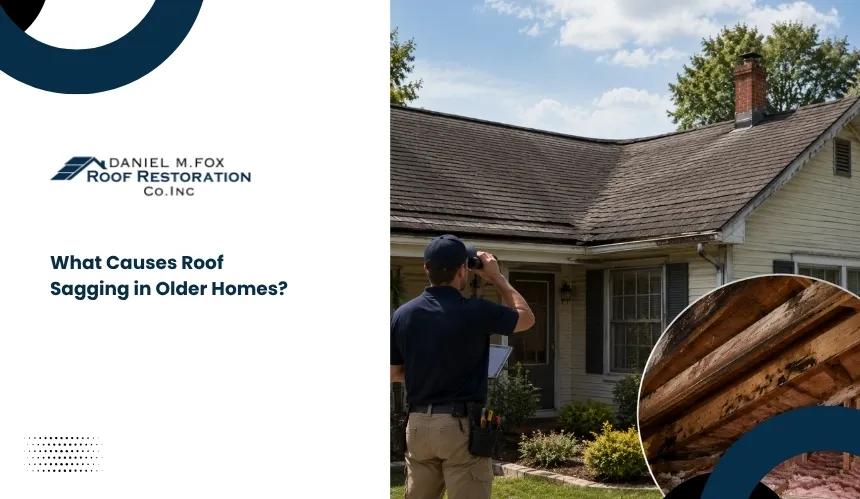
What Causes Roof Sagging in Older Homes?
Key Takeaways:
|
A sagging roof is often a sign that the structure beneath the roofing materials is no longer supporting weight as intended. In older homes, this condition can result from years of moisture exposure, aging framing, excessive roof loads, or movement within the home’s structural system. This article explains the most common causes of roof sagging, the warning signs to watch for, and when professional structural evaluation becomes necessary.
What Does Roof Sagging Indicate in an Older Home?
A sagging roof indicates that part of the roof structure is no longer carrying loads evenly. Rather than being a cosmetic defect, it usually reflects a change in the performance of framing members, roof decking, or supporting walls. The visible dip often develops gradually as structural components weaken or shift under long-term stress.
In older homes, roof systems were designed according to the construction standards and material capabilities of their time. Decades of seasonal expansion, contraction, moisture exposure, and sustained weight can reduce the strength of rafters, joists, and connections. As these components lose their ability to distribute loads correctly, the roofline may begin to bow, dip, or appear uneven.
Roof sagging should also be distinguished from isolated roofing defects. Replacing shingles or repairing flashing will not correct a roof that is sagging because of compromised framing or structural movement. Identifying whether the problem originates within the roofing assembly or the supporting structure is essential before planning repairs.
In Newton, MA, many established neighborhoods feature homes that have been standing for generations. While these properties often retain their architectural character, older roof framing may have experienced repeated New England freeze-thaw cycles, heavy winter snow loads, and decades of moisture exposure. These long-term environmental conditions can gradually increase structural stress, making early evaluation especially valuable when a roofline begins to change.
What Are the Most Common Causes of Roof Sagging?
Roof sagging develops when one or more structural elements can no longer support and distribute roof loads effectively. The underlying cause is often progressive rather than sudden, with years of deterioration, excess weight, or structural movement gradually changing the roof’s shape.
Long-Term Moisture Damage and Wood Rot
Moisture is one of the leading contributors to roof sagging because it weakens the wooden components responsible for carrying structural loads. Water entering through damaged shingles, flashing failures, ice dams, or inadequate ventilation can repeatedly wet roof decking, rafters, and trusses. As moisture remains trapped, fungal decay begins breaking down the wood fibers that provide structural strength.
Rotting structural members lose their ability to resist bending and compression. Even if the roofing surface appears intact, deteriorated framing beneath it may gradually deflect under the roof’s normal weight. Over time, the affected area settles lower than the surrounding structure, creating a visible dip along the roofline.
Pro tip: Repairing damaged shingles may not stop deterioration if moisture is also entering from inside the home. Check whether bathroom, kitchen, or dryer exhaust vents terminate in the attic, and look for wet insulation, blocked soffit airflow, or rotting sheathing. Correcting both exterior leakage and attic moisture prevents repaired wood from being exposed again. |
Aging or Weakened Structural Framing
Structural lumber naturally changes over decades of service. Repeated loading cycles, seasonal humidity fluctuations, and gradual material fatigue can reduce the rigidity of rafters, ridge boards, and ceiling joists, particularly in homes built many decades ago.
Some older homes were also constructed using framing methods that may not meet today’s structural expectations or accommodate modern roofing materials. If original members have cracked, warped, or permanently bowed over time, they distribute loads less efficiently, increasing the likelihood of progressive roof sagging.
Excessive Roof Loads
Every roof is engineered to support a specific combination of permanent and temporary loads. Problems arise when that capacity is exceeded for extended periods.
Common sources of excessive loading include:
- Multiple layers of roofing installed over existing shingles instead of complete replacement.
- Heavy snow accumulation that remains on the roof for prolonged periods.
- Water retained because of poor drainage or ice dam formation.
- Additional rooftop equipment or structural modifications that increase dead load.
When these loads remain beyond the roof’s intended design capacity, framing members can gradually deform instead of returning to their original position after the weight is removed.
Important: According to FEMA’s Snow Load Safety Guide, drifting snow, rain-saturated accumulation, blocked drainage, and ice dams can create concentrated loads on particular roof sections. Following a major Newton winter storm, new roofline movement, ceiling deflection, cracking sounds, or sticking doors should prompt professional evaluation rather than attempting to inspect or clear the roof personally |
Foundation or Wall Movement Affecting the Roof Structure
Not every sagging roof originates within the roof itself. Movement elsewhere in the building can alter how structural loads travel through the home, causing the roof framing to shift or settle unevenly.
Foundation settlement, shifting load-bearing walls, or movement caused by long-term soil changes can transfer stress upward into the roof system. Instead of remaining level, rafters and ridge lines compensate for the altered support conditions, eventually producing visible sagging.
In Newton, MA, many older homes have experienced decades of seasonal ground movement, freeze-thaw cycles, and structural settling. While some settlement is expected as buildings age, uneven movement combined with aging roof framing can increase the likelihood of roofline distortion, making a comprehensive structural inspection more valuable than addressing the roofing materials alone.
Which Warning Signs Suggest the Sagging May Be Getting Worse?
Roof sagging rarely appears overnight. As structural components continue to lose strength or shift under load, additional symptoms often emerge throughout the roof system and the interior of the home. Recognizing these warning signs early can help prevent more extensive structural deterioration.
Visible Changes Along the Roofline
The roofline often provides the earliest indication that sagging is progressing. Instead of maintaining a straight, uniform profile, sections of the roof may begin to dip between supports or develop a wavy appearance along the ridge.
Other visible indicators include uneven roof planes, localized depressions, or a ridge line that appears bowed rather than level. These changes suggest that one or more framing members are no longer carrying loads evenly and should be evaluated before the deformation becomes more pronounced.
Interior Signs Inside the Home
Structural movement within the roof system frequently affects finishes inside the house. As framing shifts, the resulting stress can transfer to ceilings, walls, and openings below.
Common interior warning signs include:
- Cracks forming where walls meet ceilings.
- Ceiling surfaces that appear bowed or uneven.
- Doors or windows that suddenly become difficult to open or close.
- Gaps developing around trim or drywall joints.
- New creaking sounds when the roof is subjected to wind or snow loads.
Although these symptoms can have multiple causes, they warrant further investigation when they occur alongside a visibly sagging roof.
Roofing Material Distress
Changes in the roof’s structure often place abnormal stress on the roofing materials above it. As the framing bends or settles, shingles, flashing, and other exterior components may no longer sit flat against the roof deck.
Signs of material distress include buckled or lifted shingles, flashing that separates from adjoining surfaces, and areas where the roof covering appears uneven despite no recent storm damage. These conditions may allow additional water intrusion, accelerating the deterioration of structural components beneath the roofing system.
Rather than evaluating each symptom in isolation, it is more effective to consider how they relate to one another. A combination of roofline distortion, interior structural changes, and roofing material movement generally indicates that the underlying issue extends beyond routine roof maintenance and requires a thorough structural assessment.
Why Is Identifying the Exact Cause Important Before Making Repairs?
A sagging roof is a symptom, not the underlying problem. Repair decisions should be based on the condition of the structural system rather than the appearance of the roof alone. Correctly identifying the source of the sagging prevents ineffective repairs and helps ensure the structure can safely support future loads.
Structural Repairs and Roof Replacement Address Different Problems
Replacing roofing materials restores the weather-resistant surface of a roof, but it does not strengthen compromised framing. If the sagging is caused by deteriorated rafters, damaged trusses, weakened roof decking, or shifting structural supports, those components must be repaired or reinforced before a new roofing system is installed.
Conversely, not every aging roof requires structural reconstruction. Some roofs have worn shingles or flashing while the framing remains sound. A professional assessment distinguishes between structural deficiencies and roofing system deterioration, allowing repairs to target the actual source of the problem rather than treating visible symptoms.
Delaying Repairs Can Increase Structural Damage
Roof sagging rarely stabilizes without intervention because the affected components continue carrying loads even after they begin to weaken. As structural members deflect further, stress is redistributed to adjacent framing, increasing the likelihood that additional sections of the roof will become affected.
Delaying corrective work may lead to:
- Greater deflection of rafters, joists, or ridge members.
- Expansion of moisture damage into previously unaffected framing.
- Separation of roof coverings, flashing, and roof penetrations.
- Higher repair costs as more structural components require replacement.
- Increased safety risks during severe weather or heavy snow events.
Addressing the underlying structural issue while the affected area remains limited is typically more practical than waiting until widespread damage develops. A diagnosis based on the roof’s framing, support system, and load path provides the information needed to determine whether reinforcement, component replacement, or a complete roof system repair is the appropriate solution.
When Should a Sagging Roof Be Professionally Inspected?
A professional inspection is recommended as soon as a roof develops a noticeable dip, an uneven ridge line, or other signs of structural movement. Waiting for leaks or visible interior damage can allow the underlying problem to progress, making repairs more extensive than if the issue had been identified earlier.
During an inspection, the evaluation extends beyond the roofing materials. The condition of rafters, trusses, ridge boards, roof decking, load-bearing walls, and supporting connections is examined to determine whether the sagging is caused by deterioration, excessive loading, moisture damage, or structural settlement. The goal is to identify the origin of the movement rather than simply document its appearance.
Certain situations warrant a higher level of urgency. These include rapidly worsening roofline distortion, significant ceiling deflection, newly formed structural cracks, doors or windows that become difficult to operate alongside roof movement, or signs that framing members have split or shifted. Homes that have recently experienced severe storms, prolonged water intrusion, or unusually heavy snow accumulation should also be evaluated if any roof deformation is observed.
For homeowners in Newton, MA, periodic roof evaluations become increasingly valuable as older homes continue to age under New England’s seasonal weather patterns. Detecting structural deterioration before it compromises additional framing or roofing components can help preserve the home’s structural integrity and support more targeted, cost-effective repairs.
If you’ve noticed a sagging roof or other signs of structural wear, don’t wait for the damage to worsen. Daniel Fox Roofing provides trusted roof repair and roof replacement services across the Greater Boston area, helping homeowners identify the root cause and restore long-term protection. Contact our team today to schedule a professional roof evaluation and receive expert recommendations tailored to your home.
Frequently Asked Questions
How can you tell whether roof sagging is active or historic?
Professionals compare the roofline with dated photos, measure deflection at multiple points, inspect framing connections, and look for fresh cracks, displaced fasteners, moisture, or changing interior gaps. A stable measurement over time may indicate older movement, but only an inspection can confirm whether the roof has stopped shifting or remains structurally active.
Will sistering the rafters fix a sagging roof?
Sistering can strengthen a rafter by fastening a new structural member alongside it, but it is not a universal correction. The added member needs adequate bearing, proper fasteners, and a continuous load path. If walls, ridge supports, trusses, or foundations have moved, reinforcing isolated rafters may leave the primary cause unresolved.
Should I call a roofer or a structural engineer first?
A roofing contractor should evaluate shingles, flashing, leaks, decking, and replacement requirements. A licensed structural engineer is more appropriate when rafters, trusses, ridge lines, load-bearing walls, or foundations may be involved. Complex sagging often requires both, with the engineer defining structural corrections and the roofer restoring a watertight roof assembly.
Does homeowners insurance cover a sagging roof?
Homeowners’ insurance may respond when sagging results from a sudden covered event, such as wind, impact, a fallen tree, or the weight of ice or snow. Gradual rot, long-term leakage, poor maintenance, and ordinary wear are commonly excluded. Report the condition promptly and request a written coverage decision before major demolition begins.
Is it safe to stay in a house with a sagging roof?
Occupancy depends on the severity and rate of movement. Leave the affected area and seek urgent guidance if framing is cracking, ceilings are dropping, doors suddenly bind, or popping and creaking sounds accompany visible deflection. Do not enter the attic or add roof loads until a qualified professional confirms that the structure is stable.
Will a sagging roof affect selling or refinancing the home?
A visible sag can influence inspection findings, buyer negotiations, appraisal conditions, and financing. Before listing, obtain a written diagnosis and keep permits, engineering plans, invoices, photographs, and final inspection records for completed work. Clear documentation helps buyers and lenders distinguish a corrected structural defect from an unresolved condition requiring further repair.
Does sagging roof repair require a permit in Newton, MA?
Permit requirements depend on the repair scope. In Newton, structural roof work generally extends beyond ordinary maintenance, while some minor roofing repairs may be treated differently by the building official. Confirm requirements with Inspectional Services, use properly registered professionals, and ensure required inspections are completed and the permit is formally closed.