
- danielfox
Roof Repair vs Roof Replacement: Which Option Saves More Money?
Key Takeaways:
|
A damaged roof creates a difficult financial decision for homeowners. While a repair may seem less expensive upfront, repeated fixes on an aging roof can eventually cost more than a full replacement. The right choice depends on factors such as roof age, damage severity, expected lifespan, and long-term maintenance expenses.
This guide explains when roof repair makes financial sense, when replacement delivers better value, and how to evaluate both options based on overall cost rather than initial price alone.
How Roof Repair and Roof Replacement Differ
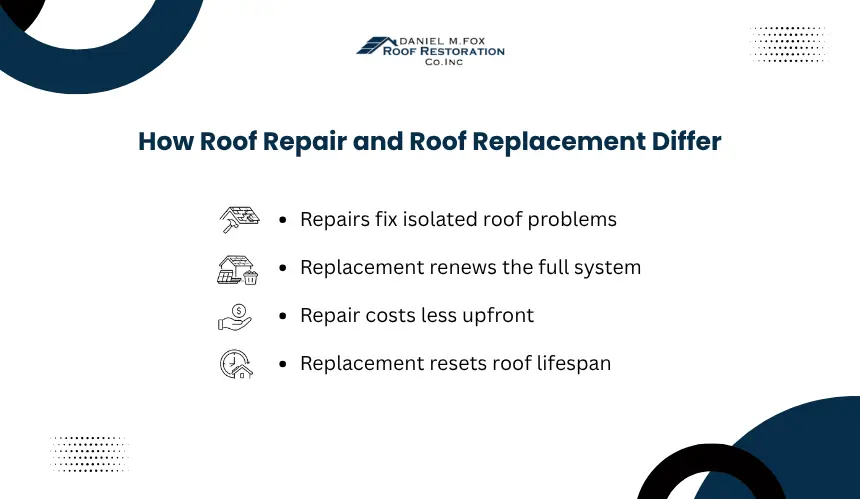
Roof repair and roof replacement address different levels of roofing problems. Understanding the scope of each option helps homeowners evaluate costs, expected lifespan, and the amount of work required before making a decision.
What Is Considered a Roof Repair?
A roof repair targets a specific problem while preserving the majority of the existing roofing system. Contractors typically replace damaged shingles, seal leaks, repair flashing, fix minor storm damage, or address isolated areas affected by wear.
Repairs are designed to restore performance without removing the entire roof assembly. Since the existing underlayment, decking, and most roofing materials remain in place, repairs generally involve lower labor and material costs.
Roof repair works best when the damage is limited and the surrounding roof structure remains in good condition.
What Does a Full Roof Replacement Include?
A roof replacement involves removing existing roofing materials and installing a new roofing system. Depending on the roof condition, contractors may also replace underlayment, flashing components, ventilation elements, and damaged roof decking.
Because replacement addresses the entire system rather than one isolated issue, it provides a fresh service life and reduces the likelihood of recurring roofing problems.
Although replacement requires a larger initial investment, it eliminates hidden deterioration that repairs alone may not resolve.
In Newton, MA, older homes and changing New England weather patterns often lead to isolated shingle damage, flashing failures, and small roof leaks rather than full system failures. In these situations, homeowners frequently choose expert roof repair in Newton, MA, to address localized problems while preserving the remaining lifespan of the existing roof.
Key Factors That Determine Which Option Costs Less
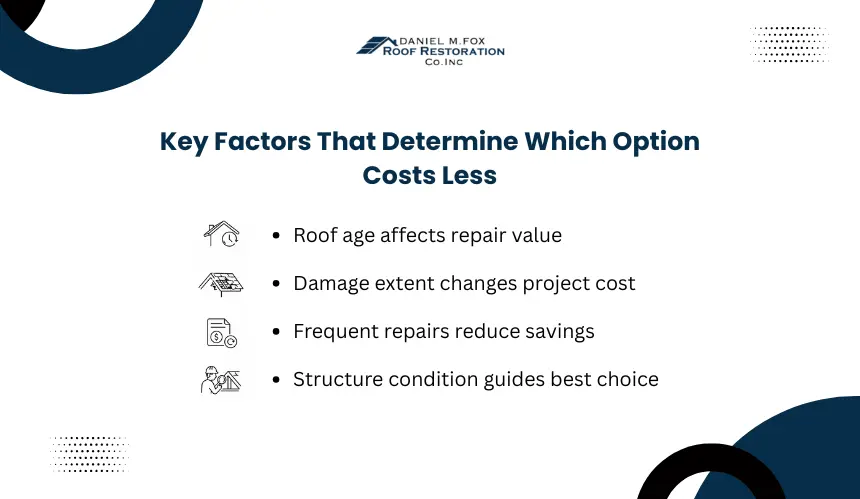
The lowest upfront price does not always produce the lowest overall expense. Several variables influence whether repairing an existing roof or investing in a replacement delivers better long-term value.
1. Roof Age and Remaining Lifespan
Roof age directly affects the financial return of a repair. A relatively new roof with many years of service life remaining can justify localized repairs because the investment extends the usefulness of the existing system.
Older roofs present a different cost equation. Spending money on repairs near the end of a roof’s expected lifespan often provides only short-term relief. In those situations, replacement may prevent additional spending within a few years.
2. Extent and Location of Damage
The size and distribution of the damage influence the overall repair strategy. A few missing shingles or a leak confined to one section generally requires less work and fewer materials.
Damage spread across multiple slopes, widespread moisture intrusion, or deterioration affecting underlying components increases labor requirements and can make replacement more economically practical. Hidden water damage can also increase costs after repairs begin.
3. Frequency of Previous Repairs
Repair history reveals how efficiently the current roof is performing. Occasional maintenance expenses are normal for most roofing systems. However, recurring leaks and repeated service calls indicate that underlying problems may no longer be isolated.
As repair frequency increases, cumulative costs begin to approach the investment required for a new roof. Evaluating total spending over several years often provides a more accurate picture than comparing a single repair invoice.
4. Roofing Material and Structural Condition
Different roofing materials have different life expectancies, repair methods, and replacement costs. Asphalt shingles, metal roofing, tile roofs, and flat roofing systems each respond differently to aging and weather exposure.
Structural conditions also affect the financial decision. Damaged roof decking, ventilation deficiencies, or moisture-related deterioration beneath the surface can increase repair complexity. When supporting components have been compromised, replacing the roofing system often addresses multiple issues at the same time rather than treating individual symptoms.
When Roof Repair Provides the Better Financial Value
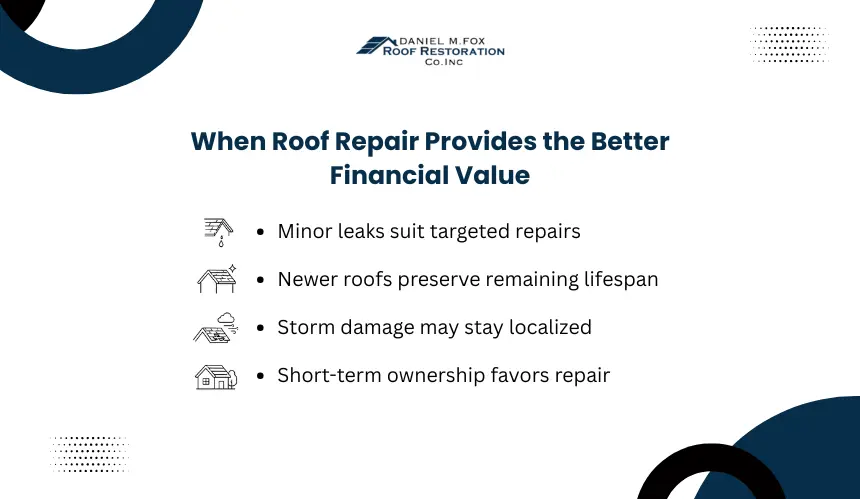
Roof repair delivers the best return when the damage is limited and the existing roofing system still has substantial service life remaining. In these situations, targeted repairs can restore performance without requiring the expense of a complete replacement.
Isolated Leaks and Minor Storm Damage
Small areas of damage usually represent the most cost-effective repair scenarios. Missing shingles, damaged flashing, or a leak around a roof penetration can often be corrected without affecting the rest of the roof.
In Massachusetts, winter ice dams and wind-driven rain frequently create localized issues near roof edges, valleys, and flashing transitions. In many cases, correcting these specific areas restores the roof’s weather resistance without replacing the entire system.
Relatively New Roofs With Good Structural Integrity
A newer roof that still has strong decking, functioning ventilation, and healthy surrounding materials typically justifies repair rather than replacement.
For homeowners in Newton, MA, many neighborhoods contain houses that have undergone roof replacements within the last decade due to severe New England weather cycles.
When these newer systems experience isolated damage from fallen branches, snow accumulation, or seasonal storms, repairs often preserve the remaining lifespan of the roof while avoiding unnecessary capital expenses.
Temporary Solutions for Short-Term Homeownership Plans
Financial priorities can change depending on how long a homeowner intends to keep the property. Someone planning to sell within the next few years may prioritize restoring functionality rather than investing in a full roofing system with decades of expected life.
A properly executed repair can address active leaks, maintain curb appeal, and satisfy inspection concerns without committing to the larger cost of replacement. This approach may provide better financial efficiency when long-term ownership is not part of the plan.
When Roof Replacement Saves More Money in the Long Run
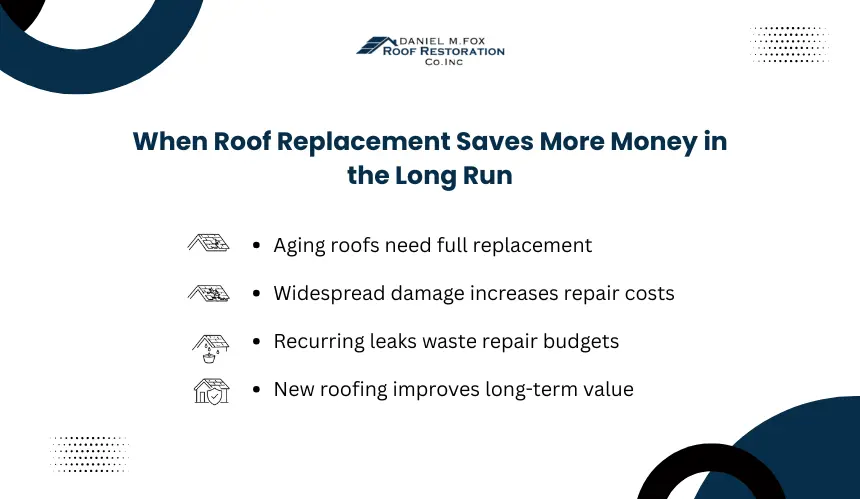
Roof replacement becomes the stronger financial choice when the existing roof can no longer protect the home reliably. In this case, replacement reduces repeat repair costs, limits hidden water damage, and resets the roof’s service life.
Aging Roofs Near the End of Their Service Life
An older roof loses value as its materials become brittle, curled, cracked, or weakened by long-term weather exposure. Repairs may stop one visible leak, but they cannot restore the original strength of aging shingles, worn underlayment, or deteriorated seal strips.
When the roof is close to the end of its expected lifespan, replacement often prevents a cycle of short-term fixes. The larger upfront cost can be more practical than paying for repeated service calls on a system that is already declining.
In Newton, MA, many homes experience decades of exposure to snow loads, freeze-thaw cycles, and seasonal storms common across New England. For homeowners dealing with aging roofing systems, investing in roof replacement in Newton, MA, often provides better long-term value than continuing to repair materials that have already reached the end of their useful life.
Widespread Damage Affecting Multiple Areas
Replacement makes more financial sense when damage appears across several roof sections instead of one isolated area. Widespread granule loss, sagging spots, repeated shingle failure, or moisture intrusion beneath multiple slopes can signal system-level deterioration.
Repairing each affected area separately can create uneven protection and unpredictable costs. A full replacement addresses the entire roof assembly at once, which reduces the risk of missed damage and future leaks.
Rising Maintenance Costs and Recurring Leaks
Recurring leaks indicate that the roof is failing beyond a single repair point. Even when each repair seems affordable, the combined cost of labor, materials, interior water damage, ceiling stains, insulation issues, and emergency service can exceed the value of temporary fixes.
Replacement controls long-term spending by removing the failing materials instead of chasing new leak points after every storm.
Energy Efficiency and Insurance Considerations
A failing roof can affect more than leak protection. Poor ventilation, damaged decking, and worn roofing materials can increase attic heat buildup, moisture retention, and HVAC strain. A replacement allows contractors to correct ventilation, underlayment, flashing, and insulation-related weaknesses during the same project.
Insurance and resale factors also matter. A newer roof may reduce inspection concerns, support stronger buyer confidence, and improve claim documentation after weather damage. These financial benefits can make replacement the better long-term investment when the current roof no longer performs consistently.
How to Decide Which Option Makes the Most Financial Sense: Roof Replacement or Repair
The best choice depends on the condition of the roof, expected ownership timeline, and the total cost of future maintenance. Evaluating these factors together provides a clearer answer than focusing on price alone.
Questions Homeowners Should Ask Before Choosing
Before committing to either option, homeowners should evaluate the current condition and expected performance of the roof.
Key questions include:
- How old is the existing roof?
- Has the roof required multiple repairs in recent years?
- Is the damage confined to one area or spread across several sections?
- Are there signs of water intrusion beneath the roofing materials?
- How long is the homeowner planning to stay in the property?
These answers help determine whether additional repairs provide value or simply delay a larger expense.
Why a Professional Roof Inspection Matters
Visible damage does not always reveal the full condition of a roofing system. Moisture trapped beneath shingles, deteriorated decking, inadequate attic ventilation, and flashing failures often remain hidden until a detailed inspection is performed.
A professional roof inspection provides information that supports a cost-based decision rather than a guess. Contractors can identify the extent of the damage, estimate the remaining service life, and determine whether repair costs are justified compared with replacement.
For homeowners in Newton, MA, seasonal snow accumulation, freeze-thaw cycles, and heavy rain can create hidden roof deterioration that is difficult to detect from the ground. A thorough inspection helps identify these issues before they develop into structural damage or costly interior repairs.
Before investing in major roofing work, homeowners can rely on Daniel Fox Roofing for a professional inspection and honest guidance. Serving Newton, MA, and the Greater Boston area, the team helps identify hidden issues, compare repair and replacement costs, and recommend the solution that delivers the best long-term value for the home.
A Simple Rule for Repair vs Replacement Decisions
In general, repairs provide better value when the roof is relatively young and the damage is isolated. Replacement becomes the stronger financial investment when the roof is nearing the end of its lifespan, experiences recurring problems, or requires extensive work across multiple areas.
The goal is not to choose the least expensive service today. The goal is to select the option that minimizes total ownership costs while maintaining reliable protection for the home over the years ahead.
Frequently Asked Questions
Can a small roof leak wait if it only happens during heavy rain?
A leak that appears only during heavy rain can still indicate flashing failure, underlayment damage, or wind-driven water entry. Waiting increases the risk of wet insulation, ceiling stains, mold growth, and decking deterioration. A targeted inspection can determine whether the leak is isolated or part of a larger roof performance issue.
Does homeowners insurance cover roof repair or roof replacement?
Homeowners insurance may cover roof damage caused by sudden events such as storms, fallen branches, hail, or wind damage. It usually does not cover normal aging, poor maintenance, or gradual material wear. Documentation, roof age, policy terms, and inspection findings determine whether repair or replacement qualifies for coverage.
Is it better to repair the roof before selling a house?
Roof repair can make sense before selling if the damage is minor and the roof still has useful life remaining. Visible leaks, missing shingles, or damaged flashing can create inspection objections and reduce buyer confidence. If the roof is near failure, replacement may support a stronger listing position and fewer negotiation issues.
Can only one section of a roof be replaced?
One roof section can sometimes be replaced when damage is limited to a specific slope or area. The main challenge is matching materials, color, age, and performance with the existing roof. Sectional replacement works best when the rest of the roof remains structurally sound and has enough lifespan left.
How does attic ventilation affect roof repair costs?
Poor attic ventilation can trap heat and moisture beneath the roof deck, causing shingles to age faster and wood components to weaken. If ventilation problems remain unresolved, repairs may fail sooner than expected. A roof inspection should evaluate intake vents, exhaust vents, moisture levels, and decking condition before choosing repairs.