
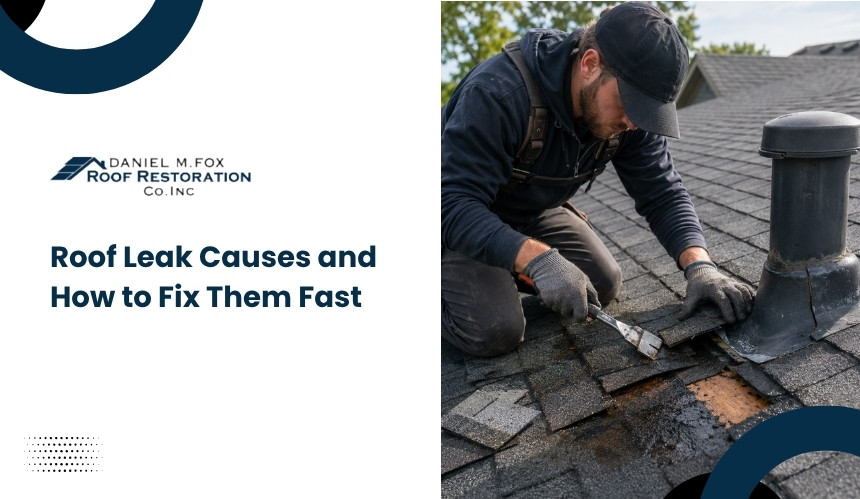
- danielfox
Roof Leak Causes and How to Fix Them Fast
Key Takeaways:
|
A roof leak can quickly escalate from a small water stain to damaged insulation, mold growth, and costly structural repairs. Leaks often originate from worn roofing components, drainage issues, or storm-related damage, making early identification critical. Taking the right action immediately can limit interior damage and prevent the problem from spreading.
This guide explains the most common roof leak causes, temporary solutions, permanent repair options, and when professional roofing service becomes necessary.
Common Roof Leak Causes to Check First
Most roof leaks originate from component failure rather than the entire roofing system failing at once. Identifying the source category first allows repairs to target the actual entry point instead of treating visible symptoms inside the home.
1. Damaged or Missing Shingles
Broken, curled, or missing shingles expose the underlying underlayment and roof deck to direct moisture. Wind uplift, aging asphalt, hail impact, and prolonged UV exposure can weaken shingles and create openings where rainwater penetrates the roofing assembly.
Leaks caused by shingle damage often develop gradually. Water may travel beneath surrounding materials before appearing inside the house, which is why ceiling stains do not always align with the damaged area above.
2. Cracked Flashing Around Roof Openings
Flashing protects transitions and joints where roofing materials meet penetrations or vertical surfaces. Chimneys, skylights, roof valleys, dormers, and vent pipes rely on metal flashing to divert water away from vulnerable seams.
Corrosion, loose fasteners, improper installation, or deteriorated sealant can compromise flashing performance. Once gaps develop, water bypasses the protective barrier and enters the roof structure.
3. Clogged Gutters and Poor Drainage
Gutters and downspouts control how rainwater leaves the roof. When leaves, debris, or sediment restrict drainage, water can overflow and accumulate near roof edges, fascia boards, and soffits.
In Massachusetts, seasonal weather patterns create additional stress on roof drainage systems. Heavy fall leaf buildup followed by snow accumulation and spring rainfall can prevent water from flowing properly. Homeowners in Newton, MA, often experience these conditions because mature trees and changing seasons increase the amount of debris entering gutters.
Prolonged standing water increases the likelihood of moisture intrusion and accelerates deterioration of nearby roofing components. Poor drainage can also contribute to ice dams in colder climates.
4. Worn Pipe Boots and Roof Vents
Roof penetrations use rubber boots, collars, and protective seals to prevent water entry around plumbing vents and exhaust pipes. These materials naturally degrade over time because of temperature fluctuations and constant exposure to sunlight.
Cracked rubber, separated sealant, or loose vent assemblies create small openings that allow water to enter during rainfall. Although these leaks may begin as minor issues, continued moisture exposure can damage insulation and wood decking beneath the roof surface.
How to Find the Source of a Roof Leak Safely
Locating a roof leak requires tracing moisture patterns rather than relying solely on where water appears inside the home. Water can travel along rafters, insulation, and decking before becoming visible, making systematic inspection more reliable than guesswork.
Step 1: Start Inside the Home
Interior signs often provide the first clues about a roof leak. Water stains on ceilings, peeling paint, damp drywall, musty odors, and discoloration around light fixtures can indicate active moisture intrusion.
Attic spaces can reveal additional evidence. Wet insulation, darkened wood, mold growth, or water trails along rafters help narrow down the affected section of the roof. Because water follows the path of least resistance, the visible damage may be several feet away from the actual entry point.
Step 2: Check the Roof From the Ground
A visual inspection from ground level can reveal obvious exterior problems without creating safety risks. Missing shingles, sagging gutters, debris accumulation, damaged flashing, and exposed roof components are common warning signs.
Using binoculars or taking photos with a smartphone zoom function can help identify damaged areas more clearly. After severe storms, homeowners in Massachusetts should inspect their property for wind damage, fallen branches, or displaced roofing materials that may have created new leak pathways.
Step 3: Avoid Risky Roof Walking
Wet surfaces, steep slopes, and hidden structural damage make roof inspections hazardous. Walking on compromised roofing materials can increase the extent of damage and create fall risks.
Newton, MA, experiences snow, ice, and freeze-thaw cycles that can leave roof surfaces slippery even after precipitation ends. For multi-story homes, storm damage, or hard-to-reach areas, a professional roofing inspection provides a safer and more accurate assessment of the leak source.
Fast Temporary Fixes to Stop Water Damage on Roofs
Once a roof leak is discovered, the priority shifts from finding the cause to limiting additional damage inside the home. Temporary measures can reduce water exposure and protect interior materials while permanent repairs are being scheduled.
1. Contain the Leak Indoors
Start by moving furniture, electronics, and valuables away from the affected area. Place buckets or containers beneath active drips and use towels to absorb excess moisture.
If water has collected inside a ceiling bulge, carefully draining the trapped water can prevent drywall from collapsing unexpectedly. Wet carpets, insulation, and fabrics should be dried as soon as possible to reduce the risk of mold growth.
2. Cover the Damaged Area With a Roof Tarp
A waterproof tarp provides temporary protection when shingles have been blown off or storm damage has exposed the roof surface. The covering should extend beyond the damaged section so water is diverted away from the vulnerable area.
In Massachusetts, strong winds and changing weather conditions can allow additional rain to enter before repairs are completed. Homeowners in Newton, MA often use emergency tarping after severe storms to minimize interior damage while waiting for roofing contractors to perform permanent repairs.
Because tarps are temporary solutions, they should not replace proper roof restoration.
3. Use Temporary Sealant for Small Openings
Minor gaps around flashing or vent penetrations can sometimes be sealed temporarily with roofing sealant or patching compounds. These products help slow water intrusion until the affected component can be repaired or replaced.
Temporary sealants are most effective on localized damage and should not be used to address widespread deterioration, structural issues, or large missing sections of roofing material. Applying additional sealant over a failed roof system may conceal the problem without resolving the underlying cause.
Permanent Roof Leak Repairs by Cause
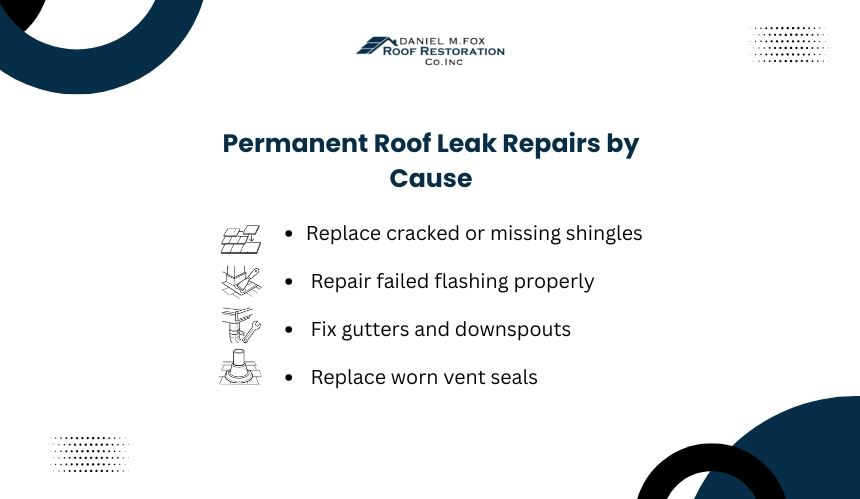
Temporary measures can slow water intrusion, but lasting protection requires repairing the component responsible for the leak. The appropriate solution depends on which part of the roofing system has failed.
1. Replace Damaged Shingles
Shingles that are cracked, missing, or severely worn should be replaced to restore the roof’s water-shedding capability. During the repair process, roofers also inspect the underlayment and decking beneath the damaged area to confirm that moisture has not affected the supporting structure.
In Massachusetts, repeated freeze-thaw cycles and winter storms can shorten the lifespan of roofing materials. Many homeowners in Newton, MA schedule repairs after seasonal weather events to address damage before it expands into larger sections of the roof.
2. Repair or Replace Flashing
Failed flashing requires more than additional caulk. Depending on the condition of the metal, contractors may reseal joints, secure loose sections, or install new flashing around chimneys, skylights, valleys, and roof-to-wall intersections.
Properly installed flashing directs water away from seams and penetrations. Replacing deteriorated flashing restores this protective pathway and reduces the likelihood of recurring leaks.
3. Fix Drainage Problems
Long-term drainage corrections focus on restoring efficient water flow. Solutions may include cleaning gutters, replacing damaged sections, adjusting downspouts, or correcting areas where debris consistently accumulates.
Addressing drainage issues also protects fascia boards, soffits, and roof edges from prolonged moisture exposure. Preventive maintenance often eliminates the conditions that allow future leaks to develop.
4. Replace Failed Vent Boots or Seals
Aging vent boots and deteriorated pipe collars are usually replaced rather than repeatedly patched. New components create a watertight seal around plumbing vents and exhaust penetrations while accommodating normal expansion and contraction caused by temperature changes.
Replacing worn seals provides more reliable performance than surface repairs, especially when existing materials have become brittle or cracked from years of weather exposure.
When to Call a Roofer Instead of Fixing It Yourself
Some roof leaks extend beyond simple maintenance issues and require professional assessment. Delaying service in these situations can allow moisture to spread into insulation, roof decking, drywall, and structural framing.
The Leak Keeps Coming Back
A recurring leak often indicates that the visible symptom is not the true source of water intrusion. Water can travel beneath shingles and along framing members before reaching interior surfaces, making repeated patching ineffective.
Persistent leaks usually require a detailed roof inspection to identify hidden damage and determine whether multiple roofing components are involved.
The Leak Appears After a Storm
High winds, hail, falling branches, and heavy rainfall can damage shingles, flashing, and roof penetrations. Some storm-related issues remain hidden from ground level and continue allowing water into the home even after the weather has passed.
Professional inspections are especially valuable after severe weather because they can uncover damage that temporary fixes may overlook.
There Are Signs of Structural or Mold Damage
Soft roof decking, sagging ceilings, wet insulation, and visible mold growth indicate that moisture exposure has progressed beyond the surface level. These conditions can compromise indoor air quality and weaken structural materials if left untreated.
Once water reaches framing members or attic insulation, repairs often involve more than replacing roofing materials alone.
If your roof leak requires immediate attention, Daniel Fox Roofing provides emergency roof repairs in Newton, MA, for homeowners dealing with active leaks, storm damage, and urgent roofing concerns. Their team can identify the source of water intrusion, recommend the appropriate repair strategy, and help prevent additional damage to your property.
Frequently Asked Questions
Can a small roof leak dry out on its own?
A small roof leak may stop dripping when rain ends, but the moisture pathway usually remains active. Water trapped in insulation, decking, or ceiling cavities can continue damaging materials even after the surface looks dry. Any recurring stain, musty smell, or soft drywall should be inspected before hidden damage spreads.
How urgent is a roof leak if water is only dripping slowly?
A slow roof leak still requires prompt attention because steady moisture can weaken drywall, saturate insulation, and create mold-friendly conditions. The volume of water matters less than how long materials stay wet. A slow drip near ceilings, attic framing, or electrical fixtures should be treated as an active repair issue.
Does homeowners insurance usually cover roof leaks?
Homeowners insurance may cover roof leaks caused by sudden events such as wind, hail, falling branches, or storm damage. Leaks from aging materials, poor maintenance, clogged gutters, or long-term deterioration are often excluded. Documentation, inspection photos, and a clear cause of damage can affect claim approval.
Why does my ceiling leak appear far from the damaged roof area?
Roof water does not always drip straight down. It can move along rafters, underlayment, insulation, pipes, or framing before reaching the ceiling. This is why interior stains may appear several feet away from the roof entry point, especially in attics with sloped framing or layered insulation.
Can a roof leak create electrical hazards?
A roof leak can become an electrical hazard when water reaches light fixtures, ceiling fans, outlets, wiring, or breaker-connected areas. Moisture near electrical components increases the risk of short circuits and unsafe contact. Power to the affected area should be avoided until the source and extent of water intrusion are checked.
Should I repair the leak or replace the whole roof?
A targeted repair is usually enough when the leak comes from one damaged component, such as a vent boot, flashing joint, or small shingle section. Full roof replacement becomes more practical when leaks are widespread, materials are near the end of their lifespan, or the roof has repeated moisture failures.