

- danielfox
Navigating Local Zoning Boards for Historic Roof Work Approvals
A Summary: Local zoning boards approve historic roof work by reviewing proposed materials, design changes, and structural impacts to ensure the project aligns with preservation rules and community standards. |
Homeowners often search for clarity on why these approvals are needed, what information zoning boards expect, and how the review can influence timelines and material choices.
Historic roofs involve more oversight than typical roofing projects because any change must maintain architectural character and comply with local preservation ordinances.
This article will guide readers through the full approval journey, from understanding regulatory expectations to preparing complete documentation that supports a smooth review.
Understanding Why Historic Roof Projects Require Zoning Approval
Historic roof work must be reviewed because even small exterior changes can alter the character of a protected property.
Local zoning boards evaluate these projects to ensure that roofing updates remain consistent with preservation rules, neighborhood aesthetics, and long-standing architectural standards.
This review helps maintain the cultural and historical value of the area while protecting the integrity of aging structures.
What Counts as Historic Roof Work That Requires Zoning Approval?
Zoning boards classify historic roof work as any alteration that affects appearance, structure, or material composition. Replacements that shift the roof profile, modify visible flashing, or introduce modern materials must be reviewed.
Even repairs that seem minor can fall under approval requirements if they influence the building’s historic character.
How Zoning Boards Preserve the Architectural Integrity of Roofs
Zoning boards oversee historic properties to ensure long-term protection of neighborhood identity. During review, they evaluate how proposed roofing materials, colors, textures, and installation methods align with the property’s original design.
Their role centers on preserving cultural value, preventing inappropriate modifications, and ensuring continuity with nearby structures.
Identifying the Local Bodies Involved in the Historic Roofing Work Approval
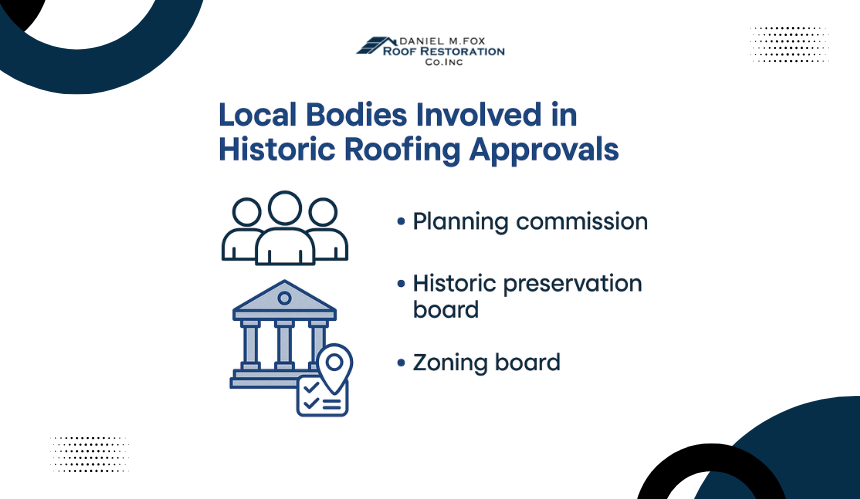
Historic roofing projects must pass through several regulatory checkpoints, and homeowners often struggle to determine which office handles each part of the review.
Massachusetts communities follow structured review systems that involve both zoning authorities and preservation-focused commissions, each responsible for different aspects of the approval.
Understanding these entities early helps prevent delays and strengthens compliance during the historic roof restoration permit process.
Which Departments Handle Local Zoning Board Approval Requirements?
Local zoning board approvals for historic roof work are typically managed by departments that oversee exterior alterations, land use regulations, and preservation standards.
Most jurisdictions rely on a combination of zoning boards, architectural review bodies, and preservation-focused authorities to ensure that roofing changes comply with established community guidelines. These departments evaluate how roofing materials, structural adjustments, and profile changes align with local ordinances and the broader historic roof restoration permit process.
In Massachusetts, two key entities work alongside zoning boards during this review. Historic District Commissions, or HDCs, evaluate roofing proposals within designated historic districts and ensure that visual character and architectural details remain consistent with local preservation rules.
The Massachusetts Historical Commission, known as MHC, provides statewide oversight for properties listed on the State Register or those connected to preservation programs.
How Preservation Commissions Regulate Heritage Roofing Projects?
Preservation commissions focus on protecting architectural authenticity. They review the visual impact of roofing materials, color selections, installation details, and any changes that influence historic identity.
Massachusetts has many designated historic districts, and each relies on a preservation commission to interpret compliance guidelines for heritage roofing projects.
This body determines whether the proposed work aligns with regional preservation goals and long-standing architectural traditions.
Preparing Documentation for Historic Roof Approval Requests
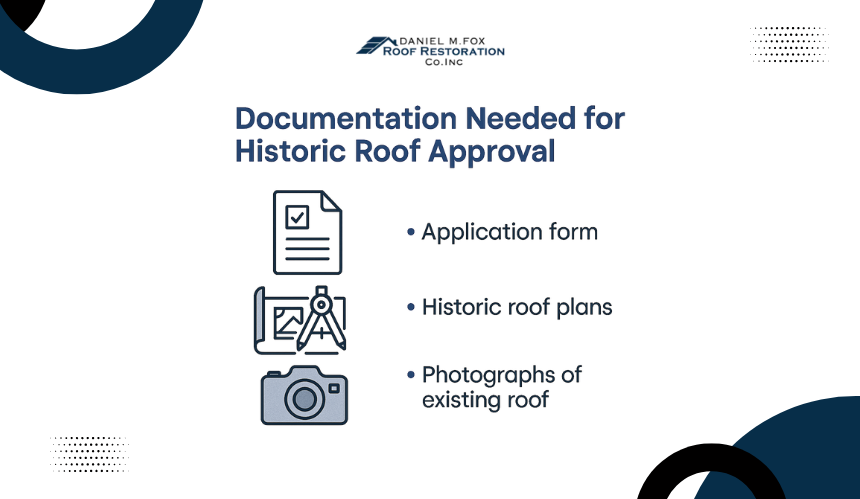
Submitting the right documentation is one of the most important steps in securing approval for historic roof work. Zoning boards and preservation commissions rely on accurate records to understand the condition of the structure, the type of alteration proposed, and whether the project meets compliance guidelines for heritage roofing projects.
What Documentation Is Required for Historic Roof Approval?
Most applications require a detailed package that shows exactly how the roof will be repaired or restored. This includes material specifications for shingles, tiles, flashing, and underlayment, along with color samples and product data sheets.
Applicants must also include current photographs that show all visible roof planes, architectural details, and areas needing repair. Scaled architectural drawings or elevation sketches help zoning boards understand how the altered roof will appear once completed.
These documents support an accurate review of roofing textures, design consistency, and any changes affecting the property’s historic character.
How to Prepare Documentation for Historic Roof Alterations?
Zoning boards and preservation agencies evaluate documentation based on clarity, accuracy, and relevance. Homeowners should focus on providing organized descriptions of the roof’s existing condition, evidence of deterioration, and a full explanation of why repairs or replacements are necessary.
Many jurisdictions, including those in Massachusetts, publish submittal checklists to ensure applicants include measurements, material descriptions, photographs, and installation notes.
Using these resources helps applicants prepare documentation for historic roof alterations that match local expectations and avoid multiple review cycles.
How Zoning Boards Evaluate Historic Roof Applications
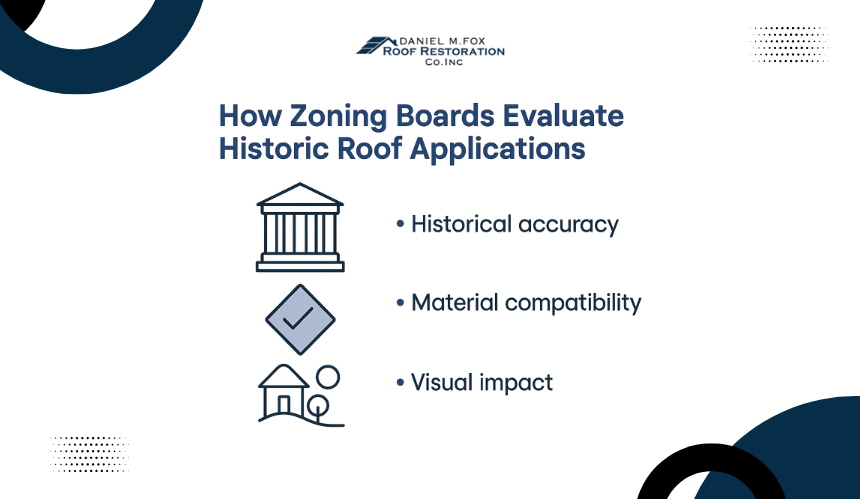
Zoning boards evaluate historic roof applications to confirm that every proposed change supports the architectural identity of the property and complies with preservation rules.
Understanding these criteria helps applicants create proposals that meet expectations and avoid unnecessary delays.
How Aesthetic Compatibility Influences Approval Decisions
Boards review whether the proposed roof maintains visual consistency with the building and nearby structures. They evaluate material texture, color accuracy, roofline appearance, and how each detail contributes to the property’s historic character.
Even small deviations from the original design may prompt additional questions if they disrupt neighborhood continuity or conflict with recognized architectural patterns.
What Structural and Functional Factors Do Boards Consider?
Structural safety plays a major role in the evaluation process. Boards examine load capacity, drainage capability, flashing methods, and installation techniques to ensure the project supports long-term performance.
For older homes in Massachusetts, reviewers may also consider seasonal conditions such as heavy snowfall or coastal moisture exposure, which influence how materials behave on historic structures.
How Material Authenticity and Longevity Impact Review Outcomes
Historic properties require materials that align with their architectural era and recognized preservation standards. Boards look for products that replicate original textures, profiles, and craftsmanship while offering dependable durability.
Applicants who demonstrate that chosen materials meet heritage expectations often experience a smoother review, especially when selections follow locally accepted preservation guidelines.
Common Challenges Homeowners Face During Zoning Review
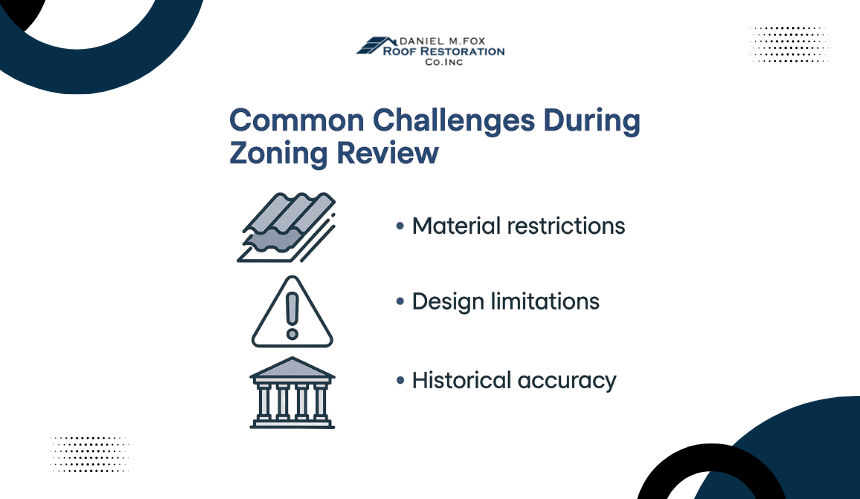
Historic roof applications often encounter issues that slow the review process or require extra revisions. These challenges usually relate to clarity, compliance, or community expectations.
- Requests for Revisions: Boards often ask for changes when material details, drawings, or design explanations are incomplete or unclear.
- Community Concerns: Public hearings may bring objections related to visual changes, material authenticity, or impacts on historic character.
- Extended Review Timelines: Applications slow down when supporting documents are missing, when preservation commissions need more information, or when meeting schedules are limited.
- Material Authenticity Questions: Boards may delay approval if proposed products differ from historically appropriate options or lack evidence of long-term durability.
- Structural Clarifications: Older properties sometimes require additional proof that they can support the chosen roofing system, especially in regions such as Massachusetts, where seasonal conditions affect structural loads.
Strategies to Improve Approval Success for Historic Roof Projects
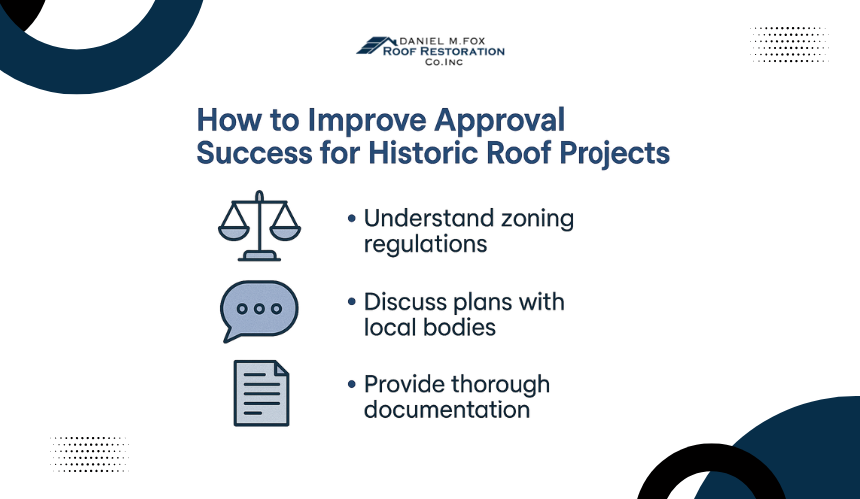
Homeowners can increase their chances of approval by aligning their proposals with preservation rules, preparing strong documentation, and understanding what zoning boards expect. These strategies help applicants work through the historic roof restoration permit process with more confidence and fewer delays.
1. Working with Experienced Historic Roofing Contractors
Work with a historic roof restoration company that specializes in heritage properties, understand the materials, installation methods, and preservation expectations that zoning boards and commissions rely on.
Their insight helps homeowners select historically appropriate materials and prepare accurate plans. In Massachusetts, this experience is especially valuable because many towns apply strict historic district standards that must be followed closely.
2. Submitting Complete and Strong Packages
A clear and well-organized submission can reduce revision requests and streamline the review. This includes accurate material descriptions, photographs of existing conditions, and drawings that illustrate the final appearance.
When applicants demonstrate thoughtful planning and attention to detail, boards can evaluate proposals more efficiently.
3. Proactive Preparation to Avoid Setbacks
Homeowners benefit from identifying potential concerns before submitting their application. Reviewing local zoning board approval requirements, verifying the authenticity of chosen materials, and preparing structural information when needed all help prevent delays.
Anticipating these issues allows boards to focus on the merits of the proposal rather than missing information.
Navigating Appeals, Revisions, and Conditional Approvals for Historic Roofing Project
Not every historic roof application is approved on the first attempt. Some proposals require changes, additional documentation, or a second review.
Understanding how appeals and conditional approvals work helps homeowners respond confidently and keep their project moving forward.
What are the Common Reasons for the Denial of Application?
When an application is denied, zoning boards usually provide clear feedback that explains what prevented approval. Common reasons include material selections that conflict with preservation guidelines, roofline modifications that affect architectural integrity, or missing information that limits the board’s ability to evaluate the project. Reviewing these comments closely is the first step toward preparing a stronger resubmission.
How to Prepare a Strong Appeal Package After Denial?
An effective appeal addresses the concerns noted during the initial review. Homeowners should revise drawings, clarify material specifications, or provide additional structural information that supports the proposed work.
In Massachusetts, appeals may also require input from the local Historic District Commission or references to guidance from the Massachusetts Historical Commission to demonstrate compliance with heritage expectations.
The appeal hearing usually involves:
- Presentation by the appellant and their representatives.
- A response from the Historic District Commission.
- Decision writing and filing within a set timeframe.
What Conditions Must Be Met for Final Approval?
Some projects receive approval with specific conditions. These conditions may involve selecting a more historically accurate material, adjusting the color or texture of the roofing, or providing verification that structural updates meet safety requirements. Meeting these conditions promptly ensures the project remains in compliance and avoids further review cycles.
If you are planning historic roof work and want guidance that aligns with local zoning rules and preservation standards, Daniel Fox Roofing Inc. is here to help. Our team understands the unique requirements of heritage properties and can support you through every step of the approval process.
Conclusion: Key Steps in the Historic Roof Restoration Permit Process
The historic roof restoration permit process follows a structured path that helps zoning boards and preservation commissions evaluate proposed changes with accuracy and consistency. The following points summarize the essential stages involved in securing approval for historic roof work.
Step 1: Confirm the Property’s Historic Status
Determine whether the home is located within a local historic district, listed on a state register, or subject to preservation guidelines that regulate exterior roofing changes.
Step 2: Identify the Reviewing Authorities
Find out which boards or commissions will evaluate the project, including zoning boards, Historic District Commissions, planning departments, or state preservation agencies, when applicable.
Step 3: Review Applicable Preservation and Zoning Guidelines
Study the local rules that apply to roofing materials, architectural details, and exterior alterations to understand what zoning boards expect during review.
Step 4: Prepare All Required Documentation
Gather material specifications, color samples, condition photos, drawings, measurements, and written descriptions that explain the need for restoration or replacement.
Step 5: Submit the Application for Formal Review
File the permit application through the municipal office or digital permitting system. Include all required forms, fees, and supporting documents to begin the official review.
Step 6: Participate in Board Hearings or Meetings
Attend scheduled hearings or meetings where the zoning board or Historic District Commission reviews the proposal, asks questions, and allows public comment when required.
Step 7: Receive the Board’s Initial Decision
The board may approve, conditionally approve, or deny the request based on how well the project aligns with historic preservation standards and local zoning rules.
Step 8: Address Conditions, Revisions, or Appeals if Needed
If conditions are assigned, complete them promptly. If revisions are requested, update the materials or drawings. If denied, prepare an appeal that responds directly to the board’s concerns.
Step 9: Obtain the Final Permit to Begin Work
Once all requirements are met and the board issues final approval, the homeowner can receive the permit that authorizes restoration work on the historic roof.
Frequently Asked Questions
Do historic roof projects ever qualify for financial incentives or tax credits?
Yes, some historic roof projects qualify for preservation grants or state and federal tax credit programs. Eligibility depends on the property’s designation status and whether the proposed work aligns with recognized preservation standards. Homeowners can check state preservation websites or local heritage programs for available incentives.
Can modern roofing technologies be used on historic homes if they are designed to look traditional?
Some modern materials, like advanced composite shingles or weather-resistant underlayments, are allowed if they maintain the appearance of the original roof. Approval depends on how closely the product replicates historic textures and finishes. Boards typically focus on the visible outcome rather than the hidden technical elements.
Does installing rooftop solar affect historic roofing approvals?
Solar installations on historic properties require special review because they can alter roof visibility and architectural character. Some jurisdictions allow solar panels if they are placed on rear-facing or minimally visible roof planes. Homeowners should confirm local solar guidelines for historic districts before planning any installation.
Are emergency roof repairs allowed without full historic approval?
Emergency stabilization, such as temporary coverings or safety repairs, is often permitted to protect the structure from further damage. Permanent repairs, however, must still go through the historic approval process once the immediate issue is controlled. Local building departments can confirm what qualifies as emergency work.
Can homeowners appeal public hearing comments if they believe they are inaccurate or unfair?
Yes, homeowners may respond to public concerns or provide clarification during follow-up reviews. Boards often allow applicants to submit additional information that addresses misunderstandings or clarifies design intentions. This helps ensure decisions are based on accurate and complete information.
Is there a way to speed up the approval process for historic roof projects?
Some jurisdictions offer faster reviews for small-scale or low-impact projects. Submitting complete documentation, scheduling early consultations with preservation staff, and choosing historically appropriate materials can also shorten the timeline. Homeowners should ask local officials whether an expedited track exists for their area.