
- danielfox
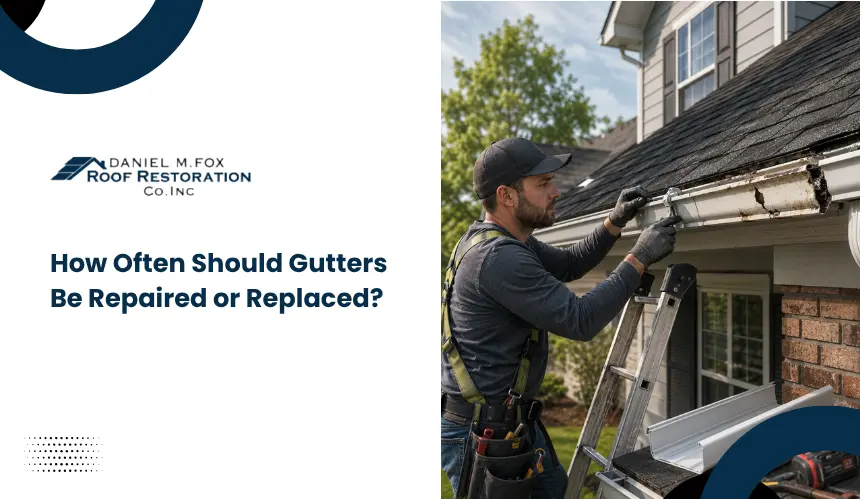
How Often Should Gutters Be Repaired or Replaced?
Key Takeaways:
|
Gutters rarely fail overnight. Most problems begin with small leaks, loose sections, or poor drainage that gradually expose your roofline, fascia, foundation, and landscaping to water damage. In areas like Newton and Greater Boston, where gutters must handle heavy spring rains, autumn leaf buildup, winter snow, and repeated freeze-thaw cycles, deterioration can occur faster than many homeowners expect.
Knowing when a repair is sufficient and when a full replacement is the smarter investment helps prevent more expensive structural repairs. This guide explains how often gutters typically need repair or replacement and the key factors that determine the right time to act.
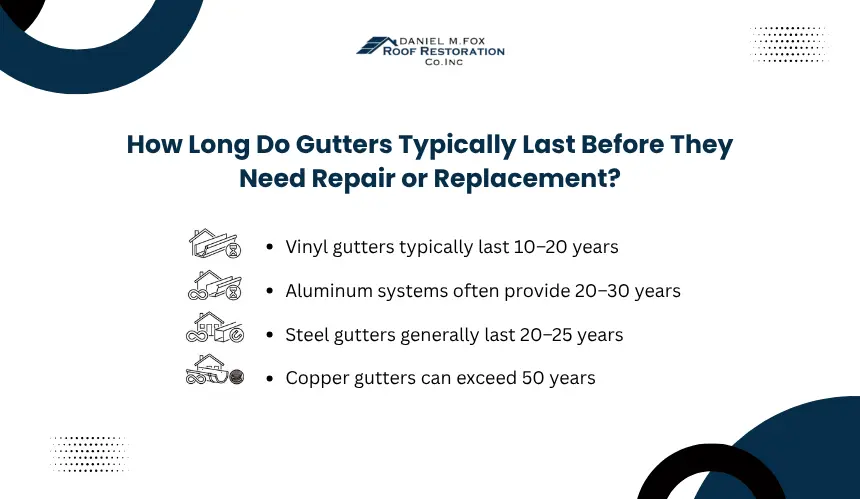
How Long Do Gutters Typically Last Before They Need Repair or Replacement?
No gutter system lasts indefinitely. Its service life depends on the material, installation quality, local weather conditions, and how consistently it is maintained. While routine repairs can extend performance, every gutter system eventually reaches a point where replacement becomes more practical than ongoing maintenance.
Average Lifespan by Gutter Material
Different gutter materials age at different rates because of how they respond to moisture, temperature fluctuations, and physical stress.
- Vinyl gutters: Typically last 10 to 20 years. They resist corrosion but are more susceptible to cracking, warping, and brittleness after prolonged exposure to changing temperatures.
- Aluminum gutters: Usually provide 20 to 30 years of service. Their rust resistance makes them a common choice, although dents, seam separation, and fastener wear may require periodic repairs over time.
- Galvanized steel gutters: Often last 20 to 25 years when properly maintained. The protective coating gradually wears away, allowing rust to develop if scratches or exposed areas are left untreated.
- Copper gutters: Can remain functional for 50 years or more. Although they develop a natural patina, their structural durability makes them one of the longest-lasting gutter materials when professionally installed.
These estimates assume normal maintenance, including routine cleaning, timely repairs, and regular inspections after severe weather events.
Pro Tip: Match replacement sections, fasteners, flashing, and roof drainage components with compatible metals. Copper runoff or direct contact with aluminum or galvanized steel can accelerate galvanic corrosion, shortening the life of otherwise durable gutters. The Copper Development Association specifically advises preventing copper wash from reaching less noble metals. |
Why Some Gutters Fail Much Sooner Than Expected
Premature gutter failure is usually driven by external conditions rather than age alone. A relatively new system can develop significant problems if it is consistently exposed to conditions that accelerate deterioration.
Improper installation is one of the most common causes. Incorrect slope, poorly secured hangers, or undersized gutters prevent efficient water flow, allowing standing water to increase stress on seams and mounting points.
Debris accumulation also shortens gutter lifespan. Neighborhoods throughout Newton with mature tree canopies often experience seasonal buildup of leaves, seed pods, and twigs that restrict drainage. The additional weight places continuous strain on brackets and fascia boards, while trapped moisture increases the risk of corrosion and wood deterioration.
Severe weather further compounds wear. Wind-driven rain, hail, ice accumulation, and repeated freeze-thaw cycles expand existing cracks, loosen fasteners, and distort gutter sections. As these minor defects accumulate, repair intervals become more frequent until replacing the system becomes the more reliable long-term solution.
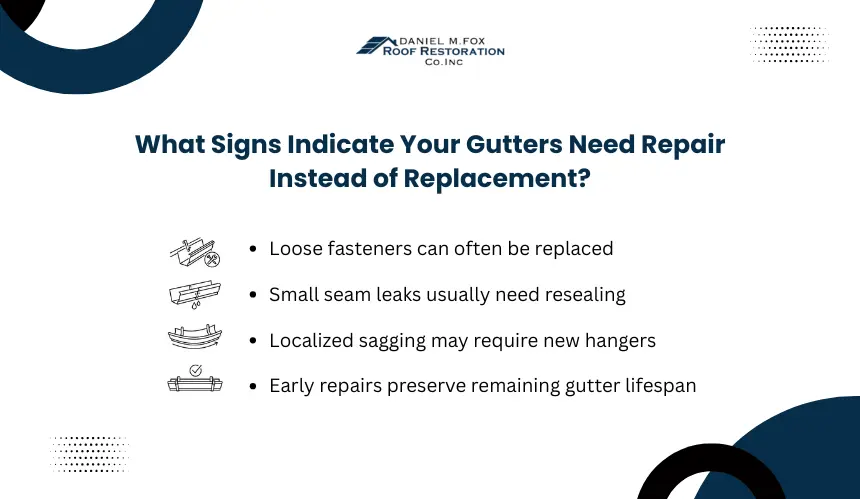
What Signs Indicate Your Gutters Need Repair Instead of Replacement?
Not every gutter problem signals the end of the system’s lifespan. Many issues are localized and can be corrected without replacing the entire gutter run. Identifying these early warning signs allows homeowners to restore proper drainage before minor defects develop into structural damage.
Minor Damage That Can Usually Be Repaired
Several common gutter issues can be resolved through targeted repairs when the surrounding system remains structurally sound.
- Loose fasteners or hangers often develop as hardware loosens over time or wood expands and contracts with seasonal weather changes. Refastening or replacing the affected supports usually restores proper alignment.
- Small leaks at seams or joints can frequently be sealed before water escapes onto fascia boards or siding. Prompt sealing prevents localized moisture intrusion from spreading to adjacent sections.
- Minor seam separation may occur as gutters expand and contract with changing temperatures. If the metal remains intact and the separation is limited, resealing the joint is often an effective solution.
- Localized sagging caused by isolated bracket failure does not always require replacement. Replacing damaged hangers and correcting the slope can restore consistent water flow without removing the entire system.
When repairs are performed early, homeowners often avoid larger expenses while preserving the remaining service life of otherwise healthy gutters.
Pro Tip: Ask the contractor to confirm that the roof’s drip edge or gutter apron directs runoff into the gutter. A damaged, missing, or poorly positioned drip edge can send water behind the gutter, causing fascia deterioration even when the gutter itself is not leaking. GAF identifies drip edge flashing as a key detail for diverting water away from the roof edge and fascia |
Problems That Should Never Be Ignored
Certain symptoms indicate that gutter damage is already affecting the home’s water management system, even if the gutters themselves appear mostly intact.
Water spilling over the gutter edges during moderate rainfall usually points to drainage failure caused by improper pitch, blockages, or insufficient capacity. Overflow allows runoff to collect around the home’s perimeter instead of being directed safely away.
Water stains beneath gutters, peeling exterior paint, or discoloration along fascia boards often signal persistent leaks that keep building materials wet. Continued exposure can lead to wood rot and costly repairs beyond the gutter system itself.
Soil erosion beneath downspouts or pooling water near the foundation suggests runoff is no longer being discharged effectively. Over time, repeated saturation can affect landscaping, walkways, and foundation stability.
Visible gaps between the gutters and the roofline also deserve immediate attention. As sections pull away from the fascia, the system becomes less capable of supporting water weight, increasing the likelihood of further separation or collapse during heavy rainfall.
Addressing these warning signs while the damage remains localized often prevents the need for a complete gutter replacement later.
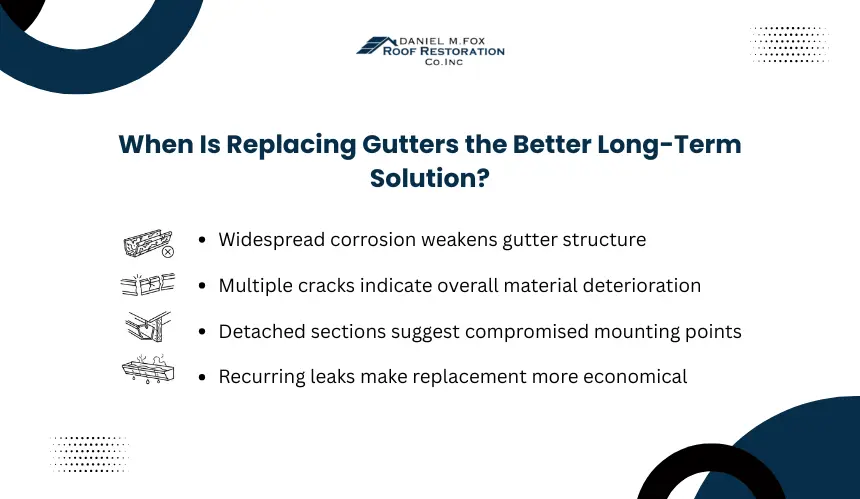
When Is Replacing Gutters the Better Long-Term Solution?
Repairs are most effective when damage is isolated, and the overall system remains structurally sound. Once deterioration becomes widespread or recurring, replacement usually delivers better performance, lower maintenance costs, and more reliable protection against water damage.
Damage That Usually Means Replacement Is Necessary
Some conditions indicate that the gutter system has reached the end of its practical service life.
- Extensive rust or corrosion weakens metal gutters beyond surface appearance. As corrosion spreads, the material loses strength, making additional patch repairs increasingly unreliable.
- Multiple cracks, holes, or split sections throughout the system suggest age-related deterioration rather than isolated damage. Repairing one section often leaves other weakened areas vulnerable to failure.
- Large sections pulling away from the fascia typically indicate compromised mounting points or underlying wood damage. Reattaching heavily stressed gutters without addressing the system as a whole rarely provides a lasting solution.
- Persistent leaks across multiple joints are another indicator. When sealants repeatedly fail in different locations, the issue often stems from widespread material movement or structural fatigue rather than individual seams.
A gutter system showing several of these conditions at the same time is generally a stronger candidate for replacement than continued repair.
Repair vs. Replacement: How to Make the Right Decision
The decision should be based on the condition of the entire gutter system rather than the most visible problem.
Age is one of the first considerations. Gutters approaching or exceeding their expected lifespan are more likely to develop additional failures, even after successful repairs. Investing in repeated service for an aging system often produces diminishing returns.
The overall repair history also matters. If leaks, sagging, or fastener failures continue to appear in different locations each year, maintenance costs can eventually exceed the value of installing a new system.
Structural integrity should carry more weight than cosmetic appearance. Gutters may still look acceptable from the ground, while hidden corrosion, weakened seams, or deteriorated mounting points reduce their ability to manage heavy rainfall effectively.
Finally, replacement can be the more economical choice when homeowners are planning a roof replacement, exterior renovation, or fascia repair. Completing these projects together minimizes labor duplication and ensures the new gutters integrate properly with the home’s updated drainage system.
What Factors Affect How Often Gutters Need Repairs or Replacement?
Two homes with the same gutter material can have very different maintenance needs. The frequency of repairs depends on how the system is exposed to weather, how the home is designed, and how consistently routine maintenance is performed.
Environmental Conditions That Accelerate Gutter Wear
Weather places continuous stress on gutter systems, but the type and intensity of that stress vary throughout the year.
In Greater Boston, gutters must withstand a demanding climate that includes heavy spring downpours, humid summers, leaf-filled autumns, and long winters with frequent snowfall and ice accumulation. This constant shift between wet and freezing conditions places repeated stress on gutter materials, fasteners, and joints, making regular gutter repair and replacement in Newton, MA, more common than in regions with milder weather.
Heavy rainfall increases water volume and flow velocity, placing greater pressure on joints, downspouts, and mounting hardware. Gutters that regularly carry more water than they were designed to handle experience faster wear.
Winter weather creates an additional challenge. Snow accumulation followed by repeated freeze-thaw cycles allows trapped water to expand inside seams and small cracks, gradually widening openings, loosening brackets, and accelerating structural fatigue. Ice dams can further increase the load on gutters, especially along roof edges where melting snow repeatedly refreezes.
Strong winds also contribute to premature deterioration by loosening gutter sections and depositing branches, leaves, and other debris into the system. Over time, prolonged ultraviolet exposure gradually degrades protective finishes and makes certain gutter materials more susceptible to cracking or surface deterioration.
Pro Tip: Homes with smooth metal roofs should be evaluated for controlled snow retention, particularly in Greater Boston. Large sheets of sliding snow and ice can pull flashing loose or rip gutters from the eaves. IBHS notes that properly designed snow guards can control sudden snow release, although placement must account for ice-dam risk. |
Home-Specific Factors That Influence Gutter Lifespan
The design and surroundings of a home play a significant role in determining how often gutters require attention.
Large roof surfaces collect greater volumes of rainwater, increasing demand on the gutter system during storms. Complex rooflines with multiple valleys also concentrate runoff into specific sections, creating localized wear if the system is not properly sized.
Nearby vegetation affects maintenance frequency as well. Homes surrounded by mature deciduous trees generally require more frequent cleaning because leaves, twigs, and seed pods restrict water flow and retain moisture inside the gutters.
Installation quality remains one of the most influential factors. Correct pitch, secure fastening, properly positioned downspouts, and appropriately sized gutters all contribute to efficient drainage and reduce unnecessary strain on the system.
How Regular Maintenance Extends Gutter Life
Preventive maintenance reduces the likelihood of small defects becoming structural failures.
Routine cleaning removes debris before blockages cause water to overflow or remain trapped inside the gutters. Keeping downspouts clear ensures runoff is discharged efficiently away from the home.
Seasonal inspections allow loose fasteners, minor leaks, and small areas of corrosion to be corrected before they spread. Checking joints, hangers, end caps, and downspout connections after major storms also helps identify storm-related damage while repairs remain straightforward.
A proactive maintenance schedule typically extends gutter service life, reduces emergency repairs, and delays the need for a complete replacement.
How Can You Maximize the Lifespan of Your Gutters?
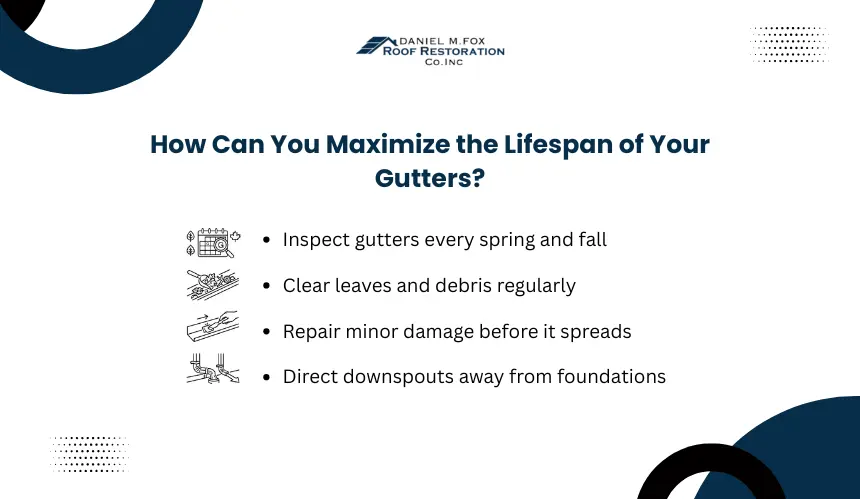
Extending the life of a gutter system is less about frequent repairs and more about preventing unnecessary wear. Routine inspections, timely maintenance, and addressing minor defects early help preserve structural integrity while reducing the likelihood of premature replacement.
Recommended Inspection and Maintenance Schedule
A consistent inspection schedule allows developing issues to be identified before they affect the home’s drainage system.
Most homes benefit from at least two comprehensive gutter inspections each year, typically in the spring and late fall. These inspections should verify that gutters maintain the proper slope, fasteners remain secure, joints are watertight, and downspouts discharge water effectively away from the foundation.
Additional inspections are recommended after severe thunderstorms, high winds, or heavy snowfall. Extreme weather can loosen brackets, shift gutter sections, or introduce debris that restricts water flow even when no obvious damage is visible from the ground.
Professional assessments also provide value for aging gutter systems. An experienced contractor can identify early corrosion, hidden seam failures, or subtle alignment issues that may not be apparent during a routine visual inspection.
Preventive Measures That Reduce Future Damage
Preventive maintenance consistently costs less than repairing water damage caused by neglected gutters.
Keeping gutters and downspouts free of leaves, twigs, roofing granules, and other debris allows rainwater to move efficiently through the drainage system. Promptly repairing small leaks, replacing damaged hangers, and resealing separated joints prevents localized problems from expanding into larger structural failures.
Where surrounding trees produce significant seasonal debris, gutter guards may help reduce blockages while lowering the frequency of cleaning. However, they should be viewed as a maintenance aid rather than a replacement for periodic inspections.
Finally, maintaining proper drainage around the property is equally important. Downspouts should discharge water far enough from the foundation to prevent pooling, soil erosion, and moisture intrusion. When gutters, downspouts, and surface drainage work together as a complete system, homeowners can significantly extend gutter lifespan while reducing the need for frequent repairs or premature replacement.
Frequently Asked Questions
Does homeowners insurance cover gutter repair or replacement?
Homeowners insurance may cover gutter damage caused by a sudden covered event, such as hail, wind, or falling debris. It generally does not pay for corrosion, aging, poor maintenance, or gradual deterioration. Photograph the damage, review your deductible, and contact the insurer before authorizing permanent repairs.
Should I replace my gutters at the same time as my roof?
Replace the roof first, then install new gutters after the drip edge, flashing, and roofline work are complete. Existing gutters in good condition may be temporarily removed and reinstalled. Coordinating both projects also exposes the fascia for inspection before a new drainage system is attached.
Are seamless gutters worth choosing when replacing an older system?
Seamless gutters are often worth considering because each run is formed to the home’s dimensions, reducing the number of splices and potential leak points. They still have joints at corners, outlets, and end caps, so metal thickness, hanger spacing, installation quality, and warranty coverage remain critical.
How do I know whether my home needs 5-inch or 6-inch gutters?
Gutter size should be calculated from the roof drainage area, roof pitch, local rainfall intensity, and the number and placement of downspouts. Six-inch gutters are not automatically better for every home, but they can manage concentrated runoff from steep roofs, large surfaces, or multiple roof valleys more effectively.
Can hidden fascia damage increase the gutter replacement cost?
Fascia damage can increase the final project cost because new gutters require a sound mounting surface. Once the old system is removed, contractors may uncover rot, split wood, failed flashing, or insect damage. Those materials should be repaired before new hangers are installed, not concealed behind replacement gutters.
Do I need a permit to replace gutters in Newton, MA?
Permit requirements depend on the project scope. Newton records show building permits issued for gutter replacement work, particularly when combined with roofing, fascia, siding, or structural repairs. The contractor should confirm current requirements with Newton Inspectional Services and identify permit responsibility in the written contract before work begins.