
- danielfox
The Role of Reflectivity and Insulation in Historic Roof Retrofits
A Quick Answer: Reflectivity and insulation play a central role in historic roof retrofits because they improve energy performance without compromising a building’s architectural character. These upgrades help reduce heat absorption, stabilize indoor temperatures, and limit long-term material stress, which supports both preservation and efficiency. |
Historic roofs respond differently to heat, sunlight, and moisture compared to modern assemblies. Their materials, construction methods, and ventilation patterns create unique challenges that require careful planning.
Reflective surfaces help manage solar gain, while compatible insulation systems limit conductive loss and support a balanced building envelope.
This blog will cover how reflectivity and insulation work, why they matter in older structures, and how they guide effective historic roof retrofits.
Understanding Why Historic Roofs Need Energy-Performance Upgrades
Older roofs were never designed to manage today’s energy demands. Without modern barriers to heat, air, and moisture, historic roof systems often perform poorly in both summer and winter.
The materials used, such as clay tiles, slate, wood shakes, or metal, have aged, settled, and often lack the layers needed to block heat loss or gain.
Retrofitting these roofs for performance is no longer optional for many building owners seeking to balance comfort, preservation, and energy savings.
What Are The Common Thermal Weaknesses In Historic Roof Structures?
Many historic roofs suffer from significant thermal leakage due to the way they were originally constructed. These buildings often include:
- No Continuous Insulation Layer, making it easy for heat to escape in winter and enter in summer.
- Wooden Roof Decks and Rafters, which conduct heat easily and offer little resistance.
- Open Eaves And Attics, which create airflow patterns that destabilize indoor temperatures.
- Moisture-Prone Cavities, where condensation can build up, accelerating material deterioration.
These weaknesses are not just energy concerns. They affect occupant comfort, indoor air quality, and the long-term structural health of the building.
How Do Retrofit Methods Improve Performance Without Damaging Historic Value?
Upgrades must be non-invasive, reversible where possible, and visually compatible with the original architecture. Some of the most effective retrofit strategies include:
- Adding Above-Deck Insulation that doesn’t alter the interior or visual lines of the roof
- Applying Reflective Roof Coatings that mimic the original finish but reduce solar absorption
- Installing Vapor-Permeable Insulation that prevents moisture traps while increasing thermal resistance
- Using Venting Strategies that respect original airflow while improving thermal balance
These solutions aim to close the energy gap without disrupting heritage aesthetics, making them ideal for historic preservation districts and regulated properties.
The Science Of Roof Reflectivity In Historic Retrofits
Reflectivity is a critical factor in managing the energy performance of historic roofs. By reflecting a portion of incoming solar radiation, reflective materials reduce heat buildup, lower cooling loads, and prevent accelerated material aging.
In historic structures, where preservation of visual and structural integrity is paramount, using the right reflective solutions ensures energy efficiency without altering the roof’s appearance.
Understanding how reflectivity works and how it interacts with older building materials is essential for planning successful retrofits.
How Reflective Surfaces Reduce Thermal Gain Without Altering Historic Aesthetics
Modern reflective coatings and materials can minimize solar heat gain while blending seamlessly with existing roof finishes. Low-gloss reflective paints, specialized pigments, and UV-stable coatings maintain the roof’s historic look.
These surfaces work by bouncing infrared radiation away from the roof deck, lowering the temperature of the roofing assembly and indirectly reducing the stress on underlying insulation and structural components.
Reflective Coatings Versus Reflective Roofing Materials In Historic Contexts
Reflective solutions fall into two main categories: surface coatings and integrated reflective materials. Surface coatings are thin applications over existing roofs, ideal for projects where visual authenticity is critical.
Reflective roofing materials, such as metal panels or membranes with high solar reflectance, provide integrated thermal performance but may require careful color and texture matching to meet preservation standards.
- Surface coatings are most effective in hot and sunny climates, where they reduce solar heat gain on existing roofs without major structural changes. They help manage summer overheating while being relatively easy to apply.
- Integrated reflective roofing materials tend to perform better in regions with high year-round solar exposure or extreme temperatures, where a more durable, long-term reflective surface is required to withstand environmental stress and maximize thermal performance.
Climate-Specific Benefits Of Reflectivity For Older Structures
The advantages of reflectivity vary by region. In hot and sunny climates, reflective surfaces significantly reduce cooling loads and indoor temperatures. In mixed climates, they can prevent summer overheating without affecting winter heat retention when combined with proper insulation.
In humid regions, reflective coatings help manage solar heat that could otherwise exacerbate moisture-related damage. For areas like Newton, MA, where winters are cold and summers are warm with occasional high humidity, reflective surfaces paired with insulation can help moderate indoor temperatures year-round while protecting roof materials from seasonal stress.
Structural And Energy Role of Insulation In Historic Roof Retrofits
Insulation is a critical component in historic roof retrofits because it directly impacts energy efficiency, indoor comfort, and long-term structural durability. Adding insulation helps stabilize indoor temperatures, reduces energy consumption, and protects underlying roof materials from accelerated wear caused by thermal stress.
What Types Of Insulation Are Compatible With Historic Roofs?
Choosing the right insulation for a historic structure requires balancing thermal performance, moisture management, and preservation of original materials. Some commonly used options include:
- Mineral Wool Boards: Provide excellent thermal resistance, are fire-resistant, and allow vapor to pass through, helping maintain a balanced roof environment.
- Rigid Polyisocyanurate (Polyiso) Panels: Offer high R-values with minimal thickness, making them ideal for above-deck applications where space is limited.
- Vapor-Permeable Insulation: Prevents trapped moisture that could damage wooden decks or other historic roof finishes.
Each option should be evaluated for its compatibility with existing materials, installation feasibility, and effect on the building’s moisture balance.
Why Airflow, Ventilation, And Vapor Control Matter In Historic Envelopes
Insulation alone is not enough. Historic roof assemblies are sensitive to trapped moisture, which can lead to rot, mold, and degradation of structural elements. Proper ventilation and vapor management ensure that:
- Air moves freely within attics or roof cavities.
- Condensation is minimized during seasonal temperature swings.
- Insulation maintains its thermal effectiveness without creating moisture-related risks.
Strategies like ridge vents, soffit vents, and vapor-permeable layers can balance airflow while preserving the roof’s structural integrity.
Insulation Placement Strategies That Preserve Historic Interiors
Retrofit installation must respect the building’s interior and visual aesthetics. Common strategies include:
- Above-Deck Insulation: Installed over existing roof decking to avoid disturbing interior spaces.
- Attic Floor Insulation: Adds thermal resistance from below the roof structure while maintaining historic roofing materials.
- Interior-Side Retrofits: Applied inside the attic or between rafters when minimal exterior modification is allowed.
Selecting the proper placement ensures the insulation delivers thermal performance without compromising historic character or ventilation pathways.
Integrating Reflectivity And Insulation: How Dual Upgrades Enhance Performance
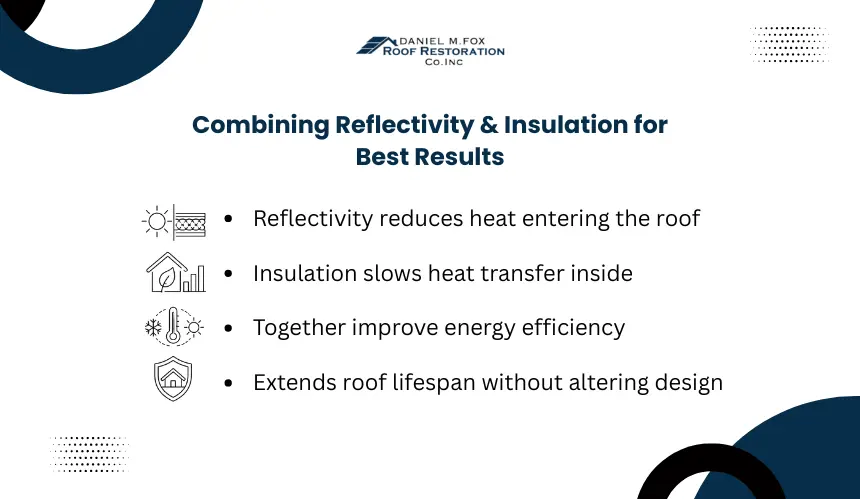
When used together, reflectivity and insulation create a complementary system that enhances the overall performance of historic roofs. Reflective surfaces reduce the amount of solar heat entering the roof, while insulation slows the transfer of any remaining heat into the building.
This combination moderates indoor temperatures more effectively than either measure alone, reducing seasonal energy fluctuations and easing the load on heating and cooling systems.
By managing both heat gain and heat loss simultaneously, the roof assembly maintains a more stable internal environment. Reflectivity limits peak temperatures on the roof surface, preventing excessive stress on insulation, while insulation ensures that any temperature differences do not lead to discomfort or material degradation inside the building.
Together, they improve energy efficiency, protect structural elements, and extend the lifespan of the roof without altering its historic character.
Preservation Rules & Compliance Considerations For Historic Roof Retrofits
Retrofitting a historic roof requires careful attention to preservation guidelines and regulatory requirements. Many historic districts and heritage properties enforce strict rules to maintain architectural authenticity, meaning not all energy upgrades are automatically permissible.
Aesthetic Restrictions And Meeting Guidelines Using Modern Materials
Historic preservation often limits changes to visible roof surfaces, color, and texture. Retrofit solutions must respect these aesthetic constraints.
For example, coatings or insulation systems should not alter the roof’s visual appearance, while vents or insulation modifications should remain hidden from view.
Compliance with these guidelines helps maintain both the building’s heritage value and neighborhood character.
Energy-Efficiency Incentives For Historic Buildings
Property owners may be eligible for energy-efficiency incentives or grants designed for historic buildings. Programs often cover partial costs for insulation, reflective coatings, or combined upgrades, provided they meet preservation requirements. Understanding these incentives can offset retrofit costs while encouraging energy-saving improvements.
In Massachusetts, property owners may benefit from general energy‑efficiency programs run through Mass Save, which offer rebates, discounts, or financing for insulation, air sealing, and other weatherization upgrades.
The Massachusetts Historic Rehabilitation Tax Credit offers up to 20% state tax credit on certified rehabilitation expenditures for qualifying historic, income‑producing properties that meet preservation standards.
Navigating Approvals: Who To Contact And Required Documentation
Retrofit projects usually require approval from preservation authorities or local building departments. Documentation may include detailed plans showing how upgrades will preserve visual and structural integrity, material specifications, and installation methods.
Early consultation with a historic roof preservation specialist ensures that the project meets legal and aesthetic requirements, reducing the risk of delays or disapproval.
Ready to enhance the energy performance of your historic roof without compromising its character? Daniel Fox Roofing Inc. specializes in expert retrofits that combine insulation, reflectivity, and preservation-friendly solutions. Contact us today to schedule a consultation and protect your historic home while improving comfort and efficiency.
Frequently Asked Questions
Can adding insulation or reflective materials affect the structural integrity of a historic roof?
When installed correctly, insulation and reflective coatings are designed to be lightweight and compatible with historic roofing systems. Professional evaluation ensures that the roof structure can support the additional layers without adding undue stress or compromising joists, rafters, or decking. Using materials suited to the existing roof composition also prevents warping, sagging, or moisture-related deterioration.
Are there specific roofing materials that should be avoided in historic retrofits?
Yes. Materials that are impermeable to moisture, excessively rigid, or incompatible with the thermal expansion properties of historic substrates can damage the roof over time. For example, standard asphalt or PVC membranes may trap condensation on older wood decks.
Using vapor-permeable insulation, breathable coatings, or flexible systems designed for older buildings helps maintain both thermal performance and material longevity.
How often should historic roofs be inspected after retrofits?
Historic roofs should be inspected at least once or twice a year, especially after seasonal weather changes. Inspections focus on checking for signs of moisture intrusion, deterioration of original materials, gaps in insulation, and reflective surface wear. Regular assessments help catch minor issues early, ensuring long-term preservation and continued energy efficiency.
How do seasonal temperature changes affect retrofitted historic roofs?
Historic roofs experience stress from fluctuating temperatures, which can expand or contract roofing materials. Retrofitted roofs with combined insulation and reflective upgrades moderate these temperature swings, reducing the risk of cracking, warping, or moisture accumulation.
Properly designed retrofits help maintain both energy performance and structural integrity throughout hot summers and cold winters.