
- danielfox
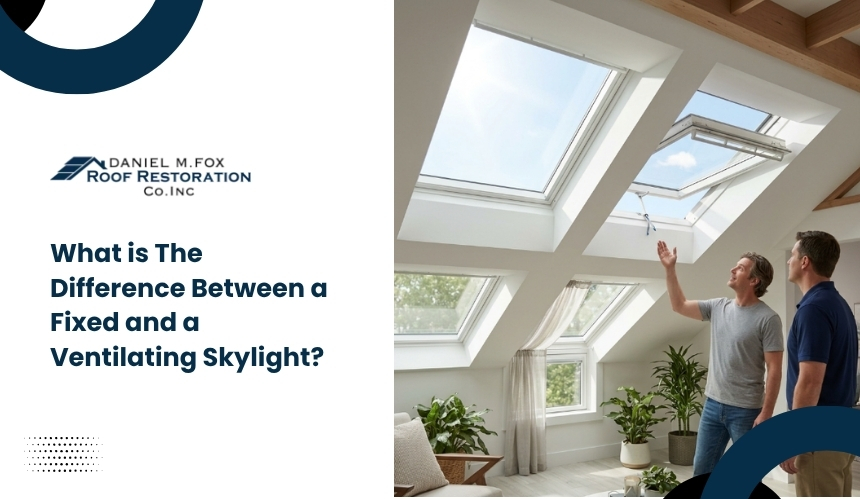
What is The Difference Between a Fixed and a Ventilating Skylight?
Key Takeaways:
|
Choosing between a fixed and a ventilating skylight affects more than natural light. The wrong option can lead to poor airflow, excess indoor heat, condensation buildup, or unnecessary installation costs depending on the room and roof design.
While both skylight types improve daylight penetration, they serve different functional purposes inside a home. This guide breaks down the real differences between fixed and ventilating skylights and where each option works best.
How Fixed and Ventilating Skylights Function Differently
Both skylight types are designed to increase natural light inside a home, but their internal construction and operational purpose are different.
A fixed skylight is built as a sealed daylighting unit, while a ventilating skylight adds airflow control through an operable frame system. That functional difference affects ventilation performance, energy behavior, maintenance requirements, and room suitability.
What Defines a Fixed Skylight
A fixed skylight is a non-operable roof window designed strictly for daylight transmission. The glass unit remains permanently sealed within the frame, which reduces air leakage potential and minimizes mechanical complexity. Because there are no hinges, motors, or opening mechanisms, fixed skylights are commonly selected for areas where additional ventilation is unnecessary.
Their sealed design typically provides stronger thermal consistency and lower maintenance exposure over time. Modern units often include insulated glazing, Low-E coatings, and argon gas fills that help reduce solar heat gain while maintaining indoor brightness.
How Ventilating Skylights Work
Ventilating skylights are designed to provide both daylight and controlled airflow. The sash can open either manually or through electric and solar-powered systems, allowing warm indoor air to escape through the roofline. This creates a natural ventilation effect that improves indoor air circulation in enclosed or moisture-prone spaces.
Because heat naturally rises, opening a roof-level skylight can release trapped warm air more effectively than standard vertical windows. This is especially useful in upper-floor rooms where heat accumulation becomes more noticeable during warmer seasons.
Ventilating models are frequently used in bathrooms, kitchens, lofts, and converted attic spaces where airflow limitations can affect comfort and moisture control.
Where Each Skylight Type Performs Best in a Home
Skylight performance depends heavily on room conditions, airflow limitations, ceiling height, and roof placement. A skylight that works efficiently in a dry, open living space may create moisture or heat management issues in a confined room with limited ventilation.
Matching the skylight type to the functional behavior of the room usually produces better long-term comfort and energy outcomes.
Rooms Better Suited for Fixed Skylights
Fixed skylights perform best in areas where the primary objective is increasing daylight rather than improving airflow. Since the unit remains permanently sealed, it is often preferred in rooms that already have adequate ventilation through windows, HVAC circulation, or open floor layouts.
Large living rooms, stairwells, foyers, and vaulted-ceiling spaces commonly benefit from fixed skylights because they allow consistent overhead lighting without introducing additional operational components. In these environments, daylight distribution becomes the priority rather than moisture release or temperature balancing.
Fixed units are also practical in hard-to-reach roof locations where regular operation would be inconvenient. Because they do not require manual access, electrical wiring, or solar-powered opening systems, installation complexity is often lower in elevated ceiling applications.
Their simplified structure can also make them more suitable for homeowners prioritizing:
- Reduced maintenance exposure
- Stronger long-term air sealing
- Lower installation costs
- Minimal operational oversight
Spaces Where Ventilating Skylights Add More Value
Ventilating skylights are more effective in rooms where heat, humidity, or stagnant air regularly accumulate. These conditions are common in enclosed spaces with limited cross-ventilation or areas exposed to frequent moisture generation.
Bathrooms are one of the most common applications because steam buildup can increase condensation around ceilings, mirrors, and surrounding finishes. A roof-level vent allows humid air to escape more directly than standard exhaust pathways alone.
Kitchens also benefit from added ventilation due to cooking heat, airborne grease particles, and moisture generated during food preparation. In upper-story lofts or converted attic rooms, ventilating skylights can reduce trapped heat that forms near sloped ceilings during warmer weather.
In these environments, airflow functionality becomes part of the room’s overall climate management rather than simply an added convenience.
How Roof Position and Climate Affect the Skylight Choice
Roof orientation and climate conditions affect skylight performance throughout the year. In Newton, MA, cold winters increase the importance of insulation and weather sealing, while warmer summer months can cause heat buildup in upper-floor rooms.
Fixed skylights are often preferred for stronger thermal sealing during Massachusetts winters. Ventilating skylights can provide added comfort during summer by releasing trapped heat from attics, lofts, and vaulted ceilings.
Snow, rain, and freeze-thaw cycles in Newton, MA also make proper flashing and waterproof installation especially important for long-term performance. During skylight installation services in Newton, MA, roof slope, drainage behavior, and seasonal weather exposure are often evaluated carefully to help prevent long-term moisture and insulation problems.
Key Differences Between Fixed and Ventilating Skylights
Although both skylight types can improve natural lighting performance, their long-term ownership demands differ significantly.
Structural design, operational components, and installation requirements all influence how each system performs over time in terms of efficiency, upkeep, and overall investment value.
Energy Efficiency and Thermal Performance
Fixed skylights are generally more thermally stable because the frame remains permanently sealed. With no operable sash or opening hardware, there are fewer areas where air infiltration can occur as seals age. This makes fixed units more consistent in maintaining interior temperature control during colder seasons.
Ventilating skylights introduce additional weather seals and movable frame sections, which slightly increases dependency on long-term seal integrity. However, modern operable skylights can still perform efficiently when equipped with insulated glazing, Low-E glass coatings, and properly engineered compression seals.
Actual energy performance is often influenced more by skylight specifications than skylight category alone, including:
- Double or triple-pane glazing
- Solar heat gain control
- UV filtering technology
- Insulated flashing systems
- Proper shaft insulation around the ceiling opening
In many homes, installation quality has a greater thermal impact than whether the skylight opens.
Maintenance Requirements and System Complexity
Maintenance differences largely come down to mechanical complexity. Fixed skylights operate as passive roof windows with no moving components, reducing wear-related maintenance over time. Their simplified construction minimizes the number of parts exposed to weather cycling and repeated operation.
Ventilating skylights contain operational hardware that may require periodic inspection or servicing, especially in electronically controlled systems. Maintenance considerations can include:
- Motor performance
- Sensor calibration
- Hinge alignment
- Seal condition
- Drainage channel cleaning
This does not necessarily mean operable skylights fail more often, but they involve more functional components that require long-term reliability management.
Debris accumulation and exterior exposure can also affect operable mechanisms differently depending on roof pitch, surrounding tree coverage, and regional weather conditions.
Cost Differences and Long-Term Value Considerations
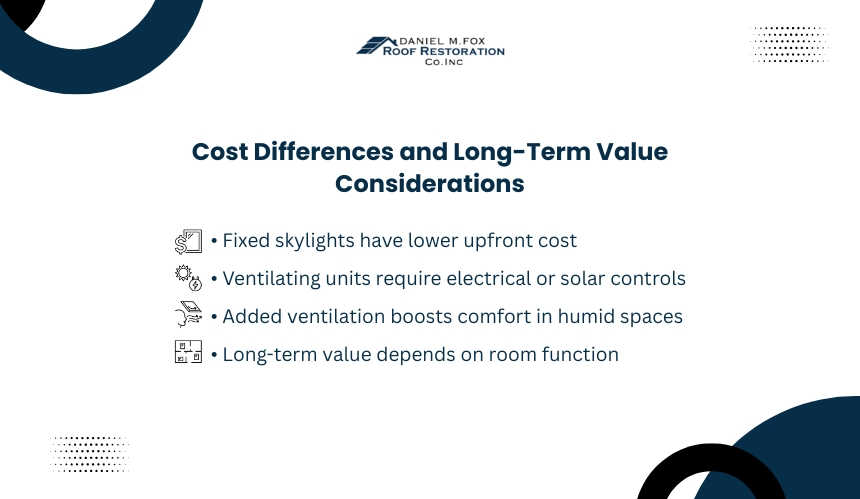
Fixed skylights are typically less expensive because the system design is simpler and installation requires fewer operational components. Projects involving fixed units often avoid electrical wiring, automation setup, and additional control hardware.
Ventilating skylights usually involve higher upfront investment due to:
- Operable frame systems
- Electrical or solar-powered controls
- Integrated rain sensors
- Smart-home compatibility
- More advanced waterproofing assemblies
However, long-term value depends on how the room functions. In spaces prone to trapped heat or excess humidity, the added ventilation capability may contribute more to indoor comfort and environmental control than a fixed skylight could provide alone.
The better financial choice is usually determined by functional performance expectations rather than installation price alone.
Choosing the right skylight involves more than appearance alone. Proper ventilation, weather protection, and roof integration all play a major role in long-term performance. Daniel Fox Roofing helps homeowners in Newton, MA, evaluate the best skylight solution based on roof structure, indoor comfort needs, and New England climate conditions.
Frequently Asked Questions
Can a fixed skylight be converted into a ventilating skylight?
A fixed skylight usually cannot be converted by simply adding hardware. Most fixed units are built with a sealed frame that is not designed to support hinges, motors, weather seals, or drainage channels. In most cases, upgrading to ventilation requires replacing the full skylight unit with an operable model.
Are ventilating skylights safe to use during light rain?
Ventilating skylights should be closed before rain unless the unit has an automatic rain sensor. Even light rain can enter through an open sash and affect drywall, insulation, or interior trim. Sensor-equipped models can close automatically when moisture is detected, which reduces risk in hard-to-reach installations.
Do skylights increase the risk of roof leaks?
Skylights do not automatically cause leaks when flashing, underlayment, slope compatibility, and curb details are installed correctly. Leak problems usually come from poor installation, aging seals, damaged roofing materials, or improper drainage around the unit. Roof integration matters more than the skylight type alone.
Is a solar-powered ventilating skylight better than an electric one?
A solar-powered ventilating skylight can be practical when wiring is difficult or expensive. Electric models may be better when homeowners want consistent power integration with switches or smart controls. The better option depends on roof exposure, control preferences, budget, and whether the skylight location receives enough sunlight.
How long do fixed and ventilating skylights usually last?
High-quality skylights can often last 15 to 25 years, depending on glass quality, frame material, flashing condition, roof exposure, and maintenance. Fixed units may have fewer wear points, while ventilating models need periodic checks for seals, hinges, sensors, and motors to maintain reliable operation.