
- danielfox
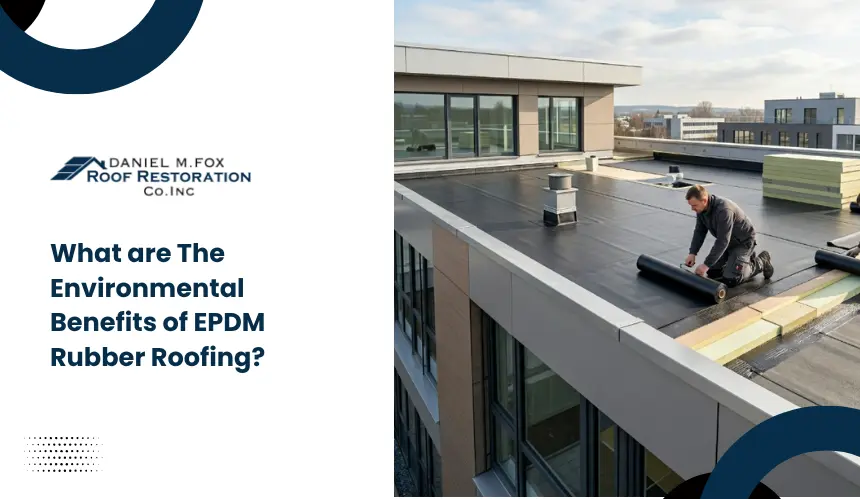
What are The Environmental Benefits of EPDM Rubber Roofing?
Key Takeaways:
|
EPDM rubber roofing is often evaluated for durability and cost, but its environmental advantages are equally significant. Building owners and facility managers increasingly look for roofing systems that reduce waste, support energy efficiency, and align with long-term sustainability goals without sacrificing performance.
EPDM addresses several of these concerns through its extended service life, recyclable materials, and low maintenance requirements. This article examines the key environmental benefits of EPDM roofing and how they contribute to a more sustainable building envelope.
EPDM Roofing Reduces Waste Through Long Service Life
A roof’s environmental impact is influenced not only by the materials used but also by how often those materials must be replaced. EPDM roofing reduces lifecycle waste by remaining functional for decades, limiting the need for frequent tear-offs, replacement materials, and disposal activities.
According to the EPDM Roofing Association’s 2025 service-life research summary, properly installed EPDM membranes often perform well beyond 30, 40, and even 50 years, with documented studies supporting long-term service life across field-aged roof samples. This reinforces why EPDM can reduce replacement cycles and roofing waste over time. |
How Does a Long Lifespan Reduce Roofing Waste?
EPDM membranes commonly remain in service for 30 years or more when properly installed and maintained. Because replacement cycles occur less frequently, fewer roofing materials enter the waste stream over the life of a building. This extended service interval reduces demand for manufacturing, transportation, and disposal associated with multiple roof replacements.
For commercial properties with large roof footprints, even a single avoided replacement can prevent substantial volumes of roofing debris from reaching landfills.
Resistance to UV, Weather, and Thermal Stress
Environmental durability is a key factor behind EPDM’s longevity. The synthetic rubber membrane is designed to withstand prolonged ultraviolet exposure, ozone, rainfall, snow, and wide temperature fluctuations without significant degradation.
Unlike roofing systems that may become brittle, crack, or deteriorate under repeated weather cycles, EPDM maintains flexibility over time. This resistance lowers the likelihood of premature failure and helps preserve the roof’s functional lifespan under varying environmental conditions.
Lower Material Consumption Over Time
A roofing system that lasts longer requires fewer replacement membranes, adhesives, fasteners, insulation components, and associated construction resources throughout its service life. As a result, the cumulative consumption of raw materials decreases when compared with systems that require more frequent renewal.
From a sustainability perspective, reduced material demand translates into lower resource extraction, less manufacturing activity, and fewer transportation-related emissions. The environmental benefit extends beyond the roof itself and affects the entire lifecycle of the roofing system.
EPDM Roofing Supports Better Energy Efficiency
Energy consumption is a major component of a building’s environmental footprint. EPDM roofing can contribute to improved energy performance by supporting thermal control strategies that reduce heating and cooling demand throughout the year.
How Does EPDM Perform Across Different Climate Conditions?
EPDM helps create a stable building envelope by limiting unwanted heat transfer through the roof assembly. Its performance is influenced by factors such as membrane color, insulation design, roof configuration, and local climate conditions.
In colder regions, black EPDM membranes can absorb solar heat, which may help reduce heating demand during cooler months. This characteristic makes EPDM particularly relevant in areas that experience long heating seasons.
In Dedham, MA, winter temperatures regularly fall below freezing, making heat retention an important consideration for commercial and residential buildings. A properly designed EPDM roofing system can support cold-weather energy management by helping maintain more consistent indoor temperatures.
Compatibility With High-Performance Insulation Systems
The environmental value of a roofing system often depends on how effectively it works with insulation. EPDM membranes are commonly installed over rigid insulation assemblies that increase thermal resistance and reduce energy loss through the roof structure.
This compatibility allows building owners to design roofing systems that meet modern energy-efficiency requirements while minimizing heat movement between interior and exterior environments. Improved thermal performance can reduce reliance on mechanical heating and cooling equipment.
Reduced HVAC Load and Energy Consumption
When a roof assembly limits unwanted heat gain and heat loss, HVAC systems operate more efficiently. Lower runtime requirements can decrease overall energy consumption and reduce associated greenhouse gas emissions from building operations.
For communities such as Dedham, MA, where buildings experience both summer humidity and cold winter conditions, year-round thermal efficiency can have a measurable impact on annual energy demand. Reduced HVAC strain also supports longer equipment life and lower resource consumption over time.
The U.S. Department of Energy notes that conventional roofs can reach 150°F or more on sunny summer afternoons, while reflective roofs can stay more than 50°F cooler under the same conditions. This is why white or reflective EPDM can reduce heat transfer into the building during cooling season. |
EPDM Rubber Roofing Can Be Recycled and Repurposed
The environmental value of a roofing material extends beyond its service life. EPDM contributes to waste reduction by offering recycling and repurposing opportunities that keep materials in use longer and reduce dependence on virgin resources.
What Happens to EPDM Roofing at the End of Its Service Life?
Unlike roofing materials that are typically discarded after removal, EPDM membranes can often enter recycling streams when they reach the end of their usable lifespan. The recovered rubber material can be processed and prepared for use in other manufacturing applications rather than being sent directly to a landfill.
This approach supports circular material management by extending the usefulness of existing resources beyond a single roofing cycle.
How Is Recycled EPDM Used in New Products?
Recycled EPDM is commonly incorporated into a variety of rubber-based products. Depending on processing methods and material quality, reclaimed EPDM may be used in construction materials, walkway surfaces, athletic applications, protective mats, and other industrial products.
Repurposing existing material reduces demand for newly manufactured rubber while maximizing the value extracted from the original roofing membrane. This creates an additional environmental benefit that continues after the roof has been removed.
Reduced Dependence on New Raw Materials
Manufacturing new construction materials requires energy, raw material extraction, processing, and transportation. When recycled EPDM replaces a portion of virgin material inputs, the overall resource burden associated with production can decrease.
From a sustainability perspective, this reduction in raw material demand helps conserve natural resources and supports more responsible material consumption practices. The ability to recycle and repurpose EPDM strengthens its position as a roofing option aligned with long-term environmental stewardship and waste reduction goals.
EPDM Requires Fewer Chemicals and Less Maintenance
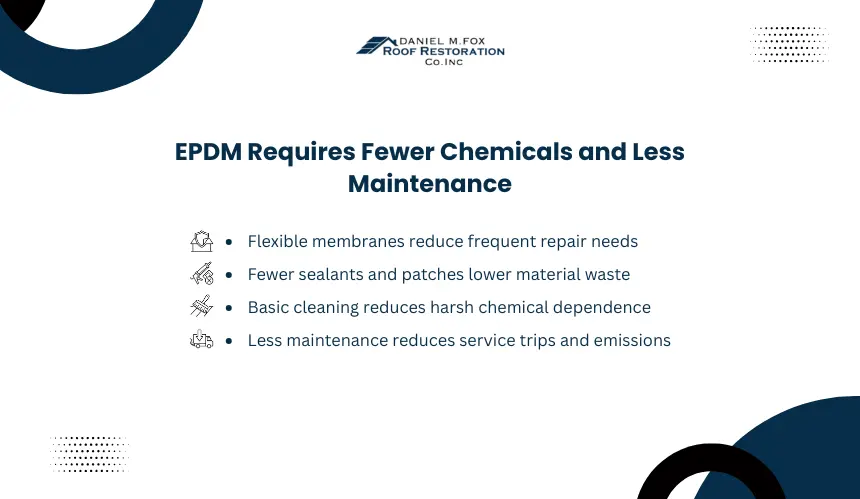
A roofing system’s environmental impact is influenced by the resources required to keep it operational. EPDM’s durability and weather resistance reduce the frequency of repairs, cleaning treatments, and maintenance-related material consumption throughout its service life.
Why Does EPDM Require Fewer Repair Materials?
EPDM membranes are engineered to remain flexible under changing weather conditions and prolonged exposure to the elements. This resilience reduces the occurrence of issues that often trigger frequent patching, recoating, or component replacement in other roofing systems.
As a result, fewer repair products, adhesives, sealants, and replacement materials are needed over the roof’s lifespan. Lower maintenance demand translates into reduced resource consumption and less construction-related waste.
Lower Need for Harsh Cleaning Products
Environmental exposure can cause dirt accumulation, biological growth, and surface contamination on many roofing systems. Because EPDM is designed for long-term outdoor performance, routine maintenance typically relies on basic inspection and cleaning practices rather than frequent chemical treatments.
Reducing dependence on specialized cleaning agents decreases the amount of chemical products introduced into maintenance operations while also lowering the environmental footprint associated with manufacturing, packaging, and transporting those products.
Reduced Maintenance Trips and Resource Use
Every maintenance visit involves labor, transportation, equipment use, and material consumption. A roofing system that requires fewer service interventions generally produces a lower operational environmental impact over time.
For property owners in Dedham, MA, where seasonal weather changes can place additional demands on building maintenance schedules, a low-maintenance roofing system can help reduce recurring service requirements while supporting long-term sustainability objectives.
Fewer maintenance activities also mean lower fuel consumption, reduced emissions from service vehicles, and less disruption to building operations.
EPDM Roofing Helps Manage Environmental Impact in Commercial Buildings
Commercial buildings often have large roof areas that can significantly influence resource consumption, energy use, and long-term sustainability performance. EPDM roofing supports environmental goals by providing a roofing platform that integrates well with modern building efficiency strategies.
Why Is EPDM Well-Suited for Large Commercial Roofs?
Many warehouses, retail centers, schools, and office buildings use low-slope or flat roof designs that require durable membrane systems. EPDM is commonly selected for these applications because it can cover extensive roof areas efficiently while maintaining long-term weather resistance.
Its ability to perform across large surfaces helps reduce the frequency of major roofing interventions, lowering the environmental burden associated with material replacement, construction waste, and ongoing building maintenance.
How Does EPDM Work With Solar Panels and Green Roofing Systems?
Sustainable building initiatives often include renewable energy generation and stormwater management strategies. EPDM membranes are compatible with rooftop solar installations and can serve as an effective waterproofing layer beneath green roof systems when properly designed.
This compatibility allows building owners to incorporate multiple sustainability measures without replacing the underlying roofing system. The result is a more integrated approach to reducing energy consumption and improving overall environmental performance.
Supporting Long-Term Sustainable Building Planning
Environmental responsibility increasingly depends on lifecycle planning rather than short-term material selection. EPDM contributes to this approach by providing durability, adaptability, and compatibility with future building upgrades.
Many commercial properties in Dedham are focused on balancing building performance, operating costs, and long-term sustainability requirements as facilities continue to modernize.
For commercial property owners evaluating rubber roofing in Dedham, MA, these characteristics of EPDM can support broader sustainability objectives, especially in facilities seeking to improve operational efficiency while reducing environmental impact over multiple decades.
Frequently Asked Questions
What makes EPDM different from other eco-friendly flat roofing materials?
EPDM stands out because its environmental value comes from lifecycle performance, not just one feature. It combines long service life, weather resistance, repairability, insulation compatibility, and recycling potential. Compared with some alternatives, its main sustainability advantage is reducing replacement frequency and material demand over decades.
Does black EPDM make a building less sustainable in warmer months?
Black EPDM can absorb more heat than lighter membranes, but sustainability depends on the full roof assembly. Proper insulation, ventilation planning, and building use often matter more than membrane color alone. In mixed climates, black EPDM may also support winter heat retention, creating a more balanced year-round performance profile.
Can EPDM be installed over an existing roof to reduce waste?
In some cases, EPDM can be installed over an existing roofing system if the structure, moisture condition, code requirements, and substrate are suitable. This approach can reduce tear-off waste, disposal costs, and landfill impact. A roof inspection is necessary before choosing recovery instead of full replacement.
Are EPDM roofing adhesives and sealants environmentally safe?
EPDM systems may use adhesives, primers, tapes, and sealants, so product selection affects environmental performance. Low-VOC adhesives and manufacturer-approved accessories can reduce chemical impact during installation. Proper application also matters because fewer failures mean fewer repairs, less material waste, and lower maintenance-related emissions over time.
How does EPDM support stormwater and rooftop drainage performance?
EPDM itself is a waterproofing membrane, but its environmental role depends on roof design. Proper slope, drains, scuppers, and edge details help move water efficiently and reduce ponding risk. Better drainage protects insulation, limits premature deterioration, and supports longer roof performance with fewer corrective repairs.
Is EPDM a good option for buildings planning solar panel installation later?
EPDM can be a strong choice for buildings that may add solar panels because it provides a durable waterproofing layer for low-slope roofs. Before installation, roof age, membrane condition, attachment method, and load capacity should be reviewed. Planning solar and roofing together helps avoid unnecessary future roof disturbance.