
- danielfox
The Cost of Non-Compliance: What Happens When You Alter a Protected Roof
A Quick Answer: Altering a protected roof without approval often results in immediate penalties, revoked permits, forced restoration, and long-term financial consequences. These outcomes occur because protected roofs fall under strict regulatory oversight, and any change made outside those rules is treated as a violation that compromises structural safety, preservation standards, or both. |
Protected roofs are governed by preservation boards, municipal codes, and architectural review authorities that rely on compliance to maintain historical integrity and structural performance.
When modifications bypass those requirements, homeowners face a chain reaction of issues that affect legal standing, insurance validity, and future property obligations.
This article explains how these consequences unfold, why they occur, and what homeowners should understand before considering any alteration that affects a regulated roof system.
Understanding What Makes a Roof Protected
Protected roofs fall under regulations that control how they can be repaired, modified, or upgraded. These rules are put in place to preserve architectural value, maintain structural standards, and prevent unsafe alterations.
Before exploring the consequences of unauthorized changes, it is important to understand what qualifies a roof for protected status.
What Types of Roofs Are Classified as Protected and Who Regulates Them
Roofs receive protected status when they are part of historic properties, landmark-listed structures, architecturally controlled developments, or neighborhoods with strict design covenants. Oversight is handled by preservation commissions, municipal building authorities, zoning offices, and homeowners associations.
In Massachusetts, many towns apply additional preservation rules to safeguard Colonial-era and Victorian-era architecture, which means roofing approvals often follow stricter review standards. Local conservation commissions in MA also monitor exterior modifications closely to ensure regional historical character remains intact.
These entities determine which materials, shapes, and structural elements are allowed and which require formal review before any modification.
Why Roofing Structures Receive Protected Status
Protection is granted to prevent the loss of architectural identity and to safeguard structural components that rely on specific materials or design features. Many older structures use construction methods that must be preserved to retain safety and authenticity.
Authorities establish these rules so that future work supports the original design intent and avoids harmful changes that reduce performance or historical value.
Which Alterations to Protected Roofs Usually Require Prior Approval
Most protected roofs cannot be altered without a formal review, even when the change seems minor. Additions such as skylights, solar hardware, dormers, vent penetrations, pitch adjustments, or material substitutions typically require documented approval.
These modifications can affect visual consistency, load distribution, or waterproofing performance, which is why regulatory bodies require homeowners to secure permission before proceeding.
Legal and Financial Penalties for Altering a Protected Roof
Unauthorized changes to a protected roof can trigger immediate consequences because these structures fall under strict preservation, zoning, and code requirements. Regulators view unapproved work as a violation that disrupts compliance, which is why the penalties affect both the present condition of the property and its long-term financial responsibilities.
What Legal Actions Can Authorities Take When a Protected Roof Is Altered Without Approval?
Government agencies and preservation boards can issue stop-work orders, citations, or mandatory correction notices when they discover unapproved roof work. These actions halt all ongoing construction until the homeowner resolves the violation.
Many jurisdictions also impose daily fines until the structure is brought back into compliance, which increases the financial impact of even minor unauthorized alterations.
How Building Code Violations Increase Total Project Costs
When unapproved modifications conflict with current building codes, homeowners may be required to undo the completed work and rebuild the affected section according to code. This often involves hiring engineers, undergoing new inspections, and paying additional application and review fees. These expenses accumulate quickly because code enforcement teams require proof that the repaired roof meets structural and safety standards.
What Civil or Third-Party Liability Homeowners Face After Non-Compliant Roof Work
Beyond regulatory action, unauthorized modifications can lead to complaints or claims from neighbors, HOAs, or architectural review groups.
These parties may pursue legal action if the alteration disrupts community guidelines, affects shared structures, or changes the uniform appearance required by association rules.
In many cases, homeowners end up paying legal fees, settlement costs, or restoration expenses to resolve these disputes.
Important: In Massachusetts, unauthorized roof modifications or roof replacements without proper permits can lead to serious legal and financial consequences. Non-compliance typically results in fines that can reach up to $1,000 per day for each violation. |
The Hidden Costs: How Non-Compliant Changes Impact Insurance Coverage
Insurance companies rely on accurate property information to assess risk, which is why unauthorized roof alterations often create coverage problems.
When a protected roof is changed without required approval, insurers may treat the modification as an undisclosed hazard that affects eligibility, claim validity, and long-term policy costs.
These consequences usually appear only when a homeowner files a claim, making them some of the most unexpected financial setbacks.
How Unauthorized Roof Alterations Can Lead to Denied Insurance Claims
Insurers may deny claims when a roof has been altered without proper documentation because the change introduces an unreported risk. Even if the damage results from weather, the carrier can argue that the unapproved modification contributed to the loss or weakened the roof system. As a result, homeowners may be responsible for the full repair bill without any coverage assistance.
Why Policy Premiums Increase After Non-Compliant Roofing Work
Unauthorized alterations often force insurers to reassess the policy because the risk profile of the structure has changed. Companies may require additional inspections, engineering evaluations, or updated certificates before reinstating full coverage.
These requirements influence the cost of future premiums because insurers charge more when they identify unverified changes that could lead to structural or weather-related failures.
Which Types of Roof Damage Lose Coverage After an Unapproved Modification
Damage caused by leaks, uplift, improper drainage, or fire exposure may not be covered if the insurer determines that the alteration affected roof performance. Carriers examine the connection between the unauthorized work and the resulting failure, then exclude losses tied to design inconsistencies or material incompatibility. This creates significant financial exposure for homeowners who rely on insurance to manage unexpected roof problems.
Structural and Safety Risks Caused by Improper Roof Alterations
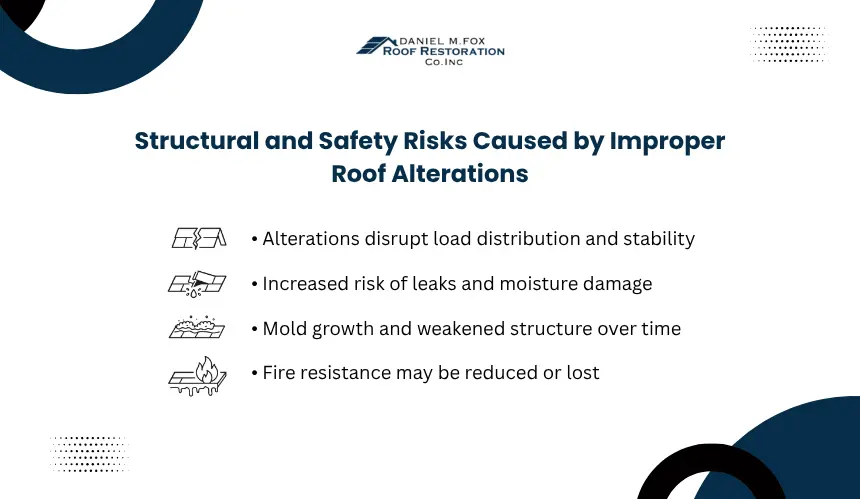
Unauthorized roof modifications often create hidden vulnerabilities that become noticeable only when weather, load, or age tests the structure. Protected roofs are designed to function as complete systems, so any unapproved change can disturb their performance.
1. Disrupted Load Distribution and Structural Stability
Alterations that shift weight, adjust roof geometry, or interfere with framing connections can weaken the load path that supports the roof.
Unauthorized additions like skylights, new penetrations, or heavier materials affect how the structure carries snow, wind, and seasonal stress.
These disruptions increase the risk of sagging, uplift, or partial failure because the assembly was never engineered to support the modified layout.
2. Increased Moisture Intrusion and Mold Development
Changes made without proper flashing, waterproofing, or drainage planning often allow moisture to enter the building envelope. Even small gaps around added features can direct water into insulation layers or attic spaces where it remains trapped.
Over time, this trapped moisture leads to mold growth, weakened sheathing, and compromised interior air quality, especially during high-humidity seasons.
3. Loss of Required Fire Resistance Ratings
Protected roofs often rely on specific materials and configurations to maintain code-approved fire resistance levels. When homeowners introduce unapproved components, change material layers, or add combustible features, the assembly no longer meets its rated performance.
This reduction in fire safety poses a risk to the property and the surrounding area because the roof may ignite or fail more quickly during a fire event.
How to Modify Protected Roofs Safely and Legally
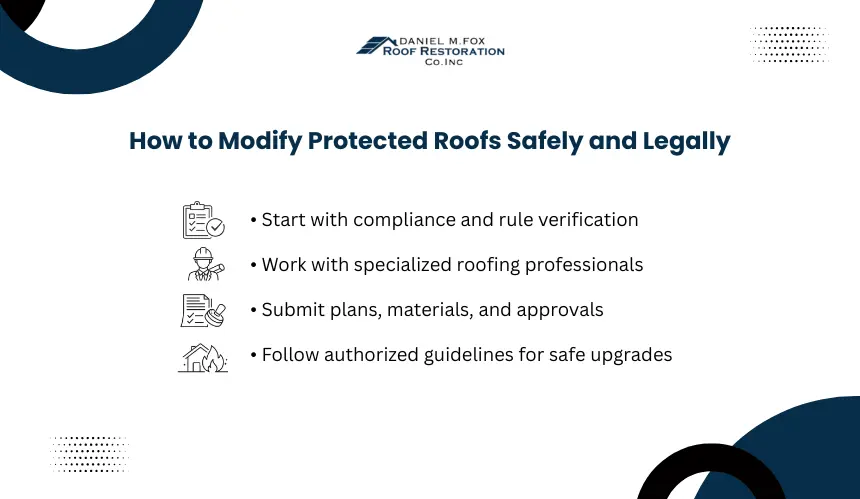
Homeowners who want to upgrade or modify a protected roof can still make meaningful improvements, but the process requires a structured approach. Compliance ensures that every change supports safety, preservation standards, and regulatory expectations.
Importance of Preliminary Compliance Review
A preliminary review gives homeowners a clear overview of which rules apply to their roof. This step involves identifying whether the property is under historic preservation, architectural review, zoning limits, or HOA governance.
By gathering these details early, homeowners can understand what is allowed, what needs formal approval, and which materials or designs must be avoided.
Hiring Preservation Architects or Specialized Roofing Professionals
Experienced architects and historic roofing contractors understand the standards applied to protected structures. They help homeowners select materials, designs, and installation methods that meet regulatory expectations while preserving structural performance.
Their technical expertise reduces the risk of mistakes and supports smoother approval from governing agencies.
Documents and Approvals Are Required Before Modifying a Protected Roof
Compliance usually requires homeowners to submit design plans, engineering assessments, material samples, and scope-of-work details to the relevant authorities. Review boards use this information to verify structural compatibility and visual accuracy before issuing permits.
Once the project is approved, homeowners receive formal authorization that outlines which modifications can proceed.
Alternatives to Altering Protected Roofs: What You Can Do Legally
Some homeowners want upgrades that improve comfort, efficiency, or durability without violating protected roof regulations. When direct alterations are restricted, there are still legal pathways that support better performance and modern convenience. Exploring these alternatives helps homeowners improve their property without risking compliance issues.
1. Non-Invasive Improvements
Many performance upgrades can be completed inside the home or along the roof perimeter without disturbing the protected assembly. Improvements such as upgraded insulation, improved attic ventilation, or enhanced gutter systems support energy efficiency and reduce water-related wear. These options maintain compliance because they do not modify the roof covering, shape, or visible exterior.
2. Approved Roofing Materials
Certain materials are accepted because they match the original appearance or structural characteristics of the protected roof. Homeowners may be able to use historically accurate shingles, approved metals, or coatings that replicate the original finish.
These compatible options preserve the intended aesthetic while ensuring the roof behaves as required by preservation standards.
3. Modern Technologies That Are Allowed
Some innovative systems are designed specifically for regulated or historic properties. Low-profile solar technologies, non-penetrating mounting solutions, and concealed underlayment upgrades allow homeowners to incorporate modern functionality without altering the roof’s visible features. These technologies offer improved performance while staying within the boundaries of approved modifications.
Protecting a regulated roof doesn’t have to feel overwhelming. With the right experts on your side, every decision becomes easier and safer. Daniel Fox Roofing Inc. can guide you through approvals, materials, and compliant upgrades so your project moves forward without stress.
Frequently Asked Questions
Can protected roof restrictions affect future renovation plans on other parts of the home?
Yes. When a roof is protected, connected features such as chimneys, exterior walls, and architectural trim may also fall under the same regulations. This can influence window replacements, siding updates, and exterior additions when those changes alter the visual profile tied to the roof.
Do protected roof rules apply to temporary structures placed on the roof?
In many jurisdictions, even temporary setups such as seasonal decorations or mounted equipment require review if they change the visible appearance or load distribution. Regulations often treat temporary installations as potential risks that must follow the same preservation standards.
How does owning a protected roof influence long-term property maintenance planning?
Owners must plan maintenance with more precision because routine tasks like replacing flashing, repainting trim, or refreshing coatings may require documentation or approved product lists. This encourages structured upkeep that protects both the roof’s integrity and its regulated status.
Can digital models or 3D scans help with planning work on a protected roof?
Yes. Many professionals now use digital roof models, laser scans, or 3D visualization tools to show how proposed changes might impact appearance or performance. These technologies help homeowners gain faster feedback from review boards and make compliance decisions with greater clarity.
Do restrictions on protected roofs influence property insurance eligibility for new buyers?
Some insurers evaluate protected roofs differently when underwriting new policies. Buyers may be required to share documentation proving that previous work followed regulations, especially in older homes. Providing this information upfront makes the transition to new coverage smoother.