
- danielfox
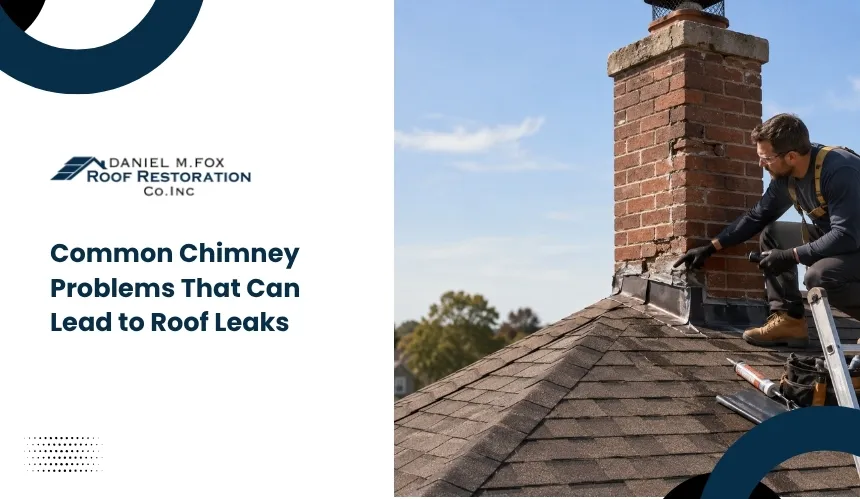
Common Chimney Problems That Can Lead to Roof Leaks
Key Takeaways:
|
A chimney can allow water into your home long before you notice dripping ceilings or damaged drywall. Problems such as failed flashing, cracked masonry, or a deteriorated chimney crown often let moisture reach the roof deck, where it spreads beyond the original entry point and becomes difficult to trace.
This guide explains the most common chimney problems that lead to roof leaks, how to recognize them, and which repairs address the root cause rather than the symptoms.
How Chimney-Related Roof Leaks Develop
The point where a chimney passes through the roof combines different materials that expand, contract, and shed water differently. Because this junction depends on multiple protective components working together, even a small failure can create a pathway for moisture to reach the roof structure.
Why the Roof-to-Chimney Junction is Vulnerable
A chimney interrupts the continuous surface of the roofing system, requiring flashing, underlayment, and masonry details to form a watertight seal. Unlike open roof slopes that direct rainwater downhill, the area around a chimney must redirect water around a vertical structure while withstanding constant exposure to rain, snow, UV radiation, and temperature fluctuations.
As roofing materials and masonry expand and contract at different rates, sealants can separate, flashing can loosen, and small gaps may develop over time. Wind-driven rain further increases the risk by forcing water beneath shingles and into openings that would otherwise remain dry during normal rainfall.
How Water Travels Through Flashing, Masonry, and Roof Decking
Water rarely drips directly below the point where it enters the roof. Once it passes damaged flashing or penetrates cracked masonry, it can travel along the roof underlayment, roof decking, rafters, or insulation before becoming visible inside the home. This often makes chimney leaks appear to originate somewhere other than the actual defect.
Moisture that remains trapped within roofing materials also accelerates wood deterioration, reduces insulation performance, and creates conditions that support mold growth. For this reason, accurately identifying the water entry point is more effective than repairing the location where stains or leaks eventually appear indoors.
1. Damaged or Improperly Installed Chimney Flashing
Flashing is the primary waterproof barrier where the chimney meets the roof. When these metal components loosen, corrode, or are installed incorrectly, rainwater can bypass the roofing system and reach the roof deck. In areas like Cambridge, MA, where roofs experience heavy rain, snow, and freeze-thaw cycles throughout the year, flashing failures are a common source of persistent roof leaks.
Loose or Missing Step and Apron Flashing
Step flashing is installed in layers alongside each course of shingles, while apron flashing protects the downhill side of the chimney. If either component shifts out of position, becomes detached, or was never integrated correctly with the roofing materials, water can enter with every rainfall instead of flowing safely around the chimney.
This type of failure is often seen after partial roof repairs or chimney work, where existing flashing is reused instead of being replaced. Over time, repeated water intrusion can damage the roof sheathing before any interior signs become visible.
Separated or Poorly Embedded Counterflashing
Counterflashing is embedded into the chimney masonry and overlaps the base flashing to create a continuous weather barrier. If it pulls away from the mortar joints, was surface-mounted instead of properly inserted, or becomes loose due to masonry movement, water can pass behind the flashing and into the roofing assembly.
On older brick homes throughout Massachusetts, seasonal expansion and contraction can gradually widen these gaps. Even a narrow separation may allow wind-driven rain to reach the roof structure during severe weather.
Corroded, Bent, or Storm-Damaged Flashing
Although flashing is designed for long-term exposure, years of moisture, ice, and debris can weaken metal components. Rust, physical distortion, or lifted edges reduce the flashing’s ability to channel water away from the chimney, allowing runoff to collect where it should be diverted.
Storms may also loosen flashing without removing it completely. Because the damage is often subtle from ground level, homeowners may notice recurring leaks before they recognize that the flashing itself has failed.
Cracked Caulk and Temporary Roofing-Cement Patches
Caulk and roofing cement are useful for sealing small details, but should never replace properly installed flashing. These materials deteriorate under prolonged UV exposure and repeated freeze-thaw movement, eventually cracking and reopening the original leak path.
Temporary patching may stop a leak for a short period, but it rarely addresses loose flashing, deteriorated masonry, or improper installation underneath. For long-term performance, professional roof inspections in Cambridge, MA should focus on identifying the failed flashing component and restoring the complete waterproof assembly rather than repeatedly applying surface sealants.
2. Cracked Chimney Crowns, Missing Caps, and Deteriorated Masonry
The chimney structure above the roof is designed to shed water before it reaches the roofing system. When the crown, cap, bricks, or mortar begin to fail, moisture can penetrate the masonry, migrate downward, and eventually contribute to roof leaks around the chimney base.
Cracked or Poorly Sloped Chimney Crown
The chimney crown is the concrete surface that covers the top of the chimney and directs water away from the flue and masonry. Hairline cracks, poor drainage, or an improperly constructed crown allow rainwater to seep into the chimney structure instead of flowing off the edges.
As moisture enters these openings, repeated freeze-thaw cycles can enlarge the cracks and increase water absorption. Over time, this trapped moisture reaches lower sections of the chimney, where it can affect nearby roofing materials and flashing connections.
Missing or Damaged Chimney Cap
A chimney cap prevents rain, snow, leaves, and animals from entering the flue while improving overall moisture protection. If the cap is missing, loose, or damaged, water falls directly into the chimney every time it rains.
Although this moisture primarily enters the flue, it can also saturate surrounding masonry and contribute to damp conditions around the roof penetration. Rust stains inside the fireplace or moisture around the chimney chase may indicate that the cap is no longer performing as intended.
Pro Tip: After a heavy rain, inspect the underside of your chimney cap from ground level using binoculars. Rust streaks, loose fasteners, or standing water on the cap are early indicators of moisture problems that often appear before interior leaks develop. |
Spalling Bricks and Water-Absorbing Masonry
Brick is naturally porous, but properly maintained masonry resists excessive water penetration. When bricks absorb more moisture than they can release, freeze-thaw expansion can cause the surface to crack, flake, or break apart, a condition known as spalling.
Spalled brick exposes the underlying masonry to even greater moisture intrusion, accelerating deterioration throughout the chimney. In many older homes across Massachusetts, prolonged weather exposure makes this one of the more common masonry defects affecting chimney performance.
Open or Deteriorated Mortar Joints
Mortar joints seal the spaces between bricks and provide structural stability. As mortar ages, it can crack, erode, or separate from the surrounding masonry, creating direct pathways for rainwater.
Once moisture enters through deteriorated joints, it can travel within the brickwork before reaching the roof intersection. Repointing damaged mortar restores the chimney’s weather resistance and helps prevent continued water migration that may eventually affect the roof deck or attic.
3. Poor Drainage and Roofing Defects Around the Chimney
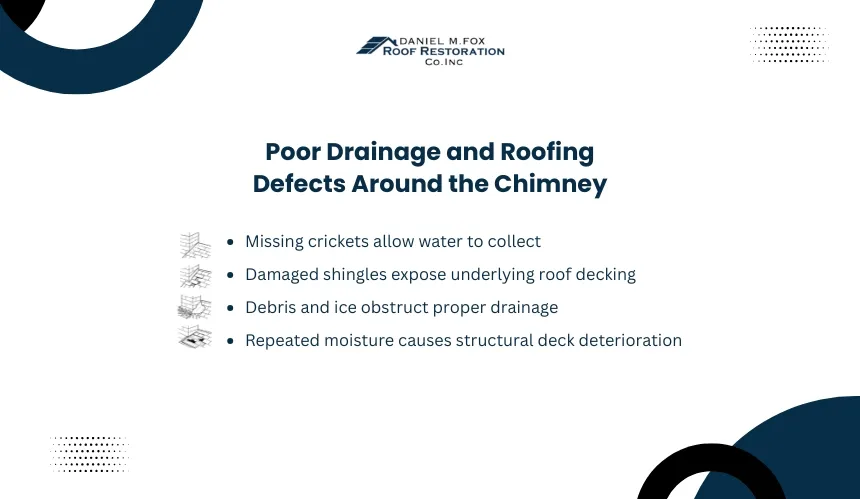
Even when the chimney itself is structurally sound, surrounding roof components must direct water safely around it. Deficiencies in drainage design or roofing materials can cause water to collect near the chimney, increasing the likelihood of leaks during prolonged rainfall or snowmelt.
A Missing, Undersized, or Damaged Chimney Cricket
A chimney cricket is a peaked structure installed on the uphill side of wider chimneys to divert water around the chimney instead of allowing it to pool behind it. Without an effective cricket, runoff slows down, increasing the amount of water pressing against the flashing and roof covering.
In Massachusetts, where winter snow accumulation is common, this area can also trap melting snow and ice. As water remains in contact with the roof for longer periods, even minor flashing imperfections become more likely to leak.
Damaged Shingles or Underlayment Beside the Chimney
The roofing materials surrounding the chimney work together with the flashing to create a continuous water-shedding system. Missing shingles, cracked roofing materials, or deteriorated underlayment interrupt that system and expose the roof deck to moisture.
Leaks caused by damaged roofing near the chimney are often mistaken for flashing failures because the symptoms appear in the same area. A thorough inspection should evaluate the condition of both the roofing materials and the flashing before determining the source of the leak.
Debris, Snow, or Ice Collecting Behind the Chimney
Leaves, branches, and other debris can accumulate behind the chimney, slowing water runoff and keeping the roof surface wet long after a storm has passed. In colder months, snow buildup may create ice dams that prevent melting water from draining properly.
This prolonged moisture exposure increases stress on flashing joints and roofing materials, especially on roofs with limited drainage or low slopes. Routine roof maintenance helps keep these areas clear and reduces unnecessary water retention.
Deteriorated Roof Decking Around the Penetration
When water repeatedly enters around the chimney, the roof decking beneath the shingles can begin to soften, delaminate, or rot. Structural deterioration often develops gradually because the damage remains concealed beneath the roofing system.
For homeowners in Cambridge, MA, where many properties feature aging roof assemblies and masonry chimneys, periodic roof inspections can identify hidden decking deterioration before it leads to extensive repairs. Addressing the underlying drainage issue early is typically far more cost-effective than replacing damaged structural components later.
Signs That the Chimney Is Causing the Roof Leak
Chimney-related leaks often develop gradually, making early warning signs easy to overlook. Recognizing how moisture behaves inside and around the home can help narrow the source of the leak before water causes more extensive damage to the roof structure.
Ceiling Stains or Damp Insulation Near the Chimney
Brown ceiling stains, damp insulation, or peeling paint near the chimney are common indicators that water is entering around the roof penetration. These symptoms often appear after sustained rainfall rather than immediately during a storm because moisture may travel through the roof assembly before becoming visible indoors.
The location of the stain should not be assumed to be the point of entry. Water frequently follows framing members or roof decking before reaching interior finishes.
Wet Rafters or Discolored Roof Decking in the Attic
An attic inspection can reveal signs of water intrusion long before damage appears inside the living space. Darkened roof sheathing, damp rafters, water trails, or soft wood around the chimney indicate that moisture has been entering the roof system over time.
These conditions may also reveal whether the leak is active or the result of previous water intrusion, helping guide the repair process more accurately.
Pro Tip: If the leak only appears during wind-driven rain from one direction, note the wind conditions when it occurs. Direction-specific leaks often point to localized flashing defects or exposed masonry joints rather than a widespread roofing failure, making professional diagnosis faster and more precise. |
Damp Brick, White Mineral Deposits, or Peeling Finishes
Moisture moving through masonry often leaves visible evidence on the chimney itself. White, powdery deposits known as efflorescence form when water carries dissolved salts to the brick surface, while peeling paint or staining around the chimney can indicate prolonged moisture exposure.
Although these signs do not always confirm a roof leak, they show that the chimney is retaining or absorbing water and should be evaluated before the problem progresses.
Leaks That Appear After Wind-Driven Rain or Snowmelt
The timing of a leak provides valuable diagnostic information. Water that enters only during heavy rain accompanied by strong winds often suggests a failure in flashing or exposed masonry. Leaks that occur during snowmelt may indicate trapped moisture behind the chimney, inadequate drainage, or ice-related water intrusion.
For homes in Cambridge, MA, where seasonal weather shifts expose roofs to rain, snow, and freeze-thaw cycles, tracking when leaks occur can help roofing professionals identify the underlying cause without unnecessary exploratory repairs.
How to Diagnose and Repair a Chimney-Related Roof Leak
Effective repairs begin with identifying the exact path water takes into the roofing system. Because several chimney components work together to keep the roof watertight, replacing the wrong part can leave the leak unresolved while allowing hidden moisture damage to continue.
Inspect the Cap, Crown, Masonry, Flashing, and Attic in Sequence
A systematic inspection is more reliable than focusing only on the area where water becomes visible indoors. Professionals typically begin at the top of the chimney by assessing the cap and crown, then examine the brickwork, mortar joints, flashing, shingles, and finally the attic for evidence of active moisture.
Following this sequence helps distinguish between water entering through the chimney structure and water penetrating the roofing system around it. It also reduces the chance of overlooking multiple defects that contribute to the same leak.
Match the Repair to the Actual Water Entry Point
Long-lasting repairs address the failed component instead of masking the symptoms. A separated counterflashing requires reflashing, deteriorated mortar joints need repointing, damaged crowns may require resurfacing or rebuilding, and missing chimney caps should be replaced with properly sized, corrosion-resistant models.
Applying sealants over deteriorated materials may slow water intrusion temporarily, but it does not restore the integrity of the waterproofing system. Selecting the correct repair based on the confirmed entry point minimizes the likelihood of recurring leaks.
Know When to Call a Roofer, Chimney Specialist, or Mason
Some chimney leaks involve only roofing components, while others originate within the masonry itself. Flashing replacement, roof covering repairs, and underlayment issues generally fall within a roofer’s expertise. Structural masonry deterioration, crown reconstruction, and brick repointing are typically handled by chimney or masonry specialists.
If you are dealing with a chimney leak or need reliable chimney repair in Cambridge, MA, or throughout the Greater Boston area, trust Daniel Fox Roofing to find the true source of the problem and provide a lasting solution. Our experienced team handles roofing and chimney-related issues with precision, helping protect your home from recurring leaks, hidden moisture damage, and costly structural repairs.
Prevent Repeat Leaks Through Routine Chimney and Roof Inspections
Preventive maintenance is often the most cost-effective way to avoid extensive water damage. Regular inspections can identify loose flashing, deteriorating mortar, cracked crowns, or early roofing wear before they develop into active leaks.
For homeowners in Cambridge, MA, and surrounding communities, scheduling roof and chimney inspections after severe storms and as part of routine home maintenance helps detect weather-related deterioration early. Addressing minor defects before water reaches the roof deck reduces repair costs and extends the service life of both the chimney and the roofing system.
Frequently Asked Questions
Can chimney condensation look like a roof leak?
Flue condensation can create damp patches, dripping, or staining near the chimney, even when the roof covering is intact. It usually develops when warm exhaust meets a cold or oversized flue. A chimney inspection can distinguish condensation from rainwater intrusion by checking the liner condition, moisture patterns, and when the leak appears.
Will homeowners' insurance cover damage from a leaking chimney?
Coverage usually depends on the cause. Sudden storm damage may qualify, while deterioration caused by neglected mortar, aging flashing, or long-term water exposure is often excluded. Document the damage, photograph affected areas, and obtain a professional inspection report before filing a claim so the insurer can evaluate the source accurately.
Should chimney flashing be replaced when installing a new roof?
Replacing or rebuilding chimney flashing during a roof replacement is often the most reliable approach, especially when the existing metal is corroded, patched, or improperly integrated. Reusing compromised flashing can shorten the new roof’s service life and create leak risks beneath materials that would otherwise remain watertight.
Can masonry waterproofing stop a chimney leak?
A breathable masonry water repellent can reduce rain absorption when bricks and mortar remain structurally sound. It cannot repair open joints, cracked crowns, failed flashing, or spalled brick. Applying a coating before correcting those defects may trap moisture inside the chimney and accelerate freeze-thaw damage rather than stopping the leak.
How do roofers find a chimney leak that only happens occasionally?
Professionals combine visual inspection with moisture meters, attic tracing, controlled hose testing, and sometimes thermal imaging. Testing begins at the lowest suspected area and moves upward gradually to isolate the entry point. This method helps separate chimney defects from nearby roofing, siding, skylight, or ventilation leaks.
Is it safe to wait if the chimney only leaks during heavy rain?
Intermittent leaking still indicates that water is bypassing part of the roof or chimney system. Delaying repairs can allow hidden moisture to damage sheathing, insulation, framing, and interior finishes between visible events. Prompt inspection is especially important when staining expands, wood feels soft, or musty odors develop near the chimney.