
- danielfox
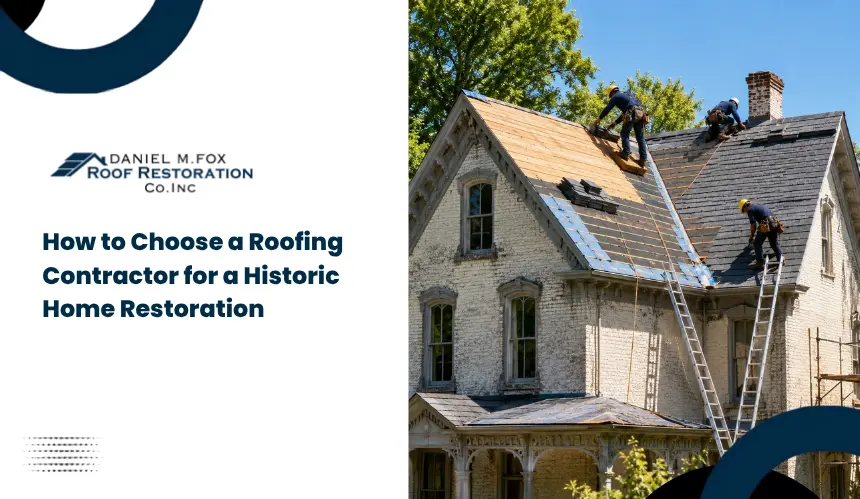
How to Choose a Roofing Contractor for a Historic Home Restoration
Key Takeaways:
|
Choosing a roofing contractor for a historic home requires more than comparing prices and availability. Older properties often contain original materials, concealed structural issues, and preservation requirements that standard roof replacement methods may not address.
A qualified historic roofing contractor must balance authenticity, structural performance, and long-term weather protection. This guide explains how to evaluate experience, restoration methods, credentials, proposals, and project safeguards before making a final decision.
Why Historic Home Roofing Requires a Specialized Contractor
Historic roofs are built around materials, details, and construction methods that differ significantly from modern systems. A contractor must understand how those elements interact before removing, repairing, or replacing any part of the roof.
How Is Historic Roof Restoration Different From Standard Replacement?
A standard roof replacement usually prioritizes removal speed, current materials, and uniform installation methods. Historic roof restoration requires a more selective approach because original slate, clay tile, wood shingles, copper features, or decorative trim may still be serviceable and worth preserving.
The contractor must determine which components can be repaired, salvaged, or replicated without altering the roofline or architectural character. This often involves matching dimensions, exposure patterns, fastening methods, and visible details rather than installing the nearest modern equivalent.
What Problems Are Common in Older Roof Systems?
Older roofs can conceal deteriorated decking, undersized framing, outdated flashing, trapped moisture, and repairs completed with incompatible materials. These conditions may not be visible during an exterior inspection.
In Massachusetts, freeze-thaw cycles, snow loads, and prolonged moisture exposure can accelerate cracking, corrosion, and movement within aging roof assemblies. A qualified restoration contractor should investigate the full system before finalizing the repair method or replacement scope.
What Can Go Wrong With an Inexperienced Roofer?
An inexperienced contractor may remove reusable materials, install products that trap moisture, or replace historic details with visually incompatible substitutes. These decisions can change the property’s appearance while creating leaks, condensation, or premature material failure.
Poor restoration work can also make future repairs more difficult because original components may be lost or altered beyond recovery. The correct contractor protects the roof’s historic fabric while resolving the structural and weatherproofing issues that caused the damage.
How Can You Verify a Contractor’s Historic Roofing Experience?
A contractor’s website may mention historic restoration, but the selection decision should rely on comparable projects, material knowledge, and documented results. Evidence should show that the roofer can work within the architectural and technical constraints of an older property.
Ask for Comparable Historic Restoration Projects
Request examples involving homes with a similar construction period, architectural style, roof geometry, and roofing material. Experience replacing asphalt shingles on an older house does not necessarily demonstrate the ability to restore a slate roof, copper-lined valley, mansard section, or ornamental roof feature.
For a property in Newton, MA, relevant experience may include work on Victorian, Colonial Revival, Tudor Revival, or Shingle-style homes. The historic roofing contractor in Newton, MA, should explain what was retained, what required replication, and how the completed work preserved the original roof profile.
Assess Knowledge of Traditional Roofing Materials
A qualified historic roofer should understand how slate, clay tile, wood shingles, copper flashing, and standing-seam metal respond to age, moisture, temperature changes, and structural movement. Ask how the contractor identifies reusable materials, sources compatible replacements, and selects fasteners or flashing metals that will not cause corrosion or premature failure.
Specific explanations matter more than broad claims. A contractor should be able to discuss slate thickness, tile profiles, shingle exposure, copper detailing, repair techniques, and the limitations of modern substitutes.
Review Portfolios and Speak With Previous Clients
Examine close-range photographs showing valleys, ridges, dormers, chimneys, flashing, gutters, and decorative details rather than relying only on wide exterior images. Before-and-after documentation should make it possible to evaluate material matching and workmanship at vulnerable roof transitions.
Ask previous clients whether the contractor identified concealed conditions accurately, protected original components, documented changes, and maintained control over the project scope. References from recent restoration projects provide stronger evidence than testimonials for unrelated roofing work.
Confirm Experience With Preservation Professionals
Historic roofing projects may require coordination with architects, structural engineers, preservation consultants, or local review bodies. Newton’s local historic district commissions review certain exterior alterations to ensure that proposed changes remain consistent with a district’s architectural character.
A contractor with relevant experience should know how to prepare material samples, repair specifications, photographs, and installation details for professional or municipal review. This capability reduces the risk of proposing work that later requires redesign, material changes, or additional approval.
Evaluate Licensing, Insurance, and Preservation Compliance
A contractor must be qualified not only to perform the work, but also to manage the legal, financial, and regulatory risks attached to a historic roof restoration. Verify these requirements before approving materials, scheduling work, or signing a contract.
What Licensing and Insurance Should a Roofing Contractor Carry in Massachusetts?
For historic home roofing work in Massachusetts, verify whether the contractor holds an active Home Improvement Contractor registration, commonly called an HIC registration. Massachusetts requires this registration for contractors who solicit, bid on, or perform work on existing, owner-occupied residential properties containing one to four units.
Depending on the project scope, a Construction Supervisor License may also be required. A CSL is generally relevant when the work affects structural elements, such as roof framing, load-bearing components, or substantial decking alterations. HIC registration and a CSL serve different purposes and are not interchangeable.
Check both credentials through official Massachusetts records and confirm that the names match the proposal and contract. The contractor should also carry current general liability insurance and workers’ compensation coverage.
Finally, verify who will obtain the local building permit because Massachusetts guidance generally places that responsibility on the hired contractor.
Does the Property Require Historic Preservation Approval?
A historic designation can restrict changes to visible roof materials, profiles, colors, flashing, dormers, chimneys, gutters, and decorative features. These controls may apply even when the proposed roofing system would otherwise meet standard building requirements.
The contractor should determine whether the property lies within a local historic district, carries an individual landmark designation, or is subject to preservation restrictions recorded with the property. Approval may be required before existing materials are removed, so regulatory review must occur during planning rather than after demolition begins.
Who Should Handle Permits and Project Documentation?
The contract should identify who will prepare applications, obtain permits, schedule inspections, and respond to requests from building or preservation officials. Assigning these responsibilities prevents delays and eliminates disputes over incomplete submissions.
Historic restoration applications may require existing-condition photographs, product specifications, material samples, elevation drawings, or written repair methods. A contractor should maintain copies of approvals, inspection records, change orders, and material documentation so the completed work can be verified later.
How Should Modern Building Codes Be Integrated?
Code compliance should improve roof performance without unnecessarily removing historic fabric. The contractor must evaluate requirements related to structural loading, roof decking, underlayment, flashing, ventilation, fire resistance, drainage, and ice protection in relation to the existing assembly.
Some modern products can be concealed beneath retained or replicated exterior materials, allowing the roof to meet current performance standards while preserving its visible character. Where a requirement conflicts with an original detail, the contractor should coordinate an approved solution with the building official, design professional, or preservation authority before installation.
Compare the Proposed Materials and Restoration Approach
A strong proposal should explain how the contractor will preserve usable roof components, replace failed materials, and correct performance problems without weakening the home’s historic character. The restoration method should be specific enough to show why each material and intervention is appropriate.
Which Roof Components Should Be Repaired, Salvaged, or Replaced?
The contractor should inspect each roof area separately rather than treating the entire assembly as equally deteriorated. Sound slate, clay tile, copper elements, wood shingles, and decorative components may remain serviceable even when nearby sections require replacement.
Salvage decisions should consider cracking, delamination, corrosion, fastener failure, moisture exposure, and remaining service life. Materials removed from less visible slopes may also be reused on prominent roof areas, improving visual consistency while reducing unnecessary loss of original fabric.
How Should Replacement Materials Match the Existing Roof?
Replacement materials should align with the original roof in profile, dimensions, thickness, texture, color variation, and weathering behavior. A visually similar product may still perform poorly if its weight, expansion rate, porosity, or fastening requirements conflict with the existing assembly.
For historic homes in Newton, MA, natural slate, wood shingles, copper flashing, and standing-seam metal may be appropriate when they match the property’s documented architecture and original construction.
High-quality architectural asphalt shingles may suit homes where asphalt is historically established, but material selection should still account for roof pitch, neighborhood character, structural capacity, and any local historic district requirements.
Ask the contractor to provide physical samples before ordering materials. Sample review allows the homeowner, architect, or preservation authority to compare new products directly with aged roofing components under natural light.
How Will the Contractor Address Structural and Moisture Problems?
The restoration plan should identify how deteriorated decking, weakened framing, failed flashing, poor drainage, and concealed moisture will be handled once the roof is opened. Covering these conditions with new materials can allow rot, corrosion, or movement to continue beneath the finished surface.
Newton’s cold winters, snowfall, temperature fluctuations, and recurring freeze-thaw conditions increase the risk of ice dams and moisture entry near eaves, valleys, chimneys, and dormers.
The proposed assembly should therefore include compatible underlayment, properly detailed ice barriers, effective drainage, and balanced ventilation without changing visible historic roof details. Massachusetts code provisions require ice barriers in designated cold-weather conditions and vulnerable roof areas.
The roof repair contractor in Massachusetts should define inspection points and repair thresholds before work begins. This creates a controlled process for evaluating concealed damage and prevents structural repairs from being improvised after demolition.
Which Modern Materials Could Be Incompatible?
Modern sealants, synthetic underlayments, fasteners, membranes, and substitute roofing products can create problems when their physical properties conflict with older materials. Trapped moisture, galvanic corrosion, restricted drying, and uneven thermal movement can shorten the life of both new and original components.
The contractor should justify each modern product based on vapor behavior, metal compatibility, fastening method, expected lifespan, and reversibility. Materials should improve weather resistance without permanently altering historic details that may require future repair.
Examine the Estimate, Contract, and Project Plan
A historic roof restoration contract should clearly define the work, responsibilities, materials, and process for handling unexpected conditions. Compare proposals by scope and accountability, not price alone.
- Detailed scope of work: The estimate should specify removal methods, salvage procedures, flashing, underlayment, decking repairs, ventilation work, cleanup, and disposal. Avoid vague language such as “repair as needed.”
- Material and labor specifications: Compare material grades, dimensions, fasteners, flashing metals, installation methods, warranties, and any subcontracted specialty work.
- Timeline and weather protection: The plan should account for approvals, custom materials, inspections, temporary coverings, and protection for interiors, landscaping, and salvaged roof components.
- Change-order process: Require written approval for concealed rot, framing damage, masonry problems, or previous repair failures. Each change should include photographs, pricing, and schedule impact.
- Unit pricing: Predetermined rates for decking, framing, flashing, and masonry repairs help control costs when hidden damage is discovered.
Protect your home’s original character with expert historical roof installation from Daniel Fox Roofing. We restore distinctive roofing systems in Newton, MA, and throughout the Greater Boston Area, combining period-appropriate materials with dependable modern performance. Contact the team to plan a restoration built around your home’s architecture.
Frequently Asked Questions
Should I pay for an independent roof inspection before asking for bids?
An independent inspection is worthwhile when replacement recommendations differ sharply or the roof contains slate, copper, clay tile, or complex historic detailing. A building-envelope consultant can assess its condition without selling the installation. Request photographs, attic findings, moisture evidence, and a repair-versus-replacement rationale before contractors price the work.
Will homeowners insurance cover the restoration of a historic roof?
Coverage usually depends on the cause of damage, not the roof’s historic status. A policy may cover sudden losses from wind, falling objects, or another insured event, while deterioration, neglected flashing, and ordinary wear are generally excluded. Photograph the damage, prevent further water entry, and obtain the insurer’s coverage decision in writing.
Can solar panels be installed without damaging a historic roof?
Solar panels may be feasible, but placement and attachment require careful review. Low-profile arrays on rear slopes, additions, or areas not visible from public streets are more likely to preserve historic character. Slate or metal roofs also require mounting details that avoid cracked units, incompatible fasteners, and difficult future repairs.
Are tax credits available for restoring an owner-occupied historic home?
Federal historic rehabilitation tax credits generally do not apply to a private, owner-occupied residence because the property must be income-producing. Massachusetts also offers a Historic Rehabilitation Tax Credit for certified projects, but eligibility and award timing are controlled by the Massachusetts Historical Commission. Confirm qualification before construction rather than assuming roofing costs will receive credit.
How often should a historic roof be inspected after restoration?
Schedule a documented roof review at least annually and after major wind, rain, or snow events. Gutters, downspouts, valleys, chimney flashing, dormers, attic surfaces, and slipped or cracked roofing units deserve attention. Material-specific maintenance should be performed by a contractor familiar with slate, copper, wood shingles, clay tile, or historic sheet metal.