
- danielfox
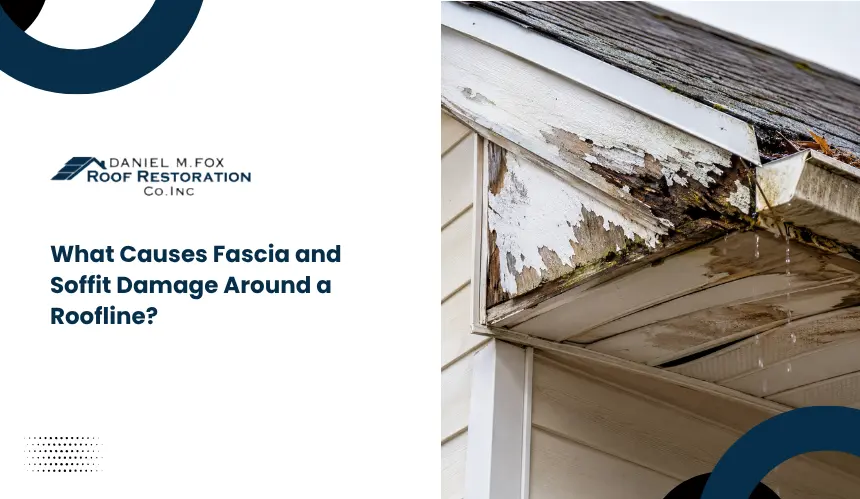
What Causes Fascia and Soffit Damage Around a Roofline?
Key Takeaways:
|
Fascia and soffit damage often begins with moisture exposure, ventilation problems, or pest activity around the roofline. When these components deteriorate, the risk of water intrusion, structural decay, and attic-related issues can increase over time.
Because fascia boards support gutters and soffits help regulate attic airflow, damage to either component can affect the overall performance of the roofing system. This article explains the most common causes of fascia and soffit damage and the warning signs homeowners may notice around the roofline.
Why Are Fascia and Soffits Important to the Roofline?
Fascia and soffits serve different functions, but both contribute to the performance and protection of the roof system. Damage to these components can affect drainage, ventilation, and the condition of nearby roofing materials.
The fascia board runs along the edge of the roof and provides a mounting surface for gutters. It helps direct rainwater away from the structure and supports the weight of the gutter system during heavy rainfall.
Soffits are located underneath the roof overhang and typically contain ventilation openings that allow fresh air to enter the attic. This airflow helps regulate heat and moisture levels inside the attic space.
When fascia and soffits remain in good condition, they support proper water management and balanced attic ventilation. Their position along the roofline also helps reduce opportunities for moisture buildup and unwanted pest entry.
What Causes Fascia Damage Around a Roofline?
Fascia boards are continuously exposed to moisture, changing weather conditions, and the load created by the gutter system. Over time, these factors can weaken the material and lead to visible deterioration along the roof edge.
How Does Water Overflow From Gutters Damage Fascia?
Clogged or poorly draining gutters allow rainwater to spill over the front and back edges of the gutter channel. Repeated exposure keeps the fascia board damp, creating conditions that can lead to wood rot, paint failure, and material breakdown.
In Massachusetts, seasonal leaf accumulation and winter debris can restrict gutter flow. Homes in Cambridge, MA, especially around mature tree-lined neighborhoods such as West Cambridge and Avon Hill, may experience heavier gutter buildup during the fall season, increasing the likelihood of overflow-related fascia damage.
Can Roof Leaks and Trapped Moisture Affect Fascia Boards?
Water entering beneath shingles or flashing can travel behind the gutter system and reach the fascia board. Because this moisture is often hidden, deterioration may continue for extended periods before visible signs appear.
Persistent moisture exposure can cause swelling, soft spots, and decay within wooden fascia components. In some cases, damage remains concealed until gutters begin pulling away from the roofline.
Does Weather Exposure Contribute to Fascia Deterioration?
Fascia materials experience constant expansion and contraction from temperature changes, precipitation, and ultraviolet exposure. Over many years, these cycles can weaken protective coatings and accelerate aging.
Massachusetts roofs regularly face snow accumulation, freezing temperatures, and spring thaw cycles. Ice formation along roof edges can increase moisture contact around fascia boards and place additional stress on the surrounding materials.
Can Pests Damage Fascia Boards?
Insects and small animals are attracted to damp or deteriorating wood. Termites, carpenter ants, and other wood-destroying pests can exploit weakened fascia boards and expand existing damage.
Open gaps near the roof edge may also attract birds, squirrels, or other wildlife seeking shelter. Once entry points develop, moisture problems and structural deterioration can progress simultaneously.
What Causes Soffit Damage Around a Roofline?

Soffits are positioned beneath the roof overhang and are exposed to moisture, airflow issues, and external impacts. Because they also support attic ventilation, damage to soffits can develop from conditions that are different from those affecting fascia boards.
Can Excess Moisture and Condensation Damage Soffits?
Warm air from inside the home naturally rises into the attic. When humidity levels remain high and ventilation is inadequate, condensation can form beneath the roof deck and around soffit areas.
Over time, persistent moisture may cause staining, peeling paint, warping, or deterioration of wood and composite soffit materials. Homes with bathrooms, kitchens, or dryers that vent improperly into the attic may experience faster moisture accumulation.
How Does Blocked Ventilation Affect Soffits?
Soffit vents are designed to bring fresh air into the attic and work together with ridge or roof vents. When insulation, debris, or dust blocks these openings, airflow becomes restricted.
Reduced air circulation allows heat and moisture to remain trapped inside the attic. This environment can accelerate wear on soffit panels and increase exposure to condensation around vented areas.
Can Storms and High Winds Damage Soffit Panels?
Strong winds and severe weather can loosen fasteners, crack panels, or dislodge sections of the soffit system. Hail impacts and wind-driven rain may also contribute to material deterioration over time.
Repeated weather events can create small openings that expose underlying components to moisture. Even minor panel movement can allow water to reach concealed areas beneath the roof overhang.
How Do Birds and Rodents Damage Soffits?
Small gaps around soffits can attract birds, squirrels, mice, and other animals searching for nesting locations. These openings often enlarge as animals repeatedly enter and exit the attic space.
Nesting materials, chewing activity, and debris accumulation can damage soffit panels and obstruct nearby ventilation openings. Once access points develop, additional moisture and pest-related issues may follow.
Damage to soffits often develops gradually, especially when ventilation issues, moisture exposure, or pest activity remain unnoticed. Regular roofline inspections can help identify early warning signs before minor deterioration spreads to surrounding roofing components.
If signs of aging or damage are appearing around the roofline, Daniel Fox Roofing provides professional fascia and soffit replacement in Cambridge, MA, to help restore proper ventilation and protect the structure from long-term moisture problems. Their team helps homeowners address roofline issues before they develop into larger repairs.
How Can Fascia and Soffit Damage Affect the Rest of the Roof System?
Damage along the roofline rarely remains isolated. Because fascia boards, soffits, gutters, and attic ventilation systems work together, deterioration in one area can create additional problems throughout the roofing assembly.
Damaged Fascia and Soffits Lead to Water Intrusion
Open joints, rotted materials, and deteriorated roof edges can allow water to reach underlying components. Once moisture bypasses the exterior surface, it may affect roof decking, insulation, and nearby framing members.
Repeated water exposure can accelerate wood decay and create conditions that are more difficult to detect from the ground.
Roofline Damage Affect Attic Ventilation Performance
Damaged soffits or blocked vent openings can disrupt the airflow cycle between soffit vents and ridge vents. Reduced air movement allows heat and humidity to remain trapped inside the attic.
Over time, excess moisture can contribute to condensation and material deterioration within the attic space.
Did you know? According to the U.S. Department of Energy, improper attic ventilation can allow moisture to accumulate and damage wood components while reducing the effectiveness of insulation. The agency identifies moisture control as one of the primary functions of a properly ventilated attic. |
Structural Components Weaken Over Time
Long-term moisture exposure can gradually affect nearby roof framing and sheathing. Wood that remains damp for extended periods becomes more susceptible to rot and loss of structural integrity.
If deterioration continues unchecked, repairs may extend beyond fascia or soffit replacement and involve additional roofing components.
Repair Costs Increase When Damage Spreads
Early roofline damage is often limited to localized areas. Once water infiltration, ventilation problems, or rot begin affecting adjacent materials, the scope of work typically becomes more extensive.
Addressing problems during the early stages can prevent secondary damage to gutters, roof decking, insulation, and attic structures.
What Warning Signs Suggest Fascia or Soffit Damage?
Roofline damage often develops gradually before causing larger roofing problems. Visible changes around the eaves, gutters, or roof overhang can indicate that fascia boards or soffits are no longer performing properly.
Is Peeling Paint or Discoloration a Sign of Damage?
Peeling paint, water stains, and dark discoloration often indicate prolonged moisture exposure. When protective finishes begin failing, the underlying material becomes more vulnerable to rot and deterioration.
Discoloration near gutter lines may also suggest recurring overflow or hidden water intrusion behind the roof edge.
Do Cracks, Soft Spots, or Rotting Areas Indicate Material Failure?
Visible cracks and soft sections usually develop after repeated exposure to moisture. Wood that feels spongy or begins breaking apart has often experienced internal decay.
In advanced cases, sections of the fascia or soffit may separate from adjacent materials, creating larger openings around the roofline.
Can Sagging Gutters or Loose Panels Signal Roofline Problems?
Gutters rely on solid fascia boards for support. When the fascia weakens, the weight of rainwater and debris can cause gutters to pull away from the home.
Similarly, loose or sagging soffit panels may indicate deteriorated fasteners, water damage, or structural movement beneath the surface.
Does Pest Activity Around the Eaves Indicate Hidden Damage?
Bird nests, insect activity, scratching noises, or visible entry points near the roof overhang can suggest deterioration within fascia or soffit materials.
Small openings created by moisture damage often become access points for squirrels, rodents, and wood-destroying insects. Identifying these signs early can help prevent additional damage inside the attic and roof structure.
Pro Tip: Inspect the underside of the roof overhang with binoculars after heavy rain rather than waiting for interior symptoms to appear. According to guidance from the National Roofing Contractors Association (NRCA), early exterior inspections can help identify developing roof-edge issues before moisture reaches insulation or interior finishes, reducing the likelihood of more extensive repairs. |
Frequently Asked Questions
How can a homeowner tell if fascia or soffit damage is cosmetic or structural?
Cosmetic damage usually affects paint, surface staining, or minor trim appearance. Structural concern begins when wood feels soft, gutters sag, panels separate, or openings appear near the eaves. A closer inspection is needed when damage affects the roof edge, gutter attachment points, attic ventilation, or nearby framing.
Should damaged fascia and soffits be repaired or fully replaced?
Minor damage may be repairable when the affected area is small, dry, and structurally sound. Full replacement is usually more practical when rot, pest entry, repeated moisture exposure, or widespread panel deterioration is present. Replacement also allows contractors to inspect hidden roofline components before the damage spreads.
Do gutters need to be replaced when fascia boards are damaged?
Gutters do not always need replacement, but they should be inspected with the fascia. Loose fasteners, poor pitch, rust, seam leaks, and overflow patterns can damage new fascia if left unresolved. If the gutter system caused the deterioration, repairing only the fascia may not solve the root problem.
What materials are best for fascia and soffit replacement in Massachusetts homes?
PVC, aluminum, fiber cement, composite trim, and properly sealed wood are common options. In Massachusetts, materials should resist moisture, freeze-thaw movement, snow exposure, and seasonal expansion. The best choice depends on roof design, ventilation needs, maintenance expectations, and whether the home requires a traditional or low-maintenance exterior finish.
Can damaged soffits affect indoor comfort or energy performance?
Damaged or blocked soffits can reduce attic airflow, allowing heat and humidity to remain trapped above the living space. This can place more stress on insulation and cooling systems. While soffits do not directly heat or cool a home, poor ventilation can affect attic conditions and overall roof performance.
How often should fascia and soffits be inspected?
Fascia and soffits should be checked at least once a year and after major storms, heavy snowfall, or gutter overflow. Homes near mature trees may need more frequent roofline checks. Early inspection can reveal peeling paint, loose panels, vent blockage, pest openings, and moisture stains before repairs become larger.