
- danielfox
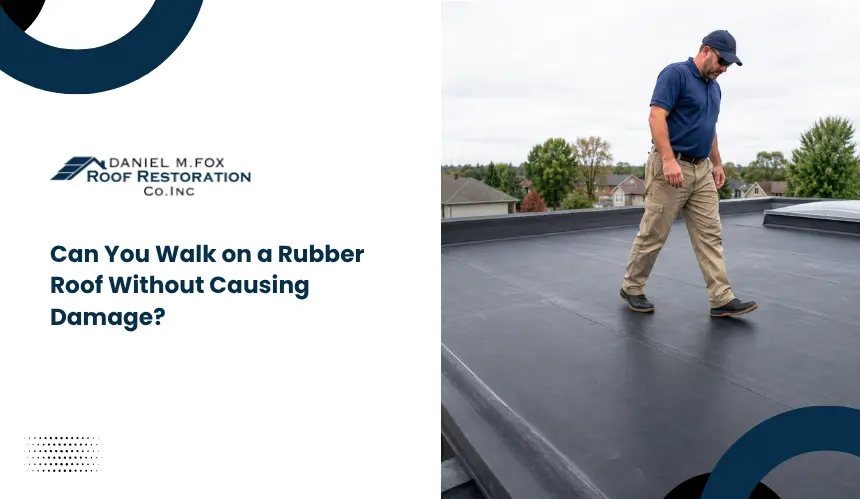
Can You Walk on a Rubber Roof Without Causing Damage?
Key Takeaways:
|
A rubber roof can generally be walked on without causing damage, but the outcome depends on factors such as roof condition, surface temperature, foot traffic patterns, and the integrity of seams and flashing. Improper access can lead to punctures, membrane stress, or accelerated wear, particularly on aging roofing systems.
Property owners often need roof access for inspections, maintenance, or equipment servicing, making it important to understand the limits of the roofing membrane. This article explains when walking on a rubber roof is safe, what risks to watch for, and how to minimize the chance of damage.
Is It Safe to Walk on a Rubber Roof?
In most cases, a properly installed and well-maintained rubber roof can support occasional foot traffic. However, safe access depends on the condition of the membrane, the roofing assembly beneath it, and how the roof is being used.
Why Can Most Rubber Roofing Systems Handle Foot Traffic?
Rubber roofing systems, particularly EPDM membranes, are designed to withstand normal environmental exposure, including expansion, contraction, wind, and weather-related stress. The membrane itself is flexible and durable enough to tolerate occasional maintenance access for tasks such as HVAC servicing, gutter cleaning, or roof inspections.
The roof deck beneath the membrane also plays a critical role. When the underlying structure remains sound and properly supported, the roofing system can typically accommodate limited pedestrian traffic without compromising performance.
When Can Walking on a Rubber Roof Cause Damage?
Problems usually arise when foot traffic is concentrated in vulnerable areas or when excessive force is applied to the membrane. Repeated traffic across the same path can create localized wear, while stepping on roof penetrations, flashing details, or unsupported sections may place unnecessary stress on critical components.
Damage is more likely when individuals carry tools, drag equipment, or perform maintenance activities that increase pressure on the roofing surface beyond normal walking loads.
How Do Roof Age and Condition Affect Walkability?
The ability of a rubber roof to tolerate foot traffic declines when the roofing system begins showing signs of deterioration. Aging membranes may become less resilient, while existing issues such as loose seams, punctures, shrinkage, or surface degradation can increase the risk of further damage during access.
Before walking on any rubber roof, the surface should be visually assessed for visible defects, soft spots, standing water, or areas that appear structurally compromised. A roof in good condition can generally handle occasional access more safely than one already experiencing wear-related issues.
What Can Damage a Rubber Roof During Foot Traffic?
Not all foot traffic creates the same level of risk. Damage typically occurs when specific roofing components are exposed to concentrated pressure, abrasion, or environmental conditions that reduce the membrane’s resistance to stress.
Sharp Objects and Improper Footwear
EPDM and similar rubber membranes resist normal walking loads but remain vulnerable to puncture forces. Footwear with embedded gravel, exposed metal components, or aggressive tread patterns can concentrate pressure into small contact points, increasing the likelihood of membrane penetration.
Tools, ladders, fasteners, and maintenance equipment present an even greater risk. A dropped screwdriver or loose sheet-metal component can puncture the membrane immediately, creating an entry point for moisture infiltration beneath the roofing system.
Stress on Seams, Flashing, and Roof Edges
The membrane itself is often not the weakest part of the roofing assembly. Seams, termination bars, flashing transitions, and roof penetrations are typically more susceptible to damage from foot traffic.
Stepping directly on pipe boots, skylight curbs, drain assemblies, or perimeter flashing can place stress on adhesive bonds and mechanical attachments. Over time, repeated loading in these areas may contribute to seam separation, flashing displacement, or water-entry pathways that are far more costly to repair than a surface scuff on the membrane.
Walking on Wet, Icy, or Extremely Hot Roofing Surfaces
Environmental conditions can significantly alter how a rubber roof responds to foot traffic. During hot summer afternoons, dark EPDM membranes absorb solar heat and become more flexible, making them more susceptible to scuffing and surface deformation under concentrated loads.
Conversely, winter conditions can create different challenges. In areas such as Newton, MA, freeze-thaw cycles often leave residual moisture, frost, or thin ice layers on low-slope roofs. Walking across these surfaces not only increases slip hazards but can also place unexpected stress on membrane seams and drainage areas when weight is applied to frozen sections of the rubber roofing system.
How to Walk on a Rubber Roof Safely
When roof access is necessary, the objective is to distribute weight appropriately, avoid high-risk roofing components, and minimize membrane stress. Proper access practices reduce the likelihood of both immediate damage and long-term wear.
1. Wear the Right Footwear
Soft-soled shoes with clean, non-marking soles provide the best traction while minimizing abrasion against the membrane surface. Before accessing the roof, footwear should be checked for trapped gravel, screws, or other debris that could puncture or scrape the roofing material.
Footwear with hard edges, metal components, or excessively aggressive tread patterns should be avoided, as these can create concentrated pressure points that increase membrane wear.
2. Stay on Stable, Supported Areas of the Roof
Weight should be placed on areas where the roof deck provides consistent structural support. Walking near penetrations, rooftop equipment mounts, skylight assemblies, and perimeter transitions can transfer loads to components that were not designed to handle frequent foot traffic.
When possible, individuals should follow existing service routes used for maintenance access rather than creating new traffic paths across the roof system.
3. Avoid Repeated Traffic in the Same Paths
A single visit rarely creates significant wear on a properly maintained rubber roof. The greater concern is repetitive traffic concentrated along the same route over months or years.
Repeated loading can gradually wear protective surface layers, increase seam stress, and accelerate membrane aging in localized areas. Facilities that require routine rooftop access often benefit from designated access routes that distribute traffic more effectively across the roofing system.
4. Inspect the Surface Before and After Access
A brief visual inspection before accessing the roof can identify conditions that increase damage risk, including loose seams, exposed fasteners, standing water, membrane shrinkage, or existing punctures. Identifying these issues beforehand helps prevent accidental worsening of existing defects.
After completing work, the roof should be checked for dropped tools, displaced flashing components, new surface damage, or debris that could affect drainage performance. Early detection of minor issues often prevents more extensive repairs later.
When Should You Avoid Walking on a Rubber Roof?
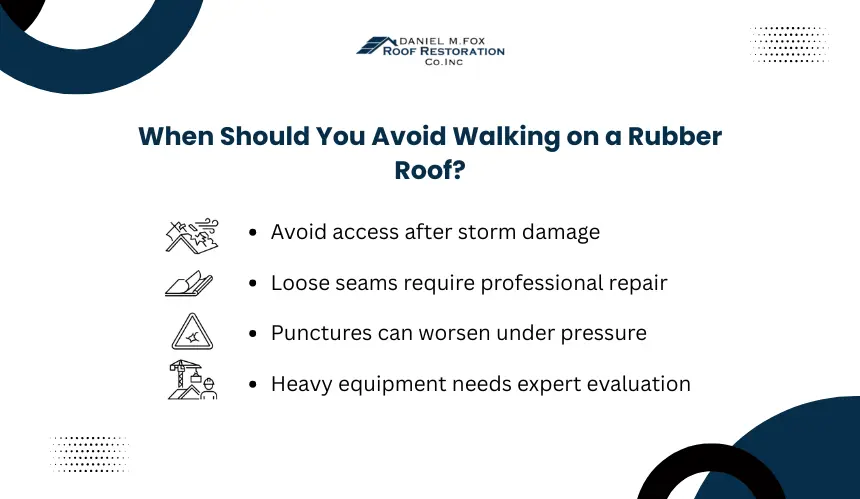
There are situations where accessing a rubber roof introduces more risk than benefit. In these cases, postponing access or using a qualified roofing professional is often the safer option for both the individual and the roofing system.
After Storms or Visible Roof Damage
Roof surfaces should not be walked on immediately after severe weather events. High winds can loosen flashing components, displace rooftop accessories, and create hidden membrane damage that may not be visible from a distance.
If branches, debris, or impact marks are present, additional weight from foot traffic can worsen existing defects or enlarge punctures that have already compromised the waterproofing layer.
If the Roof Has Loose Seams or Punctures
Seam separation and membrane punctures indicate that the roofing system has already lost part of its weather-resistant integrity. Walking near these areas can increase stress on weakened sections and potentially allow moisture to migrate further beneath the membrane.
In such cases, the priority should be assessment and repair rather than routine access. Temporary avoidance often prevents a minor roofing issue from developing into widespread insulation or deck damage.
When Performing Maintenance That Requires Heavy Equipment
Some maintenance activities involve equipment that places significantly greater loads on the roof than normal foot traffic. Large ladders, material carts, HVAC components, and mechanical service equipment can create concentrated pressure that exceeds what certain areas of the roofing assembly were designed to support.
This consideration becomes particularly relevant in regions such as Newton, MA, where roofs routinely experience seasonal snow loads, freeze-thaw cycles, and years of weather exposure. Even when the membrane appears intact, underlying components may not respond well to additional concentrated loads from maintenance equipment.
For properties with aging roof systems or frequent rooftop service requirements, professional evaluation is recommended before placing heavy loads on the surface. This is especially true for commercial and residential buildings with older rubber roofing in Newton, MA, where membrane condition and substrate stability should be verified before access is granted.
Should You Use Walk Pads or Professional Roof Access Solutions?
Roofs that require recurring access benefit from protection measures designed specifically for pedestrian traffic. Rather than relying on the membrane to absorb repeated wear, these solutions redirect traffic and reduce stress on critical roofing components.
When Are Walk Pads Recommended to Walk on Rubber Roofs?
Walk pads are most appropriate when technicians regularly access rooftop equipment such as HVAC units, exhaust systems, solar installations, or communication equipment. These reinforced pathways are installed over the membrane in areas where foot traffic is expected to occur repeatedly.
Without a designated walking surface, recurring traffic can gradually wear the membrane, even when each individual visit causes no visible damage.
What Are the Benefits of Designated Access Paths?
Designated access paths create a predictable route across the roof, reducing the likelihood of personnel stepping on seams, flashing details, drainage components, or other vulnerable areas. This approach also helps maintenance teams follow consistent access procedures regardless of who performs the work.
From an asset-management perspective, concentrating traffic onto protected pathways can extend membrane service life by reducing cumulative wear across the broader roofing surface.
When Should a Roofing Professional Be Involved Instead?
Professional involvement becomes more valuable when access decisions depend on roof condition rather than routine maintenance needs. A roofing contractor can determine whether the membrane, insulation, attachment system, and roof deck remain capable of supporting recurring traffic without increasing the risk of damage.
Professional evaluation is also advisable when property owners are considering permanent traffic-control measures, rooftop equipment additions, or modifications that may alter load distribution across the roofing system. In these situations, the goal is not simply to protect the membrane but to preserve the long-term performance of the entire roofing assembly.
Not sure whether your rubber roof is safe to walk on or is showing signs of wear? The team at Daniel Fox Roofing provides professional roof inspections, maintenance, and repair solutions to help protect your roofing investment. Contact Daniel Fox Roofing today to schedule an expert assessment and keep your roof performing at its best for years to come.
Frequently Asked Questions
Can a rubber roof support a person’s full body weight?
A properly installed rubber roof can usually support a person’s body weight when the roof deck, insulation, and membrane are in sound condition. The risk is not usually the weight itself, but concentrated pressure from footwear, tools, damaged seams, soft decking, or walking in areas already weakened by moisture or age.
Is it okay to put a ladder on a rubber roof?
A ladder should not be placed directly on a rubber roof without protection. Ladder feet can create point pressure, scrape the membrane, or puncture the surface if they shift. A protective mat, plywood sheet, or contractor-approved load-distribution method can reduce stress, especially near roof edges, flashing, and seams.
How can homeowners tell if walking caused damage?
Fresh scuffs, visible punctures, lifted seams, displaced flashing, or new debris around drains may indicate foot-traffic damage. Interior warning signs can include ceiling stains, musty odors, or moisture near roof penetrations. Even small membrane openings should be repaired quickly because trapped water can spread beneath the roofing system.
Can pets or wildlife damage a rubber roof?
Pets, squirrels, raccoons, and birds can damage rubber roofing if claws, nesting materials, or repeated movement disturb the membrane surface. Wildlife is especially risky around roof edges, vents, and flashing details. Property owners should look for scratches, droppings, chewed areas, or lifted materials during routine roof checks.
Does roof coating make a rubber roof safer to walk on?
A roof coating may improve UV resistance and surface protection, but it does not automatically make a rubber roof suitable for regular foot traffic. Walkability still depends on membrane condition, substrate support, coating type, and traffic frequency. Walk pads are usually a better option for repeated rooftop access.
How often should a rubber roof be inspected if people walk on it?
A rubber roof with occasional access should be inspected at least once or twice a year, especially after winter, storms, or maintenance work. Roofs with frequent HVAC servicing or regular foot traffic may need more frequent checks to monitor seams, penetrations, drainage points, and traffic-worn areas.