
- danielfox
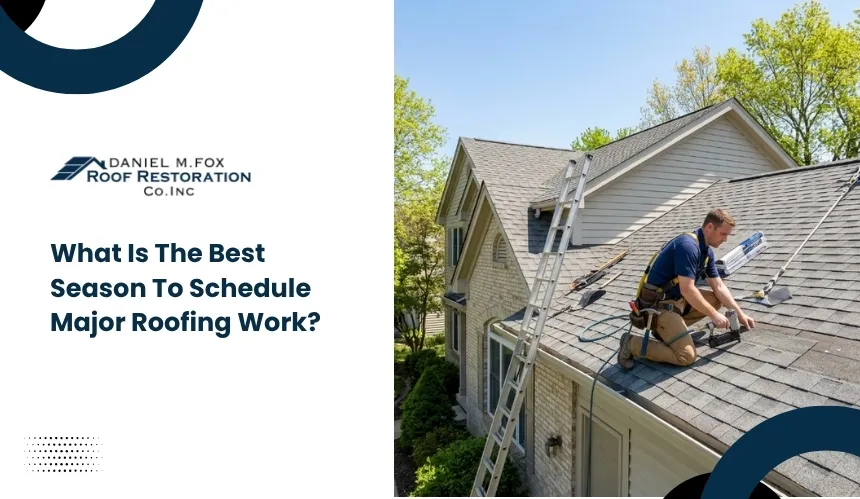
What Is The Best Season To Schedule Major Roofing Work?
Key Takeaways
|
Major roofing work requires the right timing to avoid weather delays, installation issues, and unnecessary stress. The season you choose can affect project flow, material performance, and long-term roof reliability. This blog highlights the best season to schedule major roofing work and why timing matters.
The Best Season For Major Roofing Work Depends On Weather Stability
Major roofing work is easiest to schedule when weather conditions support safe installation, dry roof decking, proper sealing, and predictable project movement. Mild temperatures and lower moisture risk give crews better control over tear-off, material placement, flashing work, and final weatherproofing.
Properties often benefit from coordinated maintenance and repair planning because New England weather conditions can create ongoing challenges for residential roofing systems. Heavy winter snowfall, ice dam formation, spring rain, and seasonal temperature fluctuations may contribute to shingle deterioration, moisture intrusion, and other roofing concerns if left unaddressed.
Because of these local weather pressures, homeowners in established Dedham neighborhoods such as Riverdale, East Dedham, Greenlodge, and Oakdale rely on regular inspections and proactive upkeep. This is why roof maintenance in Dedham is essential for identifying early issues, protecting homes from weather-related damage, and extending the overall lifespan and performance of roofing systems.
Why Is Fall Often The Preferred Roofing Season?
Fall is often the best season for major roofing work because temperatures are usually moderate enough for roofing materials to handle and seal correctly. Asphalt shingles, underlayment, flashing, and roof sealants perform better when they are not exposed to extreme heat or freezing conditions during installation.
Fall also helps homeowners prepare the roof before winter, when moisture, snow, ice, or heavy seasonal storms increase stress on weak areas. This timing is especially useful for roof replacements, large leak repairs, ventilation corrections, and aging roof systems that may not handle another harsh season well.
Why Can Late Spring Also Be A Strong Roofing Window?
Late spring can be a good time for major roofing work because temperatures are generally warmer, daylight hours are longer, and crews can complete larger projects more efficiently. It also gives homeowners time to address damage left behind by winter weather before summer heat or storm activity increases.
The main limitation is scheduling demand. Many homeowners begin requesting inspections and repairs during spring, especially after leaks, missing shingles, or storm-related damage become visible.
How Does Extreme Heat Affect Roofing Work?
High summer temperatures can make roof surfaces much hotter than the surrounding air, creating safety risks for crews and handling issues for materials. Asphalt shingles may become softer in intense heat, which can increase the risk of scuffing, pressure marks, or installation difficulty.
Extreme heat can also shorten productive work windows. Crews may need earlier start times, more breaks, and tighter planning to avoid heat-related delays.
Why Does Cold Weather Make Major Roofing More Difficult?
Cold weather can reduce material flexibility and slow down sealing performance. Asphalt shingles may become more brittle, and certain adhesives or sealants may take longer to bond when temperatures fall below ideal installation ranges.
Winter work is still possible in some cases, especially for urgent repairs, but it requires stronger planning around snow, ice, daylight limits, and safe roof access.
Why Do Rain And Heavy Moisture Create Roofing Delays?
Rain is one of the biggest scheduling risks for major roofing work because exposed decking, underlayment, and open roof sections must stay dry during installation. Moisture can interfere with sealing, slow inspections, and increase the risk of water intrusion before the roofing system is fully closed.
For planned roof replacement, a dry and stable forecast is more important than simply choosing a popular season. Weather stability protects both the installation process and the home during the project.
How Each Season Affects Roofing Work
Each season creates different installation conditions for major roofing work. Temperature, rain patterns, daylight, and surface conditions all influence how efficiently crews can remove old materials, inspect decking, install new components, and seal the roofing system.
Spring Roofing Work
Spring can be a practical time to schedule roofing work after winter exposes leaks, missing shingles, damaged flashing, or moisture problems. It gives homeowners a chance to correct roof damage before summer heat and heavier storm activity place more pressure on weakened areas.
The main challenge is weather unpredictability. Frequent rain, damp decking, soft ground, and sudden storms can delay tear-offs, inspections, material delivery, and installation timelines. For major roof replacement, spring works best when the forecast allows enough dry days to complete the project without leaving exposed areas vulnerable.
Summer Roofing Work
Summer gives roofing crews longer daylight hours and more predictable dry stretches, which can support faster project completion. This can make summer useful for large roof replacements when homeowners need a broader scheduling window.
The main concern is heat exposure. High temperatures can affect crew pacing, shingle handling, and roof surface conditions, so summer projects often require earlier start times and tighter installation planning.
Do You Know? The U.S. Department of Energy notes that conventional roofs can reach 150°F or more on a sunny summer afternoon. That explains why roofing schedules are often adjusted around surface temperature, not just the forecasted air temperature. |
Fall Roofing Work
Fall is a strong roofing season because it usually gives crews a more controlled installation window before colder weather arrives. Moderate temperatures can support consistent material handling, cleaner fastening, and more dependable sealant performance.
The only planning challenge is demand. Since many homeowners prefer this window, inspections, estimates, and project dates should be arranged before fall schedules fill.
Winter Roofing Work
Winter roofing work is possible, especially when urgent leaks, storm damage, or safety concerns cannot wait. Emergency repairs may be necessary to protect the home from water intrusion, structural damage, or worsening roof deterioration.
For major roofing projects, winter creates more installation challenges. Cold temperatures can make shingles less flexible, slow adhesive bonding, reduce daylight hours, and make roof access more difficult when snow or ice is present. Winter scheduling requires careful weather monitoring and an experienced crew that can work safely within material limits.
Key Factors That Should Influence Your Roofing Schedule
The best roofing schedule is not based on season alone. Homeowners should weigh the roof’s current condition, material behavior, contractor timelines, and regional weather patterns before choosing a project window.
Roof Condition And Urgency
The roof’s condition should decide whether a project can wait. Minor aging, worn shingles, or preventive upgrades may fit into a planned seasonal window, but active damage needs faster evaluation.
Leaks, exposed underlayment, missing shingles, or sagging areas can change the project from scheduled maintenance to damage control. In those cases, waiting for ideal weather can increase the scope of roof repair.
Material Requirements
Different roofing materials respond differently to temperature, moisture, and installation conditions. Asphalt shingles need suitable temperatures for flexibility and sealing, while metal roofing may require careful handling around expansion, fastening, and flashing details.
Tile, underlayment, roof sealants, ventilation components, and flashing systems also have installation limits. Choosing the right season helps protect material performance and reduces the risk of bonding issues, cracking, poor alignment, or moisture-related installation problems.
Contractor Availability
Roofing contractors are often booked heavily during peak seasons, especially in late spring and fall. Homeowners planning a full roof replacement may need to schedule inspections, compare estimates, select materials, and secure permits before the preferred installation window fills.
Early planning also helps avoid rushed decisions. When contractor availability is limited, homeowners may face longer wait times, fewer material options, or scheduling gaps caused by weather delays and high seasonal demand.
Local Climate Patterns
Local weather patterns can change the best time for roofing work. Regions with heavy snow may require planning before freezing conditions arrive, while areas with hurricane exposure, monsoon rain, or extreme summer heat need tighter scheduling around storm risk and safe working conditions.
A strong roofing schedule should match regional climate behavior, not just general seasonal advice. The best project window is the period when local temperature, precipitation, wind, and daylight conditions support safer installation and better roof system performance.
When Homeowners Should Not Delay Major Roofing Work
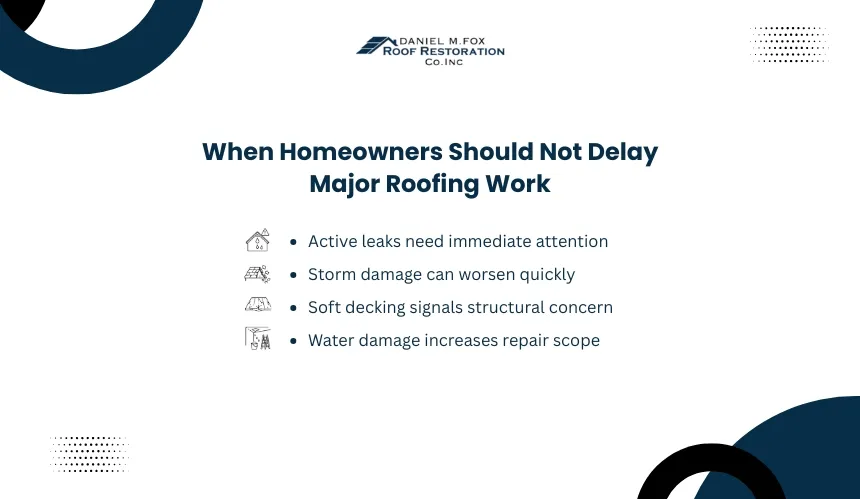
Some roofing problems should be handled before seasonal timing becomes the main concern. When damage is already allowing moisture, movement, or exposure, waiting for the “best” season can increase repair scope and weaken the roof system further.
Active Leaks Or Visible Water Damage
Active leaks require immediate evaluation because water rarely stays limited to the first visible stain. Moisture can travel along rafters, decking seams, insulation, and wall cavities before it appears inside the home.
Delaying major roofing work in this situation can lead to rotted sheathing, damaged drywall, mold-prone insulation, and higher interior restoration costs. If water is entering the home, the priority should be stopping the intrusion during the earliest safe repair window.
In Dedham, roof repair services are commonly used by homeowners to quickly address issues like roof leaks, storm damage, and worn-out shingles before they develop into more serious structural problems. In neighborhoods near Fairbanks Park and Avery School areas, these services often include repairing damaged flashing, replacing missing shingles, sealing weak roof points, and restoring weather protection after heavy rain or wind exposure.
Reliable roof repair services also play a key role in maintaining long-term roof durability by preventing moisture from spreading into insulation, ceilings, and interior structures. In areas around Oakdale and Precinct One, timely roof repair services help homeowners preserve the strength of their roofing system while reducing the risk of costly future damage.
Storm Or Wind Damage
Storm damage can weaken the roof’s protective system even when the surface appears mostly intact. Lifted shingles, missing ridge caps, bent flashing, exposed fasteners, and torn underlayment can allow wind-driven rain to reach vulnerable areas.
A post-storm inspection helps identify damage before the next weather event expands the problem. This is especially important when hail, strong gusts, or heavy rain have affected the roofline, valleys, fascia, or attic ventilation areas.
Do You Know? According to NOAA National Centers for Environmental Information, in 2024, the U.S. recorded 27 billion-dollar weather and climate disasters, and 17 of them were severe storm events. That makes storm timing a practical factor in roofing decisions because hail, wind, and heavy rain can quickly turn minor roof wear into urgent damage. |
Structural Or Decking Concerns
Soft roof spots, sagging rooflines, rotted decking, or recurring moisture patterns may indicate deeper structural stress beneath the visible roofing materials. These issues can affect load distribution, fastening strength, and the roof’s ability to hold new materials properly.
When structural concerns are present, seasonal preference should come after professional assessment. Major roofing work may need to include decking replacement, ventilation correction, or framing review before the roof can perform reliably.
How To Plan Roofing Work Around The Best Seasonal Window
Planning major roofing work early gives homeowners more control over timing, cost, material selection, and installation readiness. A strong schedule reduces weather disruption, avoids rushed decisions, and helps the project move through inspection, approval, and installation with fewer delays.
Schedule Inspections Before Peak Season
A pre-season inspection gives homeowners a clearer project timeline before contractor calendars become crowded. It also helps confirm whether the roof needs a full replacement, targeted repair, ventilation correction, flashing work, or only monitoring.
This early step improves decision quality. Homeowners can review estimates, compare material options, and reserve an installation window without being forced into rushed choices during peak roofing demand.
Allow Time For Permits And Materials
Major roofing work may require permit approval, material ordering, dumpster placement, delivery coordination, and weather backup days. These steps can affect the start date, especially when contractors, suppliers, and local permitting offices are handling higher seasonal volume.
Material availability can also influence timing. Specialty shingles, metal roofing panels, tile, flashing components, skylight accessories, and ventilation products may need extra lead time, so planning early reduces the risk of installation delays.
Prepare Your Home Before Installation Begins
Home preparation helps crews work safely and keeps the project moving efficiently. Driveways should be cleared for trucks, dumpsters, and material staging, while attic items should be covered because roof work can shake loose dust and debris.
Homeowners should also plan around noise, vibration, parking limits, pets, children, and temporary outdoor access restrictions. Notifying neighbors and securing fragile wall items can prevent avoidable disruption during tear-off and installation.
Choosing The Right Season For Your Roofing Project
The right roofing season depends on whether the project is planned, preventive, or urgent. Homeowners should choose the timing that gives the roof the best installation conditions without allowing existing damage to worsen.
What Is The Best Overall Season For Planned Roof Replacement?
Fall is generally the best season for planned roof replacement when the roof is aging but not actively leaking. It offers the strongest balance of workable temperatures, lower weather disruption, and enough time to complete the project before winter exposure increases.
For homeowners comparing seasons, fall is the safest planned window, while late spring remains a practical alternative when contractor availability or local weather patterns make fall scheduling difficult.
What Is The Best Time For Non-Urgent Repairs?
Late spring or early fall is usually ideal for non-urgent roof repairs because crews can work efficiently without extreme heat, freezing temperatures, or frequent rain disruptions. These periods are useful for addressing worn shingles, minor flashing issues, ventilation adjustments, and preventive maintenance.
The goal is to complete repairs before small defects turn into active leaks. Non-urgent work should still be scheduled early enough to avoid peak contractor demand, material delays, and sudden weather-driven booking pressure.
What Is The Best Time For Urgent Roofing Problems?
Urgent roofing problems should be handled during the earliest safe repair window. Active leaks, exposed decking, storm damage, or structural concerns can worsen each time moisture reaches the roof assembly.
Seasonal timing matters less when the roof is no longer protecting the home. In those cases, the priority is stabilizing the system, stopping water entry, and preventing the damage from spreading into the attic or interior finishes.
When major roofing work needs the right timing, expert planning makes all the difference. Daniel Fox Roofing, INC helps homeowners assess roof condition, choose the right project window, and complete repairs or replacements with dependable workmanship. Whether you are preparing for winter, fixing storm damage, or planning a full roof replacement, their team can guide you with clear recommendations and professional roofing solutions. Reach out today to schedule your roofing inspection and protect your home with confidence.
Frequently Asked Questions
How far in advance should homeowners schedule a major roof replacement?
Homeowners should schedule a major roof replacement several weeks to a few months before their preferred season, especially for fall or late spring projects. Early booking gives time for inspection, estimate review, material selection, permit approval, dumpster coordination, and weather backup planning before contractor calendars become crowded.
Can a temporary roof repair help delay full replacement until the right season?
A temporary repair can sometimes control minor leaks, lifted shingles, or flashing gaps until better installation weather arrives. It should not be treated as a long-term fix if decking, underlayment, or structural areas are exposed. A roofing contractor should confirm whether stabilization is safe or whether replacement needs to happen sooner.
What weather forecast is safest for starting roof replacement?
A safe roof replacement window usually requires dry conditions before, during, and shortly after installation. Crews need enough stable time to remove old materials, inspect decking, install underlayment, secure flashing, and close the roofing system. Rain risk matters because exposed roof sections can absorb moisture quickly.
Does roof ventilation affect the best time to replace a roof?
Roof replacement is often a good time to correct attic ventilation because shingles, ridge vents, soffit airflow, and roof deck temperature all work together. Poor ventilation can trap heat and moisture, which may shorten roof life. Pairing replacement with ventilation upgrades can improve long-term roof system performance.
What should homeowners ask a roofer before choosing a season?
Homeowners should ask about material temperature limits, weather-delay policies, crew availability, permit timelines, warranty requirements, and how exposed decking is protected during installation. These questions reveal whether the contractor can manage seasonal risks instead of simply offering the earliest available project date.
Is it better to repair small roof issues before winter or wait until spring?
Small roof issues are usually safer to repair before winter if they involve missing shingles, weak flashing, open nail holes, or early leakage. Cold weather, snow, ice, and freeze-thaw cycles can expand minor defects. Spring may work for cosmetic or low-risk maintenance, but water-entry risks should not wait.