
- danielfox
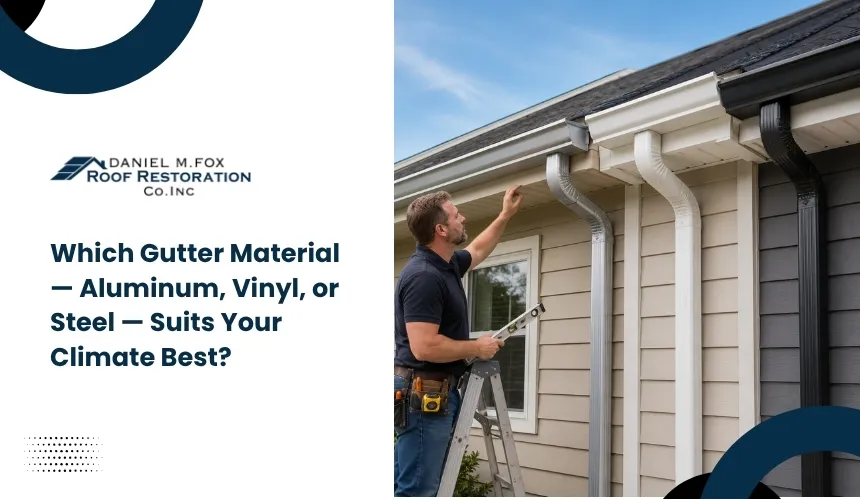
Which Gutter Material — Aluminum, Vinyl, or Steel — Suits Your Climate Best?
Key Takeaways:
|
Choosing the right gutter material involves more than comparing cost or appearance. Local weather conditions influence how gutters handle moisture, temperature changes, snow loads, and long-term exposure to the elements.
Homeowners in Massachusetts often experience heavy rainfall, winter freeze-thaw cycles, and seasonal storms, while properties in Newton, MA can face additional stress from snow accumulation and fluctuating temperatures. A material that performs well in one climate may deteriorate faster in another.
This guide explains how aluminum, vinyl, and steel gutters respond to different weather conditions to help homeowners select the option best suited to their climate.
Why Climate Matters When Choosing Gutter Materials
Weather exposure determines how quickly gutter systems age and what types of failures are most likely to occur. Temperature swings, moisture levels, and storm intensity create different performance demands, making climate compatibility a key factor in material selection.
How Temperature, Moisture, and Weather Extremes Affect Gutters
Gutters operate under constant environmental stress. Rainfall increases water volume and can accelerate corrosion in susceptible materials. High humidity prolongs moisture exposure, while prolonged heat causes expansion and contraction that may weaken joints or alter the shape of certain gutter systems.
Cold climates introduce additional challenges. Snow accumulation adds structural weight, and repeated freeze-thaw cycles can place stress on fasteners and seams. Strong winds and severe storms also affect impact resistance and overall system stability.
In Massachusetts, seasonal weather patterns expose gutters to multiple stress factors throughout the year. Homes in Newton, MA often experience heavy winter snowfall followed by temperature fluctuations that can intensify material fatigue over time.
Why One Gutter Material Does Not Fit Every Environment
Each gutter material responds differently to environmental conditions because of its physical properties. Some materials resist corrosion better, while others prioritize strength or affordability.
A material that performs efficiently in a mild climate may develop problems when exposed to extreme heat, heavy snow loads, or persistent moisture. For example, resistance to rust becomes more valuable in wet regions, while structural strength becomes a higher priority in areas with significant snow accumulation.
Matching the material to the local climate reduces the likelihood of premature deterioration and allows the gutter system to operate under the conditions it was best suited to handle.
How Aluminum Gutters Perform in Different Climates
Aluminum gutters are widely used because they combine corrosion resistance with relatively low weight. Their performance, however, varies depending on the type of weather exposure a property experiences.
Performance In Rainy And Humid Regions
Aluminum does not rust like steel, which makes it well suited for areas with frequent rainfall or elevated humidity. Continuous water exposure is less likely to cause structural deterioration, allowing the system to maintain water flow over long periods.
Because moisture-related corrosion is minimized, aluminum gutters often require fewer repairs associated with rust damage. This characteristic makes them a practical option for regions that experience regular precipitation.
Performance In Snowy And Freezing Climates
Aluminum gutters can perform effectively in cold climates, but their lighter structure makes proper installation especially important. Heavy snow and ice buildup increase the load placed on hangers and attachment points.
Massachusetts winters regularly expose gutters to snow accumulation and freeze-thaw cycles. In Newton, MA, where winter storms can create substantial ice and snow loads, reinforced fastening systems help aluminum gutters maintain structural stability.
Although aluminum does not crack from freezing temperatures as easily as some materials, excessive weight from ice dams can still lead to bending if the system is not adequately supported.
Performance In Hot And Coastal Environments
High temperatures generally do not damage aluminum, but repeated expansion and contraction can gradually affect seams and connections. Seamless aluminum systems are often preferred because they reduce the number of potential failure points.
Coastal environments introduce salt exposure, which accelerates deterioration in many metals. Aluminum provides better resistance to these conditions than traditional steel, making it a common choice in areas influenced by salt-laden air.
Its combination of corrosion resistance, moderate durability, and lightweight construction allows aluminum to adapt to a wide range of climates.
How Vinyl And Steel Gutters Compare Across Weather Conditions
Vinyl and steel gutters serve different climate needs. Vinyl is lightweight and cost-efficient for moderate environments, while steel is built for strength in harsher weather conditions.
How Vinyl Reacts To Weather Stress
Vinyl gutters resist rust because they are made from PVC rather than metal. This makes them less vulnerable to moisture exposure, but their main weakness is dimensional stability under temperature stress.
In cold conditions, vinyl can become brittle and more likely to crack under impact or weight. In high heat, it may soften, expand, or lose shape over time. This makes vinyl more sensitive to climate extremes than aluminum or steel.
How Steel Reacts To Weather Stress
Steel gutters provide high rigidity, which allows them to resist bending, impact, and heavy loading better than lighter gutter materials. This strength is useful when gutters face debris, wind pressure, or accumulated snow.
The main performance risk is corrosion. Once the galvanized or painted coating is scratched or worn, exposed steel can rust when moisture remains on the surface. Steel performance therefore depends on protective coating quality, drainage, and regular maintenance.
Common Durability Concerns For Both Materials
Vinyl and steel fail in different ways. Vinyl is more vulnerable to cracking, sagging, and shape distortion when exposed to temperature extremes or heavy weight. Steel is more vulnerable to corrosion when scratches, worn coatings, or standing moisture expose the metal surface.
The right choice depends on whether the climate places greater pressure on flexibility, strength, moisture resistance, or long-term maintenance.
Key Factors Beyond Climate That Affect Gutter Material Selection
Climate determines how a gutter system will perform, but long-term ownership considerations also influence which material delivers the best value. Lifespan, maintenance requirements, and appearance can affect replacement costs and overall satisfaction.
1. Expected Lifespan And Maintenance Needs
Aluminum gutters commonly last 20 to 30 years, with some home inspection life-expectancy guides placing aluminum gutters in the 20 to 40+ year range depending on installation quality, weather exposure, and upkeep.
Vinyl gutters usually have a shorter service range, often around 10 to 20 years, especially in climates with strong temperature swings or repeated freeze-thaw exposure. Steel gutters generally fall around 20 to 30 years, but that lifespan depends heavily on coating condition, rust prevention, and routine cleaning.
For homeowners comparing materials, lifespan should be judged alongside maintenance demand. A longer-lasting gutter material can still become expensive if it needs frequent rust treatment, joint repairs, repainting, or earlier replacement due to local weather stress.
2. Budget And Replacement Costs
Initial installation costs vary significantly between materials. Vinyl is usually the least expensive option upfront, while steel often carries higher material and labor costs because of its weight and installation requirements.
Long-term costs may differ from initial pricing. A lower-cost system that requires earlier replacement can become more expensive over time than a material with a higher upfront investment but greater durability.
Evaluating total ownership cost rather than purchase price alone provides a more accurate comparison.
3. Home Style And Curb Appeal Considerations
Gutters contribute to the visual appearance of a home because they run along the roofline and remain visible from the street. Material selection can influence available colors, finishes, and design options.
Aluminum is available in a wide range of factory finishes and is commonly used with seamless systems for a cleaner appearance. Steel provides a more substantial look and can complement traditional architectural styles. Vinyl offers color options but generally provides fewer customization possibilities.
Selecting a gutter material that aligns with both functional requirements and the home’s exterior design creates a more cohesive finished appearance.
Which Gutter Material Is Best For Your Climate?
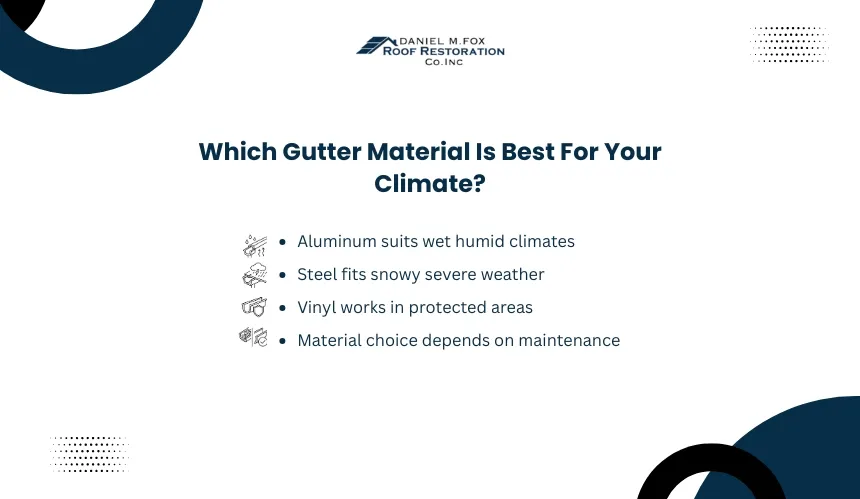
For Massachusetts homeowners, gutter material should be selected around moisture exposure, winter loading, freeze-thaw movement, and maintenance tolerance.
Homes in Newton, Randolph, and Cambridge can face different property conditions, but the core decision usually depends on whether the gutter system needs corrosion resistance, structural strength, or budget efficiency.
Best Choice For Wet And Humid Climates
Aluminum is generally the most practical choice for wet and humid conditions because it resists rust while still offering better durability than vinyl. This matters in Massachusetts, where spring rain, summer humidity, and shaded rooflines can keep gutter systems damp for extended periods.
For homes in Newton with tree cover or older rooflines, aluminum can be especially useful because it handles recurring moisture without the same corrosion risk as untreated steel. In Randolph, where seasonal rain and leaf buildup can increase standing-water risks, rust resistance becomes a stronger material advantage.
Best Choice For Cold And Snowy Climates
Steel gutters are often preferred where snow weight, ice buildup, and storm impact create higher structural demand. Their rigidity helps them handle heavier loads, especially when the system is properly coated and securely fastened.
In Newton and Cambridge, older homes with steep rooflines or complex drainage paths may place extra stress on gutters during winter. Aluminum can still work well with reinforced hangers, but steel may be better when the priority is maximum strength under snow and ice pressure.
Best Choice For Hot Or Mild Climates
Vinyl gutters are usually better suited to mild climates where extreme freezing, heavy snow, and sharp seasonal temperature swings are limited. Because Massachusetts weather is rarely mild year-round, vinyl is usually a better fit for lower-risk sections of a property rather than full exposure areas.
In Cambridge, where some properties have smaller roof sections, protected elevations, or limited gutter runs, vinyl may be acceptable when cost is the main concern. For most full-home systems in Newton or Randolph, aluminum usually offers a safer balance of weather resistance and long-term value.
Quick Comparison Table For Aluminum, Vinyl, And Steel
The table below summarizes how each gutter material fits common Massachusetts climate conditions and property needs.
Factor | Aluminum | Vinyl | Steel |
Typical Lifespan | 20-30 years | 10-20 years | 20-30 years |
Rust Resistance | Excellent | Excellent | Moderate |
Snow And Ice Resistance | Good with support | Weak | Strong |
Performance In Humid Conditions | Excellent | Good | Moderate |
Resistance To Extreme Temperatures | Good | Limited | Excellent |
Maintenance Requirements | Low | Low | Moderate |
Initial Cost | Moderate | Low | Higher |
Best Climate Match | Wet, humid, mixed climates | Mild climates | Snowy and severe-weather climates |
For most Massachusetts homes, aluminum is the strongest default choice because it balances rust resistance, weight, cost, and seasonal durability. Steel makes sense when snow load and impact resistance matter most, while vinyl should be used more selectively in protected or lower-stress areas.
Homeowners comparing materials and seeking professional gutter services in Newton, MA, should evaluate how local weather patterns and long-term maintenance requirements align with each material’s strengths.
Daniel Fox Roofing provides professional gutter repair and installation services across Greater Boston, helping homeowners choose durable systems suited to local weather conditions. From repairing damaged gutters to installing new gutter systems, the team delivers reliable solutions built to manage rain, snow, and seasonal wear.
Frequently Asked Questions
How do I know if my gutters need repair instead of full replacement?
Gutter repair usually makes sense when the damage is limited to loose hangers, small leaks, minor joint separation, or isolated sagging. Full replacement becomes more practical when gutters have widespread rust, repeated overflow, bent sections, poor slope, or recurring leaks across multiple runs. Age and material condition should guide the decision.
Are seamless gutters better than sectional gutters for Massachusetts homes?
Seamless gutters are often a stronger option for Massachusetts homes because they reduce joint failure points along the roofline. Fewer seams mean fewer places for leaks, debris buildup, and freeze-thaw separation. Sectional gutters may cost less upfront, but they usually require more maintenance where rain, snow, and temperature movement are common.
Does gutter thickness matter when choosing aluminum or steel gutters?
Gutter thickness affects strength, dent resistance, and long-term stability. Thicker aluminum or steel gutters handle heavy water flow, ladder contact, falling branches, and winter load better than thinner systems. Material choice matters, but gauge, hanger spacing, and installation quality often determine whether the gutter system performs well under real weather stress.
Can gutter guards change which gutter material is best?
Gutter guards can reduce leaf buildup and standing water, but they do not change the core strengths of aluminum, vinyl, or steel. They mainly support performance by improving drainage and reducing cleaning frequency. In tree-heavy areas, guards can help protect gutters from overflow, but the base material still needs to match local weather conditions.
What gutter problems are common on older homes in Newton and Cambridge?
Older homes in Newton and Cambridge may have uneven fascia boards, complex rooflines, steep pitches, or outdated drainage layouts. These conditions can cause overflow, sagging, poor pitch, or water pooling near the foundation. Custom sizing, secure fastening, and proper downspout placement are often more important than choosing material based on cost alone.
How often should gutters be inspected in Greater Boston?
Gutters in Greater Boston should usually be inspected at least twice a year, especially after fall leaf drop and before or after winter weather. Homes near mature trees may need more frequent checks. Inspections should focus on clogs, loose fasteners, rust spots, seam leaks, downspout flow, and signs of water spilling behind the gutter.