
- danielfox
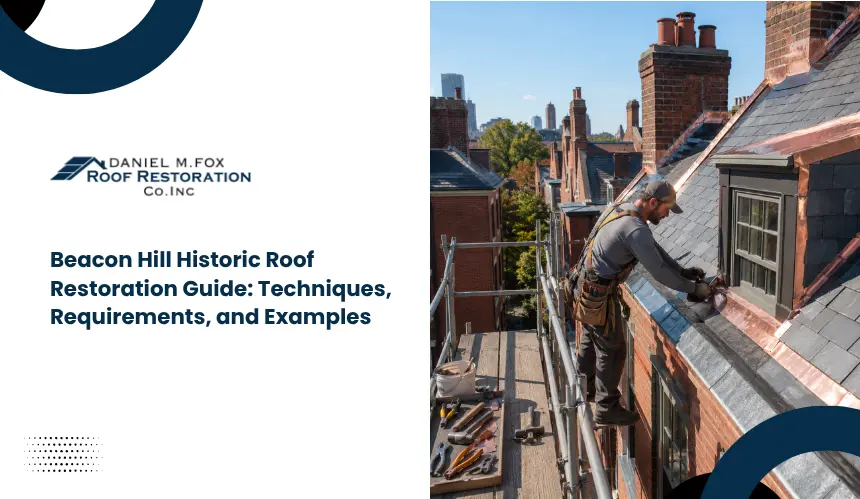
Beacon Hill Historic Roof Restoration Guide: Techniques, Requirements, and Examples
The Beacon Hill brownstone roof restoration project stands out because it brought a deteriorating historic slate roof back to full structural strength while preserving every architectural detail required in a protected Boston district.
The case study offers a clear look at how skilled planning, accurate material selection, and strict preservation compliance work together to protect the integrity of a historic roof that has weathered more than a century of use.
Understanding the Historic Significance of Beacon Hill Brownstones
Did you know? The Beacon Hill Historic District was the first city-designated historic district in Boston, with designation beginning in 1955. |
Beacon Hill is recognized for its nineteenth century charm, and the roofs of its brownstones help define that character. Many still feature original slate surfaces, copper elements, and handcrafted structural details that have survived for generations.
These roofs represent more than functional components. They are visible markers of the neighborhood’s architectural history.
Architectural Features That Shape Roof Restoration Decisions in Beacon Hill
The design of a Beacon Hill brownstone strongly influences how its roof should be restored. Steep slate surfaces, decorative dormers, tall chimneys, and unique rooflines were built with construction practices common in the nineteenth century.
These features guide how contractors source materials, plan the order of repairs, and handle fragile components that have aged over time. Each decision helps maintain the original aesthetic that makes Beacon Hill instantly recognizable.
The Cultural Importance of Preserving Historic Roof Elements in Beacon Hill
Beyond structural value, these roofs carry cultural meaning within the community. They create continuity across the district and contribute to the visual rhythm of the streetscape.
Restoring roof elements such as slate tiles, copper accents, and masonry trims helps preserve the atmosphere that draws residents, historians, and visitors to the area.
Paying attention to these details reinforces the neighborhood’s identity and maintains the legacy that has been passed down through generations.
Pre-Restoration Assessment of the Brownstone Roof System
Before historic roof work begins on a Beacon Hill brownstone, specialists conduct a careful assessment to understand the roof’s condition and determine which elements require preservation, repair, or full replacement.
Brownstones in this district often contain original slate, copper detailing, and nineteenth century structural components, so identifying issues early helps teams plan a restoration that respects the architectural character of the home and complies with preservation requirements.
What Structural Conditions Are Commonly Found During Initial Roof Evaluations of Brownstone Roof System?
Inspectors often uncover patterns of deterioration that develop over decades of exposure to New England weather. Slate tiles may show delamination caused by repeated freeze and thaw cycles, and moisture can settle beneath older tiles or around dormers where flashing has weakened.
Copper elements often age naturally and may display early corrosion that needs attention. Chimney masonry might also loosen or erode, creating small gaps that allow water to travel into the roof system. These findings guide the order of repairs and help determine which components require immediate stabilization.
Interesting: In historic slate-roof assemblies, even after a century, slate failure rates can be as low as 1.5%, meaning over 98 percent of slates remain intact. |
Which Tools and Techniques Do Experts Use to Inspect Historic Roofs?
Specialists rely on tools that allow them to diagnose issues without disturbing historic materials. Thermal imaging is used to locate concealed moisture, while moisture meters help verify the extent of water penetration in the roof deck.
Drone photography supports inspections by providing safe access to higher sections of the roof in Beacon Hill’s narrow streets. In some cases, archived drawings or past renovation photos help clarify original roof configurations.
Selecting Proper Materials for Historically Accurate Roof Restoration
Choosing appropriate materials is one of the most important decisions in any Beacon Hill roof restoration. Brownstones in this neighborhood rely on exterior elements that define their nineteenth century character, and preservation guidelines require close alignment with original materials. Every choice, from slate type to flashing metal, helps maintain the historic identity of the building while improving long term performance.
Why Is Slate Matching Important for Beacon Hill Roof Restorations?
Slate selection often determines whether a restored roof will meet preservation expectations. Specialists look for slate that resembles the original in thickness, color variation, and texture so the finished surface blends naturally with surrounding brownstones.
Matching the pattern layout is equally important because many Beacon Hill roofs were installed with specific coursing styles. Using slate from reputable quarries helps ensure material longevity and visual consistency.
Copper vs. Lead Flashing for Historic Brownstones
Material decisions for flashing depend on durability, compatibility with slate, and alignment with preservation guidelines. Copper is traditionally used on Beacon Hill brownstones because it develops a natural patina that fits well with the district’s architectural style.
Some older roofs may show remnants of lead flashing, which requires careful evaluation before replacement. Preservation authorities typically expect flashing materials to reflect the original metalwork that was used when the building was constructed.
Insulation and Underlayment Options That Meet Historic Criteria
Beacon Hill roofs must use underlayment and insulation systems that improve performance without affecting the exterior appearance. Specialists often use breathable or vapor permeable membranes that allow the roof deck to dry naturally while still providing water protection beneath the slate. These membranes prevent condensation issues that can develop when modern synthetic barriers are used in historic assemblies.
Insulation selections also require careful consideration. Many Beacon Hill brownstones rely on traditional rafters and older interior framing, so insulation must be compatible with these materials. Mineral wool and rigid wood fiberboard are common choices because they manage moisture effectively and do not interfere with the ventilation patterns found in older roof systems.
The Core Challenges Faced During Beacon Hill Roof Restorations
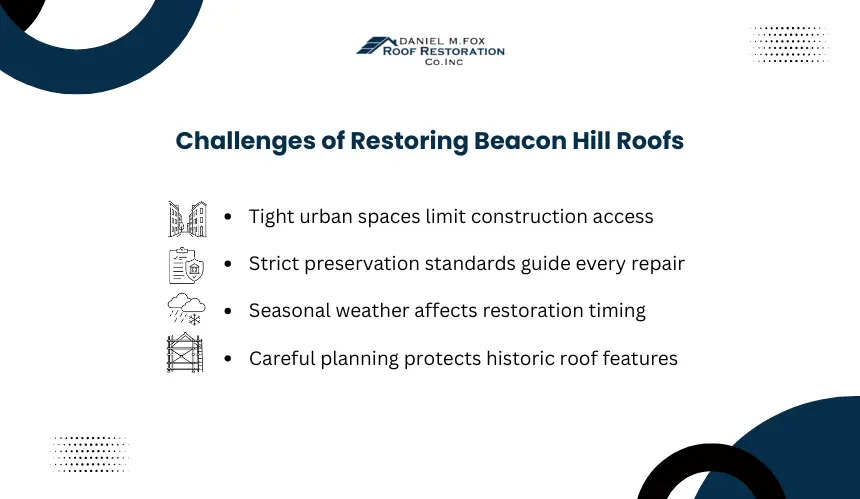
Historic roof restoration in Beacon Hill presents challenges that differ from standard roofing projects. The district’s architecture, preservation rules, and densely built surroundings influence how specialists plan and execute the work.
Each challenge requires careful coordination to protect the building’s character and maintain compliance with the neighborhood’s preservation standards.
1. Limited Access and Urban Working Conditions
Beacon Hill’s narrow streets and closely aligned brownstones create significant limitations for construction teams. Scaffolding must be arranged in ways that do not obstruct pedestrian pathways or disturb adjacent historic facades. Material delivery is often done in smaller loads because large vehicles cannot navigate the neighborhood easily.
Moving slate, copper, and tools up to the roof requires organized staging areas that fit within restricted space. These conditions influence the sequence of work and require detailed logistical planning.
2. Strict Preservation Compliance Requirements
Preservation standards in Beacon Hill require every visible exterior detail to align with the building’s original appearance. When existing materials show unexpected deterioration, replacements must still match the historic profile, even if modern alternatives would simplify the repair.
Roofing contractors document each adjustment to ensure alignment with Beacon Hill Architectural Commission and Boston Landmarks Commission guidelines. This ongoing coordination protects the neighborhood’s architectural continuity but also demands careful planning and consistent communication.
3. Weather and Seasonal Construction Constraints
Boston’s climate significantly affects restoration schedules on historic roofs. Cold weather and freeze thaw cycles can weaken slate or cause small movements in older materials, which influences when certain repairs can safely occur.
Humidity and coastal storms require secure coverings to protect exposed areas while work is underway. Specialists plan installation of slate, copper detailing, and structural repairs around temperature conditions to maintain durability and long term performance.
Boston Preservation Guidelines Influence Roofing Work
Historic districts in Boston follow detailed preservation standards that protect the original appearance of brownstones and ensure that any exterior work respects the neighborhood’s architectural character. Roofing plans must reflect these expectations clearly before any restoration is approved.
Key Requirements Set by Preservation Authorities in Boston
Restoration proposals are reviewed to confirm:
- Material authenticity that reflects the original roof assembly
- Color accuracy for slate and copper elements
- Flashing compatibility with historic metals and roof geometry
- Visual consistency with surrounding brownstones
- Proper detailing for dormers, chimneys, and rooflines
Both the Boston Landmarks Commission and the National Register of Historic Places require documentation that demonstrates the proposed work will not change or diminish the historic fabric of the structure.
Beacon Hill Architectural Commission Requirements for Roof Restoration
The Beacon Hill Architectural Commission (BHAC) is responsible for reviewing all exterior alterations that can be seen from a public way. This includes roof replacements, slate repairs, copper detailing, and changes to structural roof elements. These expectations guide historic roof preservation contractors in Greater Boston toward authentic restoration methods that keep the brownstone consistent with its nineteenth century design.
1. Design and Structural Expectations
BHAC standards emphasize:
- Maintaining original rooflines without altering height or slope
- Preserving dormer shape, chimney massing, and parapet details
- Ensuring repairs maintain the visual rhythm of the streetscape
2. Material Matching Standards
To protect the neighborhood’s historic character, BHAC requires:
- Slate that replicates the original in color blend, thickness, and texture
- Copper components shaped and detailed to reflect historic craftsmanship
- Replacement materials that duplicate existing features wherever possible
These expectations guide historic roof preservation contractors across Greater Boston toward restoration practices that honor nineteenth century design while ensuring long term roof performance.
3. Focus on Authentic Replication
BHAC approvals consistently highlight the importance of accurate duplication. Several documented restoration reviews note that reinstating period appropriate slate patterns is essential to maintaining the architectural identity of Beacon Hill’s brownstones.
This focus ensures the neighborhood’s historic streetscape remains visually unified and culturally significant.
Example of Slate Roof Replacement on a Beacon Hill Brownstone
A brownstone built around 1870 underwent a full exterior restoration that included the installation of a new slate roof. This project is publicly documented through the contractor’s portfolio and reflects common preservation practices in Beacon Hill.
Key details include:
- Use of slate selected to match the building’s original appearance
- Installation designed to preserve nineteenth century exterior character
- Integration of copper detailing to replicate historic metalwork
- Restoration of exterior elements to maintain the building’s historic identity
Although the portfolio does not provide a full technical breakdown, the photographic evidence and description confirm that the project aligned with the architectural expectations of the historic district.
Roof Restoration Approvals Recorded in BHAC Public Meeting Notices
The Beacon Hill Architectural Commission provides public access to meeting agendas and approval notices for work conducted within the historic district. Several recent entries confirm the approval of complete roof replacements or significant slate repair on specific brownstone addresses.
These records highlight how BHAC reviews visible roofing changes and ensures the work follows preservation standards.
Typical project characteristics include:
- Replacement of deteriorated slate with historically appropriate materials
- Preservation of existing dormer structures, chimneys, and parapet lines
- Approval conditions requiring accurate matching of slate color and thickness
- Documentation confirming that exterior changes remain consistent with the historic streetscape
While these notices do not provide detailed technical plans, they offer authentic confirmation that such restoration efforts are actively reviewed and guided by preservation authorities.
If you want your historic brownstone roof restored with the care it deserves, Daniel Fox Roofing Inc. is ready to help. We understand the craftsmanship, material precision, and preservation standards needed to protect the architectural character of roofs. Reach out today to begin a restoration that honors your home’s history while strengthening its future.
Frequently Asked Questions
How long does a typical Beacon Hill roof restoration review process take?
The review timeline varies based on project scope, but most homeowners can expect several weeks between submitting an application and receiving a decision from the Beacon Hill Architectural Commission. The commission evaluates material samples, visibility from public ways, and the proposed detailing before granting approval. Larger projects may require revisions, which can extend the process.
Are temporary protective structures allowed during restoration work?
Yes, temporary coverings and protective scaffolding are permitted when needed for safety and weather protection. These structures must be arranged so they do not obstruct public pathways or affect nearby historic facades. Contractors usually coordinate these setups in advance to ensure compliance with district expectations while maintaining safe working conditions.
Can modern energy efficiency upgrades be added during historic roof restoration?
Energy improvements are possible as long as they do not alter visible exterior features. Upgrades such as improved insulation, moisture safe underlayment, or interior ventilation adjustments can be incorporated into the roof assembly.
These enhancements must remain compatible with historic materials and avoid creating vapor barriers that could harm original wood framing.
What type of maintenance schedule is recommended after a historic roof is restored?
Most specialists recommend an annual visual check and a more detailed review every few years to evaluate slate movement, copper aging, and debris buildup. Routine maintenance helps preserve the roof’s appearance and ensures that early signs of wear are addressed before they affect underlying structural components.
Is it possible to reuse original slate during a restoration project?
Original slate can sometimes be salvaged if the tiles remain structurally sound. Contractors often evaluate each piece during removal and reuse it when possible to maintain visual continuity. Salvaged slate is typically integrated with new matching material to create a uniform, historically appropriate finish.