
- danielfox
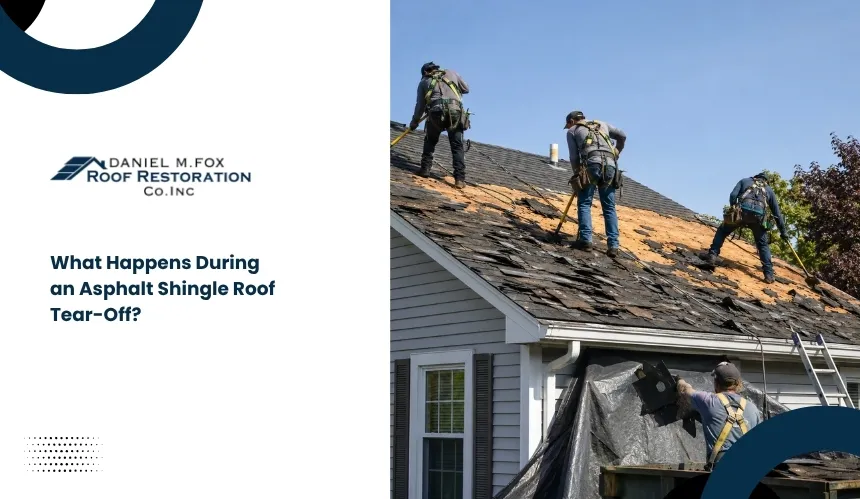
What Happens During an Asphalt Shingle Roof Tear-Off?
Key Takeaways
|
Replacing an asphalt shingle roof is a major investment, and one of the most common questions homeowners ask is what actually happens during the tear-off process.
Removing the existing roofing system is more than pulling off old shingles because it also exposes the roof deck, reveals hidden damage, and prepares the surface for a new installation.
Understanding each stage helps you know what to expect, why certain steps cannot be skipped, and how the process affects the performance of your new roof. This guide explains the complete asphalt shingle roof tear-off process from preparation through final cleanup.
What Happens Before the Roof Tear-Off Begins?
Before the first shingle is removed, the roofing contractor prepares the job site to protect the property, maintain worker safety, and keep the tear-off process efficient. Careful preparation reduces the risk of damage, speeds up debris removal, and allows the crew to identify any conditions that could affect the roof replacement.
Protecting the Home and Surrounding Property
The first step is protecting areas around the house that could be affected by falling roofing materials. Contractors typically cover landscaping, HVAC equipment, windows, decks, and other vulnerable features with tarps or protective coverings.
Vehicles are usually moved away from the work zone, and homeowners may be advised to remove fragile items from walls or shelves because vibrations from roof work can occasionally shift them.
Protecting the property before work begins minimizes cleanup, reduces the chance of accidental damage, and creates a safer environment for both the crew and the homeowner.
Setting Up Safety Equipment and Material Disposal
Roof tear-offs generate a significant amount of debris, including shingles, roofing nails, underlayment, flashing, and damaged wood. To manage this efficiently, contractors position a dumpster or disposal trailer close to the home whenever site access allows. This shortens the distance debris must travel and helps keep the work area organized.
Safety equipment is also installed before work starts. Depending on the roof’s height, pitch, and local safety requirements, crews may use fall protection systems, roof anchors, harnesses, ladders, and stabilizing equipment. Establishing these measures before removal begins reduces job site hazards and allows work to proceed without unnecessary interruptions.
OSHA requires residential construction workers operating six feet or more above a lower level to use an approved fall-protection system. Visible harnesses, anchors, guardrails, or equivalent controls indicate that the roofing crew is treating the tear-off as regulated construction rather than routine exterior work. |
Inspecting the Existing Roof Before Removal
Although a roof replacement has already been planned, contractors perform a final visual inspection before beginning the tear-off. They examine the condition of the shingles, flashing, roof penetrations, drip edge, valleys, and ventilation components to understand how the existing roofing system was assembled.
This inspection also helps identify areas that may require closer attention once the old materials are removed. Signs such as uneven roof surfaces, recurring leak locations, or visible sagging can indicate underlying deck deterioration or moisture intrusion that cannot be fully confirmed until the roof is stripped to its structural surface.
Step-by-Step: How an Asphalt Shingle Roof Tear-Off Is Performed
Once the site is prepared, the crew begins removing the existing roofing system in a controlled sequence. Each stage exposes the next layer of the roof, allowing contractors to verify structural integrity before new materials are installed. In Newton, MA, where roofs must withstand snow loads, freeze-thaw cycles, and seasonal rain, following this sequence is essential for a durable replacement.
1. Removing Shingles, Underlayment, and Flashing
The tear-off starts with stripping away the asphalt shingles using specialized roofing tools designed to lift shingles while removing embedded nails. Crews work in sections from the ridge toward the eaves to keep debris manageable and maintain a safe working surface.
After the shingles are removed, the underlayment is pulled up to expose the roof deck. Metal flashing around chimneys, skylights, roof valleys, vents, and wall intersections is also removed unless specific components remain in suitable condition for reuse, which is uncommon during a full roof replacement. Removing every roofing layer ensures the new system is built on a clean, properly prepared surface rather than over aging materials.
2. Inspecting the Roof Deck for Hidden Damage
With the roofing materials removed, the roof deck becomes fully visible for inspection. This is the first opportunity to evaluate the condition of the wood sheathing without concealed layers hiding potential problems.
Contractors check for moisture damage, soft spots, delamination, loose fasteners, warped panels, and areas weakened by long-term leaks. They also verify that the decking provides a solid fastening surface for new shingles. In older homes throughout Newton, MA, this inspection is especially valuable because previous repairs or decades of weather exposure may have affected sections of the roof structure that were not visible before the tear-off.
3. Repairing or Replacing Damaged Decking
If damaged decking is found, those sections are removed and replaced before the new roofing system is installed. Installing shingles over deteriorated wood reduces nail holding strength and increases the risk of premature roof failure.
Repairs may involve replacing individual plywood or oriented strand board (OSB) panels, reinforcing localized framing where necessary, or correcting uneven areas that could affect the finished roof surface. Completing these repairs at this stage provides a structurally sound base capable of supporting the new roofing materials for their intended service life.
4. Preparing the Roof for New Roofing Materials
Once the roof deck has passed inspection and all necessary repairs are complete, the surface is cleaned of loose debris, protruding fasteners, and remaining roofing material. The deck is then ready for the installation of the new roofing system.
This preparation creates the proper foundation for underlayment, ice and water barrier where required, flashing, ventilation components, and new asphalt shingles. Starting with a clean, structurally sound deck improves installation quality and reduces the likelihood of future issues caused by hidden defects beneath the finished roof.
Massachusetts’ current residential roof-assembly requirements apply the 2021 International Residential Code, which requires ice barriers in designated ice-prone areas to extend at least 24 inches inside the exterior wall line. This coverage protects more than the visible eave by reaching the heated-wall transition where backed-up meltwater can penetrate the roof assembly. |
What Problems Can Be Found During a Roof Tear-Off?
A roof tear-off often reveals conditions that cannot be detected from the surface alone. Identifying and correcting these issues before installing new shingles prevents hidden defects from shortening the lifespan of the new roofing system.
In Newton, MA, where roofs experience repeated freeze-thaw cycles, snow accumulation, and seasonal storms, uncovering concealed damage is a key advantage of a full tear-off.
Wood Rot and Moisture Damage
Water that penetrates beneath aging shingles or flashing can remain trapped within the roof assembly for extended periods. Over time, this moisture can cause roof decking to soften, wood fibers to decay, and fasteners to lose their holding strength.
Roofing contractors inspect areas around valleys, chimneys, skylights, and roof penetrations because these locations are more prone to water intrusion. Replacing moisture-damaged decking before the new roof is installed helps prevent future leaks and provides a stable surface for fastening shingles.
Structural Weakness or Deck Deterioration
A tear-off also exposes structural issues that may not produce obvious symptoms from inside the home. Decking panels can weaken due to age, repeated moisture exposure, or long-term loading, resulting in soft spots or uneven roof surfaces.
Contractors check for loose or deteriorated sheathing, sagging sections, and areas that no longer meet structural performance requirements. For many older homes in Newton, MA, this inspection helps identify localized deterioration before it affects the performance of the replacement roof.
Ventilation and Flashing Issues That Need Correction
Removing the old roofing system allows contractors to evaluate whether critical components were installed correctly or have deteriorated over time. Damaged flashing, improperly sealed roof penetrations, or outdated ventilation layouts can all contribute to recurring roofing problems.
During this stage, contractors verify that flashing locations are properly detailed and that intake and exhaust ventilation can support balanced attic airflow. Correcting these deficiencies before installing new materials helps control moisture buildup, improves roof system performance, and reduces the likelihood of premature shingle deterioration.
What Should Homeowners Expect During the Roof Tear-off Project?
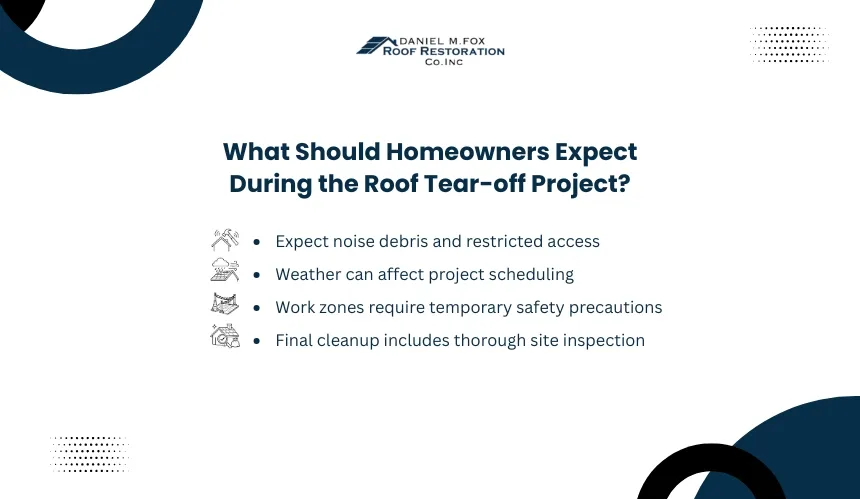
A roof tear-off is an active construction project that temporarily changes how the property is accessed and used. Knowing what to expect during the work helps homeowners prepare in advance and understand how the contractor manages safety, scheduling, and site conditions.
If you are planning an asphalt shingles roof replacement in Newton, MA, these expectations are especially relevant because changing weather can influence daily roofing operations.
Noise, Debris, and Temporary Access Restrictions
Roof tear-offs involve constant movement of workers, roofing materials, and disposal equipment. Homeowners should expect sustained noise from shingle removal, nail extraction, and debris being transferred into dumpsters or trailers.
To maintain a safe work zone, contractors typically restrict access to areas directly below the roofline. Patios, driveways, or sections of the yard may be temporarily unavailable while materials are being removed overhead.
Although crews use tarps and magnetic sweepers to collect roofing nails, homeowners are generally advised to keep children and pets away from the work area until cleanup is complete.
Typical Timeline and Weather Considerations
The duration of a roof tear-off depends on several factors, including roof size, roof complexity, pitch, the extent of decking repairs, and weather conditions. Many residential tear-offs are completed within a day, while larger or more complex projects may require additional time before new roofing materials are fully installed.
Weather also plays an important role in scheduling. In Newton, MA, rain, strong winds, or severe weather forecasts may require contractors to adjust the work schedule to avoid exposing the roof deck to unnecessary moisture.
Professional roofing crews monitor weather conditions closely and use temporary protective coverings if unexpected weather develops during the project.
Cleanup and Final Site Inspection
After the tear-off and installation work are complete, contractors perform a thorough cleanup of the property. Roofing debris is removed, protective coverings are collected, and magnetic tools are used to recover loose nails from driveways, walkways, lawns, and landscaped areas.
The project concludes with a final inspection to verify that roofing materials have been installed correctly, flashing details are complete, and the job site has been restored.
This final review also provides an opportunity for homeowners to ask questions and confirm that the roof replacement has been completed according to the agreed scope of work.
Why a Complete Roof Tear-Off Creates a Better Foundation for a New Roof
A complete roof tear-off allows contractors to inspect the roof deck, repair hidden damage, and install every roofing component on a clean, structurally sound surface. This reduces the risk of trapping moisture, covering deteriorated wood, or leaving behind problems that could shorten the lifespan of the new roof.
It also allows the new underlayment, flashing, ventilation components, and asphalt shingles to function as a complete roofing system rather than relying on aging materials underneath. Many manufacturers also require installation over a properly prepared deck for warranty compliance.
Although a full tear-off requires more work upfront than installing shingles over an existing roof, it provides a stronger foundation, improves long-term performance, and helps prevent costly issues that may otherwise remain hidden beneath the new roof.
Frequently Asked Questions
How can I avoid surprise charges for damaged roof decking?
Ask the contractor to list the replacement rate for plywood or OSB in the written estimate, including labor and disposal. The contract should also explain how additional work is documented and approved. Request photographs of damaged sections before authorizing a change order so added costs remain verifiable.
Can a roofer determine how much decking needs replacement before the tear-off?
An attic inspection, moisture stains, sagging areas, and soft roof sections can indicate possible deterioration, but covered sheathing cannot be fully evaluated beforehand. A responsible estimate should identify this uncertainty rather than guarantee a fixed decking quantity. Older homes or roofs with previous leaks carry a greater risk of concealed repairs.
Do gutters need to be removed before asphalt shingles are torn off?
Gutters can often remain in place when they are securely attached and properly protected. Removal may be necessary if the drip edge must be replaced, the gutter fasteners obstruct roof-edge work, or the existing system is damaged. The contractor should explain how gutters and downspouts will be protected from falling debris.
What happens if solar panels, skylights, or satellite equipment are installed on the roof?
Roof-mounted equipment usually requires advance coordination before tear-off begins. Solar panels may need removal by a qualified installer, while skylights should be evaluated for replacement or reflashing. Satellite dishes, antennas, and wiring must also be addressed in the project scope to prevent delays, leaks, or unexpected subcontractor charges.
Can roof removal cause dust or debris to enter the attic?
Small particles may enter through decking gaps, attic vents, or openings around penetrations, particularly in older roof assemblies. Homeowners should cover stored belongings and keep insulation-sensitive equipment protected. Debris inside the attic may also reveal sheathing gaps that should be sealed or corrected before the replacement system is completed.
Does an asphalt roof tear-off require a permit in Newton, MA?
Permit requirements should be confirmed with Newton’s Inspectional Services Department before work begins. The department oversees permits for building repair, reconstruction, and alteration, with applications handled through the city’s online portal. Homeowners should also clarify whether the contractor will arrange required inspections and include permit fees in the estimate.
What documents should I receive after the roof replacement is finished?
Keep the signed contract, final invoice, permit records, inspection documentation, material specifications, warranty certificates, and photographs of completed work. These records can support future warranty claims, insurance reviews, and home-sale disclosures. Confirm which warranty requires contractor registration because product and workmanship coverage may involve separate documentation.