
- danielfox
How Much Does Asphalt Shingle Roof Replacement Cost in Massachusetts? (2026 Guide)
Key Takeaways
|
Replacing an asphalt shingle roof is one of the largest home improvement expenses many Massachusetts homeowners will face, but project costs can vary significantly based on roof size, material quality, labor, and the home’s condition. In most cases, homeowners can expect to pay anywhere from $8,000 to $20,000+, with larger or more complex roofs costing more.
This guide explains typical asphalt shingle roof replacement costs in Massachusetts, the factors that influence pricing, and how to determine whether a quote is fair.
Average Asphalt Shingle Roof Replacement Cost in Massachusetts
Roof replacement costs in Massachusetts are influenced by local labor rates, building requirements, roof complexity, and material selection. While every home is different, understanding typical price ranges provides a reliable starting point for budgeting and comparing contractor estimates.
Typical Cost Range for Most Massachusetts Homes
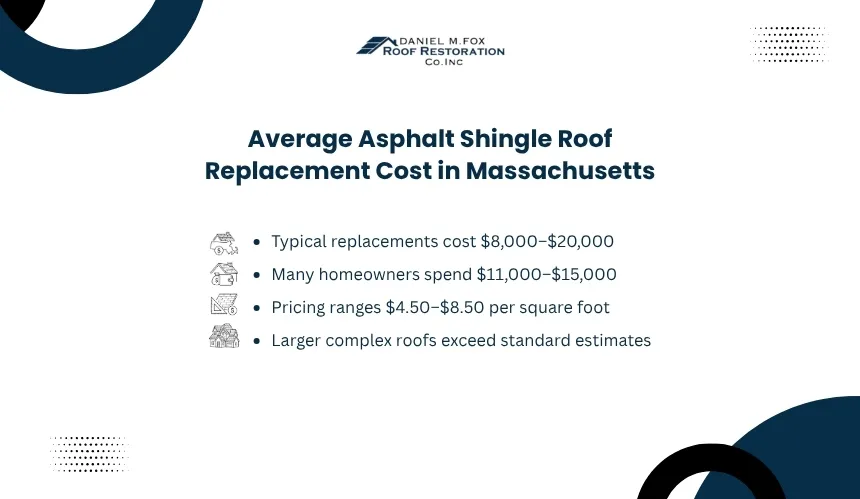
A complete asphalt shingle roof replacement in Massachusetts typically costs between $8,000 and $20,000, with many homeowners spending around $11,000 to $15,000 for a standard single-family home. These estimates generally include removing the existing roof, installing new underlayment, asphalt shingles, flashing replacement where needed, and cleanup.
Projects may exceed this range if the roof has multiple slopes, steep sections, extensive flashing details, or damaged roof decking that requires replacement. Conversely, smaller, single-story homes with straightforward roof designs often fall near the lower end of the pricing spectrum.
Average Cost by Roof Size (Small, Medium, and Large Homes)
Roof size is one of the strongest cost drivers because it directly affects material quantities, labor hours, and waste disposal.
- Small homes (1,000 to 1,500 sq. ft.): Approximately $8,000 to $11,000
- Medium homes (1,500 to 2,500 sq. ft.): Approximately $11,000 to $16,000
- Large homes (2,500+ sq. ft.): Approximately $16,000 to $20,000+
These ranges assume architectural asphalt shingles installed under typical Massachusetts roofing conditions. Homes with detached garages, dormers, skylights, or complex rooflines may require additional labor and materials.
Cost Per Square Foot and Per Roofing Square
Roofing contractors commonly estimate projects using both square footage and roofing squares, where one roofing square equals 100 square feet of roof surface.
For asphalt shingle roof replacement in Massachusetts, homeowners can generally expect:
- Approximately $4.50 to $8.50 per square foot of roof area
- Approximately $450 to $850 per roofing square, including labor and standard installation materials
The final cost per square depends on factors such as roof accessibility, shingle grade, underlayment selection, ventilation upgrades, and whether structural repairs are discovered after the existing roof is removed. Understanding these unit costs also makes it easier to compare estimates from different roofing contractors on an equal basis.
What Affects the Cost of Roof Replacement?
Two homes with similar square footage can receive noticeably different roofing estimates because replacement costs are determined by more than size alone. In Massachusetts, pricing is also influenced by regional labor costs, local building requirements, and roofing practices designed to withstand the state’s snow, ice, wind, and seasonal temperature fluctuations.
Roof Size, Pitch, and Complexity
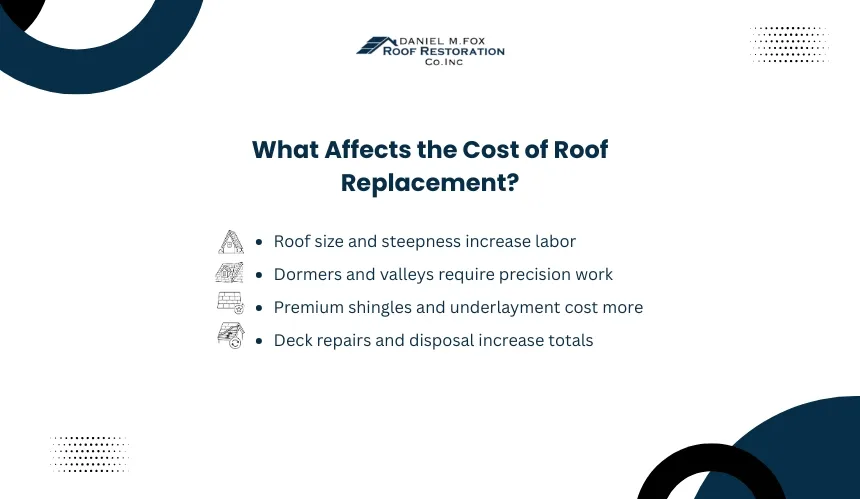
Larger roofs require more shingles, underlayment, fasteners, and labor, naturally increasing the overall project cost. However, roof geometry often has an even greater impact.
Steep roof pitches are common on many Massachusetts Colonial, Cape Cod, and Victorian homes, requiring additional safety equipment and slower installation methods.
Architectural features such as dormers, valleys, chimneys, skylights, and intersecting roof planes increase the amount of cutting, flashing, and precision work involved, leading to higher labor costs and greater material waste.
Material Quality and Shingle Type
Not all asphalt shingles are priced the same. Standard three-tab shingles are typically the most economical option, while architectural shingles have become the preferred choice for many Massachusetts homeowners because they offer improved wind resistance, longer service life, and better performance during harsh New England weather.
Additional roofing components also affect the final price, including:
- Synthetic or high-performance underlayment
- Ice and water shield along eaves, valleys, and vulnerable roof penetrations
- Ridge cap shingles
- Ridge and intake ventilation systems
- New flashing around chimneys, walls, plumbing vents, and skylights
Massachusetts building codes generally require ice barrier protection in vulnerable roof areas to help reduce the risk of ice dam-related water intrusion, making these materials a standard part of many roof replacement projects rather than optional upgrades.
Tear-Off, Decking Repairs, and Disposal Costs
Most roof replacements in Massachusetts involve removing the existing roofing system before new materials are installed. Tear-off labor, dumpster rental, transportation, and disposal fees are typically included in the contractor’s estimate.
Once the old shingles are removed, hidden issues such as moisture-damaged plywood, deteriorated roof decking, or previous repair work may become visible. Homes exposed to repeated freeze-thaw cycles or long-term ice dam activity are more likely to require localized decking replacement before the new roofing system can be installed safely.
Labor Rates, Permits, and Seasonal Demand in Massachusetts
Labor costs vary across Massachusetts, with roofing projects in the Greater Boston area and surrounding communities often carrying higher installation costs than many central or western parts of the state due to higher operating expenses and demand.
Municipal permit requirements also differ by city or town, and permit fees are commonly included in professional roofing estimates. Seasonal demand further affects pricing, with the busiest roofing period typically running from late spring through fall.
During peak months, contractor schedules fill quickly, which can influence both project timelines and labor costs, especially for larger or more complex roof replacements.
Estimated Asphalt Singles Roofing Costs in Massachusetts by Home Size
While contractors calculate pricing using the actual roof surface area, many homeowners know their home’s square footage instead of the roof size. The estimates below provide a practical budgeting guide for typical Massachusetts homes with asphalt shingle roofing. Actual costs will vary based on roof design, pitch, and the factors discussed earlier.
1,000 to 1,500 Sq. Ft. Homes
For smaller homes, ranch-style properties, and many Cape Cod homes, an asphalt shingle roof replacement typically costs between $8,000 and $11,000.
This price generally covers the removal of one existing layer of shingles, installation of new architectural asphalt shingles, underlayment, flashing replacement where necessary, and standard cleanup. Costs may increase if the roof has multiple dormers, steep slopes, or damaged roof decking that requires repair.
1,500 to 2,500 Sq. Ft. Homes
Homes in this size range account for many of the single-family properties found throughout Massachusetts. A complete asphalt shingle roof replacement generally falls between $11,000 and $16,000.
Many roofs in this category include additional features such as attached garages, intersecting rooflines, valleys, and multiple ventilation components. These design elements require more materials and installation time, contributing to the overall project cost.
2,500+ Sq. Ft. Homes
Larger homes typically require a greater volume of roofing materials and significantly more labor. Homeowners can generally expect asphalt shingle roof replacement costs to range from $16,000 to $20,000+, depending on the complexity of the roof.
High-end homes often include multiple roof sections, chimneys, skylights, covered porches, and intricate flashing details that increase installation time. Premium architectural or designer asphalt shingles, upgraded ventilation systems, and extensive decking repairs can also push project costs beyond the upper end of the typical range.
How to Know if a Roofing Quote Is Fair
A roofing estimate should provide enough detail to explain exactly what you are paying for, not just a final price. Comparing quotes based on scope, materials, and workmanship rather than cost alone helps homeowners make a more informed decision and reduces the risk of unexpected expenses after work begins.
What Should a Professional Roofing Estimate Include?
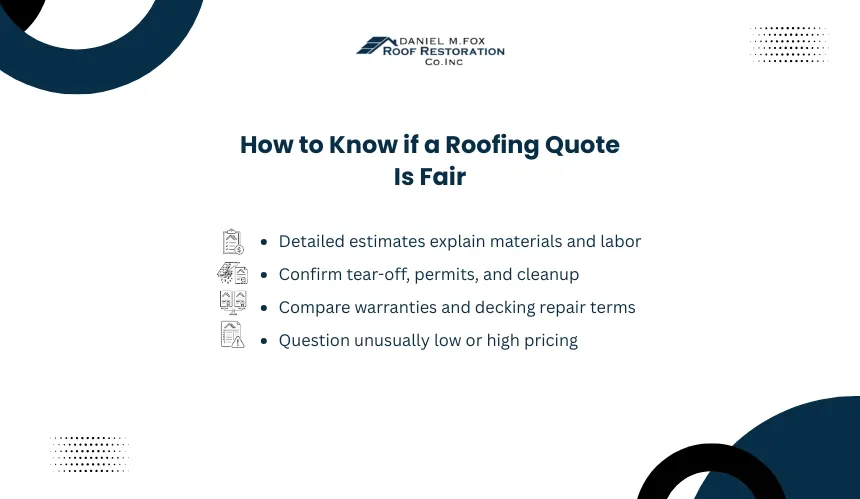
A detailed estimate should clearly identify the work being performed and the materials being installed. This makes it easier to compare contractors on an equal basis and understand where pricing differences come from.
Look for estimates that include:
- Complete tear-off and disposal of existing shingles
- Type and manufacturer of asphalt shingles
- Underlayment and ice and water shield specifications
- Flashing replacement around chimneys, walls, and roof penetrations
- Ridge ventilation or other ventilation improvements, if applicable
- Replacement of damaged roof decking, including how additional costs are handled
- Permit fees, cleanup, and project timeline
- Manufacturer warranties and contractor workmanship warranty
A transparent estimate reduces misunderstandings and provides a clearer picture of the overall value being offered.
Warning Signs of Unusually Low or High Quotes
The lowest quote is not always the best value. Estimates that are significantly below the local market average may exclude necessary materials, use lower-grade products, or omit costs that are later added as change orders.
Likewise, a substantially higher estimate should include a clear explanation for the added cost, such as premium roofing materials, extensive structural repairs, or enhanced warranty coverage. Asking contractors to explain major pricing differences helps ensure you are comparing the same scope of work.
Questions to Ask Before Signing a Roofing Contract
Before selecting a roofing contractor, homeowners should clarify several important details that can affect both project quality and long-term performance.
Consider asking:
- Is the contractor licensed and adequately insured to work in Massachusetts?
- Will the existing roof decking be inspected after tear-off?
- What type of asphalt shingles and underlayment will be installed?
- How are unforeseen repairs documented and approved?
- What warranties are provided for both materials and workmanship?
- Who obtains the required building permits?
For homeowners in Quincy, MA, these questions are particularly valuable because many neighborhoods feature older homes with aging roof structures, chimneys, and multiple roof penetrations that may require additional attention during replacement.
An asphalt shingles roofing contractor in Quincy, MA, familiar with local housing styles, municipal permitting requirements, and coastal weather conditions can often identify potential issues early and provide a more accurate estimate before work begins.
How to Budget for an Asphalt Shingle Roof Replacement
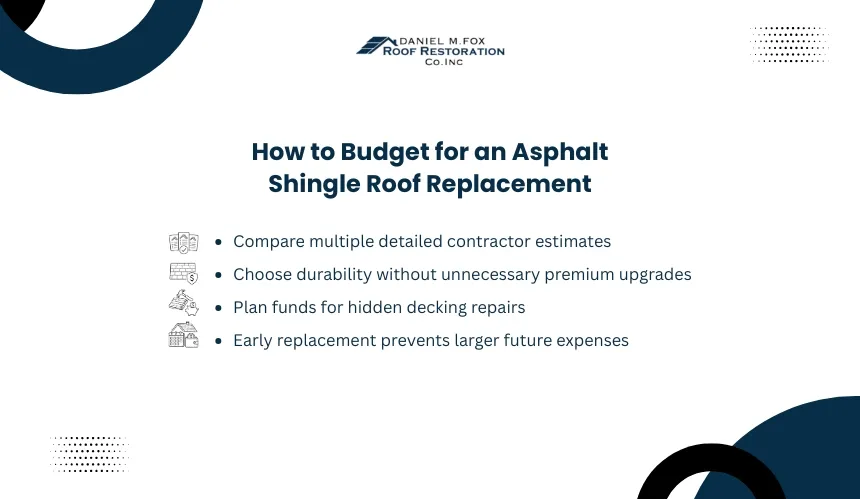
Planning ahead can make a roof replacement more manageable financially and help you avoid delaying a project until leaks or structural damage become more expensive to repair. A realistic budget should account for both the quoted installation cost and any potential repairs that may be discovered once the existing roof is removed.
Ways to Reduce Replacement Costs Without Sacrificing Quality
Lowering the overall project cost does not necessarily mean choosing the cheapest materials or contractor. Instead, focus on decisions that maintain long-term performance while avoiding unnecessary upgrades.
Consider these practical strategies:
- Request detailed estimates from multiple reputable Massachusetts roofing contractors.
- Choose architectural asphalt shingles that balance durability and cost rather than premium designer products if appearance is not the primary concern.
- Schedule the project before minor roof issues develop into extensive decking or structural repairs.
- Review the estimate carefully to understand what is included before comparing prices.
- Ask about manufacturer promotions or financing options that may be available during certain times of the year.
These approaches help homeowners control costs while still investing in a roofing system designed to perform for decades.
When Replacing Your Roof Now Can Save Money Later
Postponing a roof replacement often increases the total cost of ownership. Aging shingles can allow moisture to penetrate the roofing system, leading to deteriorated decking, damaged insulation, interior ceiling stains, mold growth, and more extensive repairs.
Replacing the roof before these issues develop typically limits the project to the roofing system itself rather than additional structural restoration. It also helps maintain proper weather protection through Massachusetts’ heavy rain, snow, and freeze-thaw cycles, reducing the likelihood of emergency repairs during severe weather.
Is Asphalt Shingle Roofing the Best Value for Massachusetts Homes?
For many homeowners, asphalt shingles remain the most cost-effective roofing material because they offer a strong balance of affordability, durability, and availability. Modern architectural shingles are designed to withstand high winds, shed water efficiently, and perform reliably in New England’s changing weather conditions when installed correctly.
While premium materials such as metal, slate, or synthetic roofing can offer longer service lives, they also require a significantly higher upfront investment. For homeowners seeking dependable long-term performance without substantially increasing project costs, an asphalt shingle roof replacement continues to provide one of the best overall values in the Massachusetts residential roofing market.
If you’re planning an asphalt shingle roof replacement in Quincy or anywhere across the South Shore and Greater Boston area, GN Exteriors delivers expert roofing solutions with honest pricing and quality craftsmanship. Contact our team today to schedule a professional roof assessment and receive a detailed estimate tailored to your home’s needs.
Frequently Asked Questions
Can an asphalt shingle roof be replaced during winter in Massachusetts?
An asphalt shingle roof can be replaced during a Massachusetts winter, but installation depends on dry decking, safe working conditions, and manufacturer-approved cold-weather methods. Shingles may become brittle and their adhesive strips may not activate naturally, so careful handling and hand-sealing may be required. Snow, ice, wind, and limited daylight can extend the schedule.
Will homeowners insurance pay for an asphalt shingle roof replacement?
Homeowners insurance may cover roof replacement when damage results from a covered event, such as wind, falling objects, or the weight of ice and snow. It generally does not pay for deterioration caused by age, deferred maintenance, or normal wear. Coverage also depends on your deductible and whether the policy settles losses at replacement cost or actual cash value.
Can new asphalt shingles be installed over an existing roof?
Installing new asphalt shingles over an existing layer may be technically possible when local code, manufacturer instructions, and roof conditions allow it. However, an overlay prevents a full inspection of the roof deck, adds weight, and can conceal moisture damage. A complete tear-off usually provides better diagnostic access and a cleaner foundation for the new roofing system.
What happens to solar panels during a roof replacement?
Existing solar panels normally must be disconnected, removed, stored, and reinstalled before roofing work can proceed. Coordinate the roofing contractor and qualified solar provider so that mounting points, flashing, wiring, and warranty responsibilities are documented. Replacing an aging roof before a new solar installation avoids paying for panel removal and reinstallation later.
How long does an asphalt shingle roof replacement usually take?
Many straightforward asphalt shingle replacements are completed within a few working days, but roof complexity, property access, weather, and hidden repairs can extend the timeline. Homeowners can usually remain inside, although tear-off and nailing create substantial noise and vibration. Children, pets, vehicles, attic belongings, and fragile wall decorations should be protected before work starts.
Do gutters need to be replaced when the roof is replaced?
Functional gutters do not automatically need replacement when new shingles are installed. The contractor should inspect gutter attachment points, fascia boards, drainage performance, leaks, sagging, and corrosion before deciding. Gutters may be temporarily removed to protect them or improve roof-edge access, while damaged systems can be replaced efficiently during the same exterior project.