
- danielfox
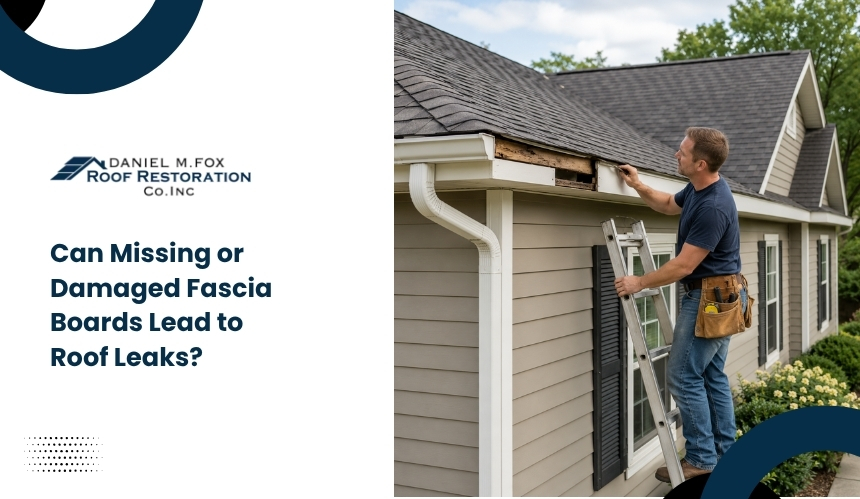
Can Missing or Damaged Fascia Boards Lead to Roof Leaks?
Key Takeaways:
|
Missing or damaged fascia boards can allow water to reach vulnerable areas along the roof edge, increasing the risk of leaks and hidden moisture damage. Problems that begin around the fascia often affect gutters, roof decking, and nearby structural components over time.
Because fascia damage is not always obvious from the ground, homeowners may overlook early warning signs until water intrusion becomes more severe. This blog explains how fascia boards influence roof performance and how their condition can contribute to roof leaks.
Yes, Missing or Damaged Fascia Boards Can Cause Roof Leaks
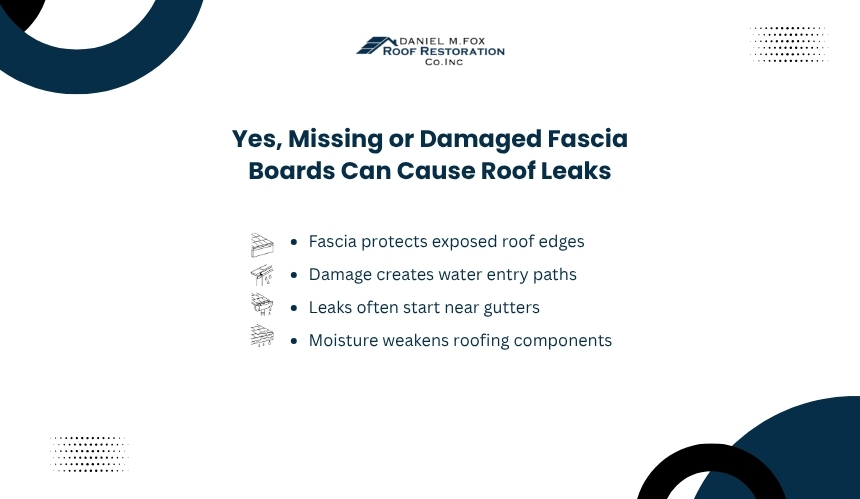
Fascia boards are part of the roof edge assembly and play a role in supporting gutters and protecting exposed roofing components. When these boards deteriorate or go missing, water can bypass the intended drainage path and reach materials that are not designed for prolonged moisture exposure.
What Do Fascia Boards Do in a Roofing System?
A fascia board runs along the lower edge of the roof and creates a finished surface where gutters are attached. It helps shield the ends of roof rafters and supports proper water management around the eaves.
Together with the soffit, drip edge, underlayment, and gutter system, the fascia contributes to keeping rainwater moving away from the structure. Damage to one component can affect the performance of the entire roof edge.
How Does Fascia Damage Create Pathways for Water Intrusion?
Cracked, rotted, or missing fascia boards leave gaps where water can enter behind the gutter line. Rainwater may then reach the roof decking, rafter tails, or exterior wall components instead of flowing safely into the gutter.
Repeated exposure to moisture can weaken wood materials and create conditions for rot, mold growth, and structural deterioration. Small openings around the roof edge often become larger as water damage progresses.
Why Do Roof Leaks Often Begin Around Roof Edges and Gutters?
Roof edges experience constant exposure to rainfall and runoff. If gutters overflow, pull away from the house, or lose proper alignment, excess water frequently accumulates near the fascia.
Because the roof edge is the transition point between the roofing system and drainage system, failures in this area can direct water beneath shingles or behind exterior materials. Over time, this moisture can develop into interior leaks and more extensive roof damage.
Common Causes Of Fascia Board Damage
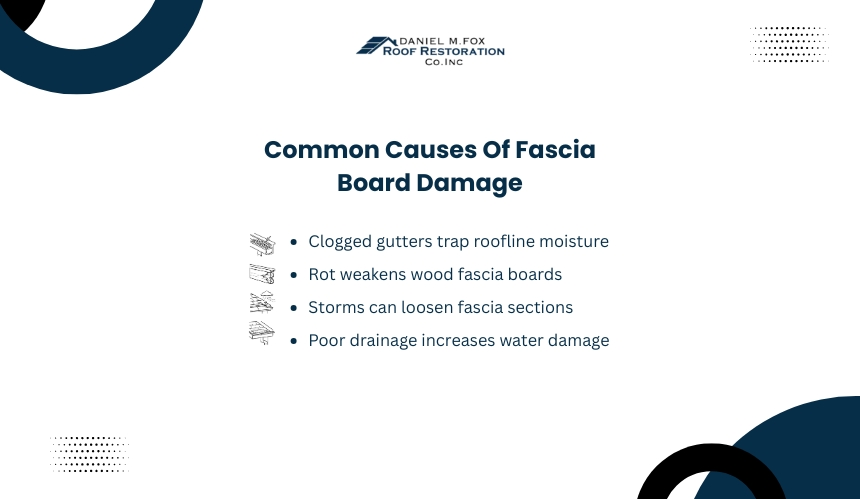
Fascia boards usually fail because of long-term exposure to moisture, physical stress, or environmental conditions that affect the roof edge. Identifying the underlying cause helps prevent repeated repairs and further water-related problems.
Persistent Moisture And Clogged Gutters
Overflowing gutters are one of the most common reasons fascia boards deteriorate. When leaves, debris, or sediment restrict water flow, rainwater can spill over the front or back of the gutter and remain in contact with the fascia for extended periods.
Continuous moisture exposure gradually breaks down protective coatings and allows water to penetrate wood fibers. Once moisture becomes trapped, deterioration can accelerate beneath the surface.
Rot, Mold, And Wood Deterioration
Wood fascia boards are vulnerable to decay when they remain damp for long periods. Fungal growth and rot weaken the material, reducing its ability to support gutters and protect the roof edge.
In many cases, deterioration starts in small sections that are difficult to notice from ground level. Soft spots, crumbling wood, or dark staining often indicate advanced moisture damage inside the board.
Storm Damage, Pests, And Aging Materials
Strong winds, ice accumulation, and severe weather can loosen fascia boards or expose them to additional stress. Birds, squirrels, insects, and other pests may also enter damaged sections and enlarge existing openings.
Older roofing systems naturally experience wear over time. As materials age, protective finishes deteriorate and wood becomes more susceptible to cracking and moisture absorption.
Improper Gutter Installation Or Poor Roof Drainage
Gutters that are incorrectly pitched or inadequately supported can place excessive weight on fascia boards. Water may pool instead of draining properly, increasing the likelihood of moisture damage along the roofline.
This issue can be especially relevant in Cambridge, MA, where mature tree-lined neighborhoods such as West Cambridge and Avon Hill often experience seasonal leaf buildup in gutters. During winter freeze-thaw cycles and heavy New England rain events, blocked drainage systems can cause water to back up against fascia boards and accelerate deterioration around the roof edge.
Warning Signs That Fascia Problems May Already Be Causing Leaks
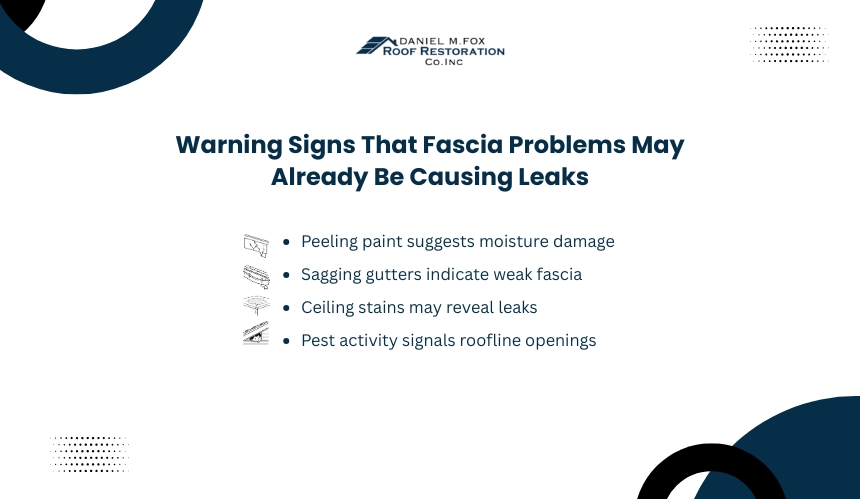
Fascia damage often produces visible symptoms before major roof failure occurs. Recognizing these indicators early can help homeowners address water intrusion before it spreads to surrounding roofing and structural components.
Homeowners seeking professional roof repair in Cambridge, MA, should pay close attention to these warning signs, especially given the area’s seasonal weather conditions and aging housing stock.
Peeling Paint, Discoloration, Or Visible Rot
Moisture exposure commonly causes paint to blister, peel, or fade around the roofline. Dark streaks, staining, or soft areas on the fascia surface may indicate that water has already penetrated the material.
Visible wood decay or sections that appear warped typically suggest prolonged moisture retention rather than a recent isolated event.
In Cambridge, MA, frequent rain, snow, and freeze-thaw cycles can accelerate fascia deterioration, making early detection especially important for protecting older homes and historic properties.
Sagging Gutters Or Separated Roof Edges
Fascia boards provide the attachment point for most gutter systems. When the board weakens, gutters may begin to sag, tilt, or pull away from the house.
Gaps between the gutter and roof edge can allow rainwater to flow behind the system instead of into it. This condition increases the likelihood of hidden moisture accumulation around the eaves.
Water Stains Near Soffits, Ceilings, Or Exterior Walls
Leaks originating at the roof edge do not always appear directly beneath the damaged fascia. Water can travel through roof decking and framing members before becoming visible inside the home.
Common signs include:
- Brown or yellow stains on ceilings
- Discoloration near upper exterior walls
- Damp soffit panels or peeling exterior finishes
- Moisture marks around attic insulation
These symptoms often indicate that water has moved beyond the roof edge and reached interior building materials.
Increased Pest Activity Around The Roofline
Damaged fascia boards can create openings that attract birds, insects, squirrels, and other small animals. Once access points develop, pests may enter attic spaces or nest near the eaves.
Unusual sounds in the attic, visible nesting materials, or recurring insect activity around the roofline can signal that fascia deterioration has created entry points that should be inspected.
Addressing these issues promptly can help prevent more extensive roof damage and reduce the risk of pests gaining access to attic spaces.
What Can Happen If Damaged Fascia Boards Are Left Unrepaired?
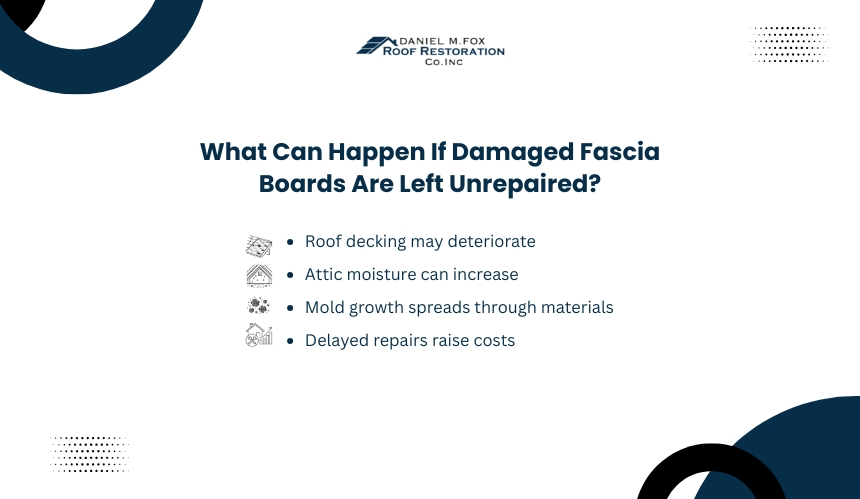
Fascia deterioration rarely remains isolated to the board itself. Once water bypasses the roof edge, surrounding materials become vulnerable to moisture exposure, increasing the scope and cost of repairs.
1. Damage To Roof Decking And Underlayment
Water entering through compromised fascia areas can reach the roof decking beneath the shingles. Over time, repeated moisture exposure may weaken plywood or OSB sheathing and reduce its structural performance.
Roof underlayment can also deteriorate when exposed to water for extended periods. Once these protective layers are compromised, the roof becomes more susceptible to future leaks.
2. Moisture Problems Inside The Attic
Water infiltration near the eaves often affects attic spaces before interior living areas show visible signs of damage. Damp insulation, elevated humidity, and condensation can develop when moisture repeatedly enters the roof assembly.
Wet insulation loses efficiency and may no longer provide the intended thermal performance. This can contribute to higher heating and cooling demands throughout the home.
3. Mold Growth And Reduced Structural Integrity
Persistent moisture creates favorable conditions for mold development on wood framing and nearby building materials. Mold colonies can spread beyond the original leak area if moisture problems remain unresolved.
In addition, prolonged wood decay may weaken rafter tails, soffit framing, and other structural components connected to the roof edge. Repairs become more complex once deterioration extends beyond the fascia board itself.
4. Higher Repair Costs Over Time
Minor fascia repairs are generally less extensive than repairs involving roof decking, insulation, framing, and interior finishes. Delaying corrective work allows moisture damage to spread to additional components.
What begins as a localized roof-edge issue can eventually require multiple repairs involving the gutter system, roofing materials, attic components, and exterior trim. Early intervention typically limits both the extent of damage and the overall repair expense.
If you have noticed signs of fascia damage or suspect a roof leak, Daniel Fox Roofing is ready to help. Serving Cambridge and surrounding communities throughout Greater Boston, the team provides professional roofing solutions to address roof edge problems before they lead to more extensive damage.
Frequently Asked Questions
Can a small gap behind the gutter cause a roof leak?
A small gap behind the gutter can allow rainwater to run behind the drainage system instead of into it. Over time, that water may reach fascia boards, soffits, roof decking, or wall framing. Even narrow openings near the roof edge can become leak points during heavy rain or snowmelt.
How can a homeowner tell if fascia damage is cosmetic or structural?
Cosmetic fascia damage usually affects paint, trim appearance, or surface staining. Structural damage is more serious and may include soft wood, sagging gutters, loose fasteners, warped boards, or visible rot. If the fascia no longer supports the gutter securely, the issue should be inspected before water reaches deeper roofing components.
Should fascia boards be replaced before installing new gutters?
Fascia boards should be inspected before new gutters are installed because gutters need a solid, stable attachment surface. Installing gutters over rotted or weakened fascia can lead to poor drainage, sagging sections, and early failure. Damaged boards should usually be repaired or replaced first.
Can fascia damage affect attic ventilation?
Fascia damage can affect attic ventilation when moisture spreads into nearby soffits or blocks airflow at the eaves. Poor ventilation may trap heat and humidity inside the attic, increasing the risk of condensation, mold growth, and roof sheathing damage. Roof edge repairs should include checking soffit vents and airflow paths.
Is fascia board damage more common in older homes?
Older homes often have a higher risk of fascia damage because wood trim, aging gutters, older roof edges, and repeated weather exposure weaken over time. In areas like Cambridge and Greater Boston, freeze-thaw cycles, snow, rain, and mature trees can place additional stress on roofline components.
When should a roofer inspect fascia boards after a storm?
A roofer should inspect fascia boards after a storm if gutters look loose, shingles near the edge appear lifted, water is overflowing, or debris has struck the roofline. Wind-driven rain and ice can expose weak fascia areas quickly. Early inspection helps confirm whether the damage is isolated or connected to a roof leak.