
- danielfox
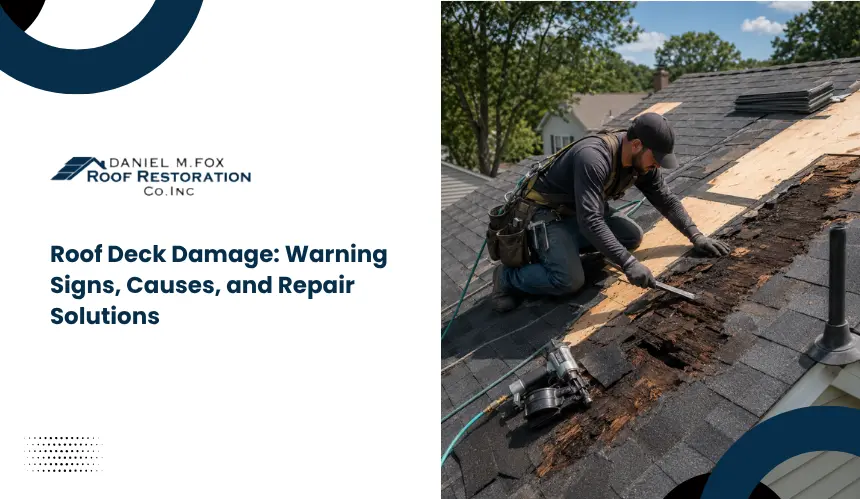
Roof Deck Damage: Warning Signs, Causes, and Repair Solutions
Key Takeaways:
|
Roof deck damage can compromise the stability of an entire roofing system, often developing beneath the surface before visible problems appear. Left unaddressed, moisture intrusion, wood rot, and structural deterioration can lead to more extensive and costly repairs.
Identifying the early signs and understanding the underlying causes can help homeowners prevent further damage and make informed repair decisions. This guide covers the warning signs of roof deck damage, common causes, and the repair solutions used to restore roof performance.
What Is Roof Deck Damage and Why Does It Matter?
The roof deck serves as the structural foundation that supports shingles, underlayment, and other roofing components. Damage to this layer can weaken the roofing system, increase the risk of leaks, and reduce the roof’s ability to withstand weather exposure.
What the Roof Deck Does Beneath Your Shingles
A roof deck is typically made from plywood or oriented strand board (OSB) panels attached to the roof framing. It provides a stable surface for roofing materials and helps distribute loads across the structure.
Under normal conditions, the decking remains protected by underlayment and exterior roofing materials. When those protective layers fail, moisture can reach the wood substrate and begin the deterioration process.
How Roof Deck Damage Impacts Structural Integrity and Roof Performance
Roof deck damage reduces the strength and stability of the roof assembly. Softened or rotted decking may no longer securely hold nails, which can lead to loose shingles, recurring leaks, and reduced wind resistance.
In more advanced cases, prolonged moisture exposure can cause sections of the roof to sag or create uneven surfaces. Damaged decking can also allow mold growth and compromise attic conditions, affecting the overall performance and lifespan of the roofing system.
What Are the Warning Signs of Roof Deck Damage?
Roof deck damage often develops gradually and may not be immediately visible from the exterior. Recognizing early symptoms can help prevent more extensive structural repairs and limit moisture-related problems inside the home.
Sagging Areas, Soft Spots, and Uneven Roof Lines
Visible dips or waves along the roof surface can indicate that the decking underneath has weakened. A sagging section often develops when wood loses its strength due to prolonged moisture exposure or decay.
Homeowners may also notice soft or spongy areas while walking on the roof during an inspection. These conditions suggest that the decking is no longer providing adequate support for the roofing materials above it.
Interior Signs Such as Ceiling Stains and Attic Moisture
Water stains on ceilings or upper walls often point to moisture entering the roofing system. While the leak may originate elsewhere, damaged roof decking can allow water to spread and affect interior surfaces.
Inside the attic, damp insulation, water droplets, or elevated humidity levels may indicate that moisture has reached the decking. Persistent exposure increases the likelihood of wood deterioration over time.
Mold Growth, Musty Odors, and Increased Humidity
Excess moisture trapped within the roof structure creates conditions that support mold and mildew growth. Homeowners may notice a musty smell in the attic or upper living spaces before visible mold appears.
Higher indoor humidity levels can also signal hidden moisture problems within the roofing system. When left unresolved, these conditions may affect indoor air quality and accelerate the breakdown of surrounding building materials.
What Causes Roof Deck Damage?
Roof deck deterioration is typically the result of long-term exposure to moisture or conditions that weaken the wood over time. Identifying the source of the problem is essential because repairs are most effective when the underlying cause is corrected.
1. Roof Leaks and Long-Term Moisture Exposure
Roof leaks are one of the most common causes of damaged decking. Cracked shingles, deteriorated flashing, and failed underlayment can allow water to penetrate beneath the roofing materials and reach the wood substrate.
Repeated moisture exposure causes plywood or OSB panels to absorb water, leading to swelling, delamination, and wood rot. The longer moisture remains trapped, the greater the risk of structural deterioration.
2. Poor Attic Ventilation and Trapped Condensation
A poorly ventilated attic can create excessive heat and humidity inside the roof assembly. When warm, moist air becomes trapped, condensation may form on the underside of the decking.
Over time, this hidden moisture can weaken the wood even when there are no active roof leaks. Inadequate airflow can also shorten the lifespan of surrounding roofing components and insulation.
3. Aging Roofing Materials and Storm-Related Damage
As roofing materials age, they become less effective at preventing water intrusion. Worn shingles, damaged flashing, and deteriorated sealants increase the likelihood of moisture reaching the roof deck.
Severe weather events such as hail, heavy rain, and high winds can also create openings in the roofing system. Even minor storm damage can expose the decking to repeated moisture cycles if repairs are delayed.
4. Pest Infestations and Wood Rot
Insects and small animals can contribute to roof deck deterioration by creating entry points or damaging wooden components. Termites, carpenter ants, and rodents may accelerate structural problems that already exist.
When moisture and biological activity occur together, wood rot can spread more rapidly. Advanced decay reduces the deck’s load-bearing capacity and may require replacement rather than localized repairs.
In Newton, MA, and nearby communities throughout Massachusetts, roof deck damage is commonly associated with heavy rain, snow accumulation, ice dams, and seasonal freeze-thaw cycles. Homes in older neighborhoods may also have aging roof structures that are more susceptible to moisture-related deterioration, making timely inspections and repairs especially valuable.
How Is Roof Deck Damage Repaired?
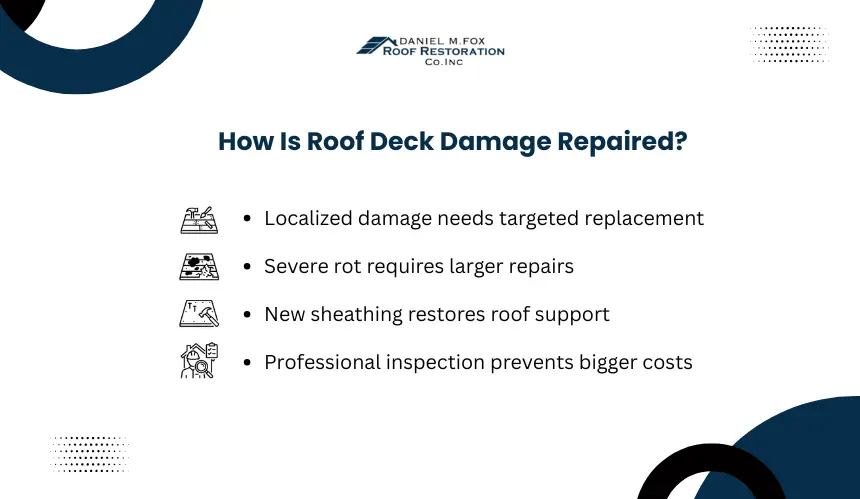
The appropriate repair method depends on the extent of deterioration and whether the surrounding roofing components remain intact. A professional inspection typically determines if the damage is isolated or affects a larger portion of the roof structure.
When Localized Deck Repairs Are Enough
Minor damage confined to a small area can often be addressed by removing the affected roofing materials and replacing only the compromised section of decking. This approach is common when moisture intrusion is discovered early and the surrounding wood remains structurally sound.
Localized repairs preserve more of the existing roof system and can reduce overall project costs. However, the source of the moisture must also be corrected to prevent recurring damage.
Situations That Require Partial or Full Deck Replacement
Widespread wood rot, multiple leak locations, or extensive structural weakening may require replacing larger sections of the roof deck. In some cases, contractors recommend full deck replacement during a roof replacement project when deterioration is present across multiple areas.
Replacing severely damaged decking restores the roof’s structural support and provides a stable base for new roofing materials.
Replacing Damaged Sheathing and Installing New Roofing Materials
The repair process generally begins with removing shingles, underlayment, and other materials covering the affected area. Contractors then remove the damaged plywood or OSB sheathing and install new decking panels that meet current building requirements.
After the structural layer is restored, new underlayment, flashing, and roofing materials are installed to create a weather-resistant roofing system. Proper installation helps protect the new deck from future moisture intrusion and extends the overall lifespan of the roof.
When Should You Call a Roofing Professional for Roof Deck Repair?
Homeowners in Newton, MA, often deal with roofing challenges caused by harsh winters, heavy rainfall, and aging housing stock. These conditions can accelerate hidden moisture problems and make early roof evaluations especially important for preventing more extensive structural damage.
For properties showing signs of deterioration, professional roof repair services in Newton, MA, can help identify the extent of roof deck damage and determine the most appropriate corrective action.
Signs the Damage May Be Structural
Certain symptoms indicate that the problem extends beyond surface roofing materials. Significant roof sagging, widespread water intrusion, recurring leaks, and deteriorated attic framing may point to structural involvement.
When these conditions are present, delaying repairs can increase the risk of additional damage to the roof system and other parts of the home.
Why Early Inspections Can Prevent Larger Repair Costs
Roof deck problems rarely improve without intervention. Early inspections allow contractors to locate moisture sources before deterioration spreads to surrounding decking, insulation, or framing components.
Addressing damage in its initial stages can often reduce the amount of material that requires replacement and help preserve the remaining roof structure.
Questions to Ask Before Approving Roof Deck Repairs
Before moving forward with repairs, homeowners should understand the scope of the work being recommended. Helpful questions include:
- How much of the roof deck is damaged?
- Will the repair involve partial or full deck replacement?
- What caused the damage in the first place?
- Are any additional roofing components affected?
- What materials will be used during the repair?
Clear answers to these questions help homeowners make informed decisions and ensure the underlying issue is properly resolved.
Suspect roof deck damage before it turns into a major roofing issue? Daniel Fox Roofing provides trusted roofing and exterior solutions for homeowners in Newton, MA, and nearby communities throughout Greater Boston. Whether you need an inspection, targeted repairs, or a complete roofing upgrade, the team is ready to help protect your home with reliable workmanship and lasting results.
Frequently Asked Questions
Can roof deck damage be repaired without replacing the whole roof?
Roof deck damage can be repaired without a full roof replacement when the affected area is small, dry, and structurally isolated. Contractors usually remove the shingles and underlayment above the damaged section, replace the compromised plywood or OSB, then reinstall protective roofing materials. Larger moisture spread may require broader roof work.
How do roofers confirm roof deck damage during an inspection?
Roofers confirm roof deck damage by checking exterior roof lines, attic moisture, stained sheathing, soft decking, nail holding strength, and ventilation conditions. In some cases, the full extent is only visible after shingles are removed. A proper inspection connects the visible symptoms with the underlying moisture or structural source.
Does homeowners insurance cover roof deck repairs?
Homeowners insurance may cover roof deck repairs when the damage comes from a sudden covered event, such as wind, hail, or storm impact. Gradual deterioration, poor maintenance, long-term leaks, or aging materials are often excluded. Homeowners should review the policy and request inspection photos before filing a claim.
How long does roof deck repair usually take?
Small roof deck repairs may take one day when the damage is limited and weather conditions are favorable. Larger repairs involving multiple sheathing panels, framing concerns, or roof replacement can take longer. The timeline depends on access, material availability, moisture spread, and whether hidden damage appears during tear-off.
Should damaged roof decking be replaced during a roof replacement?
Damaged roof decking should be replaced during a roof replacement because new shingles need a solid, dry, and stable base. Installing roofing materials over rotted or weakened sheathing can reduce nail grip, increase leak risk, and shorten the new roof’s lifespan. Deck inspection is a critical part of reroofing.
Why are older homes in Newton, MA more prone to roof deck issues?
Older homes in Newton, MA, may have aging roof framing, older ventilation layouts, layered roofing materials, or past leak repairs that hide underlying deck deterioration. Seasonal snow, rain, and freeze-thaw cycles can also stress roofing systems. These conditions make periodic attic and roof inspections especially useful for early detection.