
- danielfox
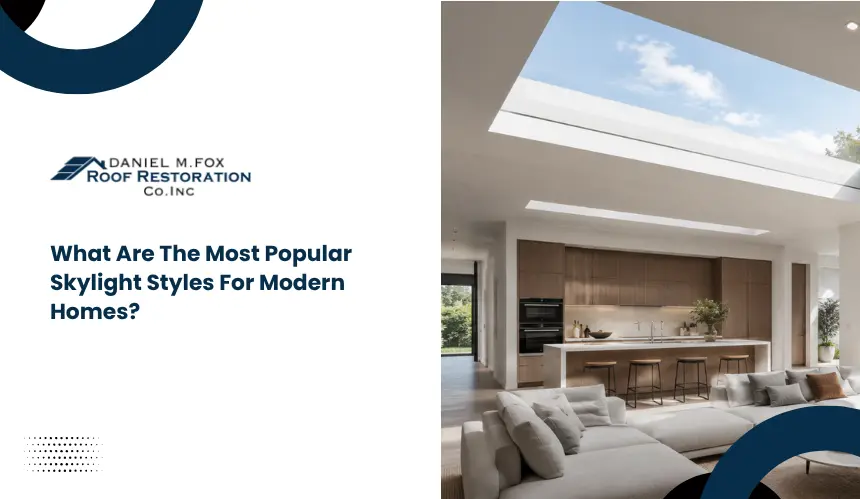
What Are The Most Popular Skylight Styles For Modern Homes?
Key Takeaways
|
Natural light has become a key part of modern home design, helping interiors feel brighter, more open, and more comfortable. Skylights add daylight from above while supporting a cleaner, more spacious look without major layout changes. This blog explains what makes skylight styles popular in modern homes and how they can improve everyday living.
The Most Popular Skylight Styles Homeowners Choose Today
A skylight changes how a room behaves throughout the day. The main differences come from light direction, air movement, ceiling placement, and how much control the homeowner needs over brightness, heat, and moisture.
Fixed Skylights for Clean, Low-Maintenance Daylight
Fixed skylights are non-opening roof windows designed to bring steady natural light into interior spaces without adding ventilation mechanics. Their sealed structure makes them a practical choice for homeowners who want brighter rooms with fewer moving parts and lower maintenance demands.
This style works well in hallways, stairwells, kitchens, living rooms, and other areas where daylight is the main priority. Because fixed skylights do not open, they are often selected for clean ceiling lines, improved sky views, and consistent illumination in rooms that feel dark during the day.
Ventilating Skylights for Daylight and Airflow
Ventilating skylights combine overhead daylight with controlled airflow. They can be manual, electric, or solar-powered, depending on the home’s layout, ceiling height, and access needs.
These skylights are especially useful in kitchens, bathrooms, laundry rooms, and upper-level spaces where warm air, steam, odors, or humidity tend to collect. When opened, they allow rising air to escape through the roof, which can support better indoor comfort and reduce trapped moisture in high-use areas.
Tubular Skylights for Small or Hard-to-Reach Spaces
Tubular skylights, also called sun tunnels, are compact daylighting systems that channel sunlight through a reflective tube from the roof into the room below. They are often used where a full skylight is not practical because of limited ceiling space, attic obstructions, or narrow room layouts.
This style is popular for closets, corridors, pantries, interior bathrooms, and small rooms without exterior windows. Tubular skylights do not create the same open-sky view as traditional skylights, but they can deliver useful daylight in spaces that usually depend on artificial lighting.
Flat Roof and Roof Window Styles for Modern Architecture
Flat roof skylights, roof windows, and larger architectural skylight systems are commonly used in contemporary homes, additions, lofts, and open-plan layouts. These styles are chosen when the skylight needs to support both function and visual design.
Flat glass units create a sleek, low-profile look on modern rooflines, while roof windows can provide light, ventilation, and access in attic or loft spaces. Larger skylight systems can also define a room’s architectural character by making ceilings feel taller, brighter, and more connected to the outdoors.
How Each Skylight Style Changes Light, Ventilation, and Room Function
A skylight’s design directly affects how a room performs. The right style can increase usable daylight, control trapped heat, support airflow, or bring brightness into spaces where standard windows cannot work.
Do You Know? According to the U.S. Environmental Protection Agency, Americans spend about 90% of their time indoors, and some indoor pollutant levels are often 2 to 5 times higher than typical outdoor levels. That makes daylight, airflow, and indoor comfort more than design choices. In modern homes, skylights can support brighter rooms and, when operable, help improve air movement in spaces where stale air tends to collect. |
Fixed Skylights Maximize Brightness Without Moving Parts
Fixed skylights work best when the goal is stable overhead daylight rather than air exchange. Their sealed design limits mechanical complexity, which makes them suitable for rooms where consistent brightness matters more than ventilation.
Because the light enters from above, fixed units can reach deeper parts of a floor plan than standard wall windows. This makes them useful in spaces where daylight needs to spread across the room without changing furniture placement, wall storage, or exterior window openings.
Venting Skylights Support Moisture and Temperature Control
Venting skylights improve room function by giving warm, humid, or stale air a high exit point. Since heated air rises, an operable skylight can support natural air movement when lower windows, doors, or exhaust fans do not fully clear the space.
This is especially valuable in rooms with recurring moisture or heat load. Instead of only adding daylight, a venting skylight helps regulate indoor conditions by releasing trapped air before it contributes to condensation, stuffiness, or lingering odors.
Tubular Skylights Bring Daylight Where Windows Cannot
Tubular skylights solve a layout problem rather than a design-display problem. They move sunlight through a reflective tunnel, allowing daylight to reach enclosed spaces that cannot support a full roof window or exterior wall opening.
Their value is strongest in compact areas where visibility is the priority. A tubular system can reduce daytime reliance on artificial lighting without requiring a large ceiling cutout, major framing changes, or a direct view of the sky.
Do You Know? According to the U.S. Energy Information Administration, residential lighting used about 81 billion kilowatt-hours of electricity in 2020, accounting for roughly 6% of electricity consumption in U.S. homes. Strategic daylighting from skylights can reduce daytime dependence on artificial lighting in dark rooms, hallways, and interior spaces. |
Larger Skylight Designs Create a Stronger Architectural Statement
Larger skylight designs affect scale, proportion, and visual rhythm. Instead of functioning as a single light source, oversized or grouped skylights can shape how the ceiling is perceived and how the room connects to the roof structure.
Their impact depends on alignment. When the glazing follows the room’s layout, ceiling geometry, or main activity zones, it creates a deliberate architectural feature rather than a random bright spot overhead.
Best Skylight Styles by Room Type in a Modern Home
The best skylight choice depends on the room’s main limitation. Some rooms need broader daylight, some need moisture relief, and others need compact daylight access where windows or large roof openings are not practical.
Living Rooms and Open-Plan Spaces
Living rooms and open-plan spaces usually benefit from fixed, large-span, or grouped skylights because these rooms need even daylight across wider areas. The goal is not only brightness, but better light distribution across seating, dining, and transition zones.
Grouped placement can prevent one concentrated beam from dominating the room. When skylights are aligned with ceiling shape, furniture layout, or circulation paths, the space feels brighter without creating uneven glare or isolated dark corners.
Kitchens and Bathrooms
Kitchens and bathrooms need skylights that respond to moisture, heat, and limited wall space. Venting skylights are often the better fit because they add daylight while giving steam, cooking heat, and humid air a controlled exit path.
They also preserve wall space for cabinets, mirrors, tile, and fixtures. In these rooms, the skylight should be evaluated as part of the ventilation strategy, not only as a lighting upgrade.
Hallways, Closets, and Interior Rooms
Hallways, closets, pantries, and interior rooms often need compact daylight rather than large overhead glazing. Tubular skylights are useful in these spaces because they can route light around framing limits and tight ceiling layouts.
This makes them practical for enclosed zones that feel dim during the day but do not need ventilation or a sky view. Their main function is to improve visibility in spaces that standard windows cannot serve.
Bedrooms, Lofts, and Attic Conversions
Bedrooms, lofts, and attic conversions require more control because daylight, privacy, heat, and nighttime comfort all affect how the room functions. Roof windows and venting skylights can work well in these spaces when they are paired with shades, blinds, or glazing that manages glare and solar heat.
In lofts or converted attic rooms, operable skylights can release trapped warm air near the ceiling and support nighttime cooling. For bedrooms, shaded skylight systems are often the better choice because they allow natural light during the day while preserving privacy and sleep comfort.
Design Factors That Make Skylights Look Modern
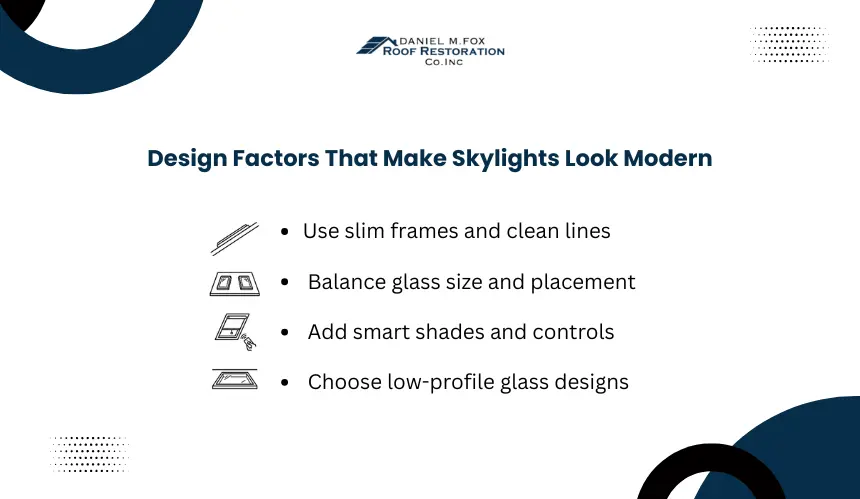
A skylight looks modern when it feels integrated with the roof, ceiling, and room layout rather than added as an afterthought. Frame profile, glass size, placement, controls, and architectural shape all affect whether the final result feels clean, balanced, and intentional.
Do You Know? The U.S. Department of Energy recommends that skylight size generally be no more than 5% of the floor area in rooms with many windows and no more than 15% in rooms with few windows. This is why bigger is not always better. Oversized skylights can increase glare, heat gain, and uneven light distribution. |
Slim Frames and Clean Roofline Integration
Slim frames create a cleaner skylight appearance by reducing visual bulk around the glass. In modern homes, low-profile units are often preferred because they sit closer to the roof surface and blend more smoothly with simple rooflines.
Neat flashing is equally important because it controls both appearance and performance. Poorly finished flashing can make even a high-quality skylight look heavy or misplaced, while precise integration supports water management, roof continuity, and a more polished exterior finish.
Larger Glass Areas and Balanced Placement
Larger glass areas can make skylights feel more architectural, but placement determines whether they improve the room or disrupt the ceiling layout. Proper spacing, symmetry, and alignment with furniture zones help skylights feel planned rather than random.
Ceiling height and room orientation also shape the final effect. A high ceiling can handle larger or grouped skylights, while smaller rooms may need tighter proportions to avoid glare or uneven light. Balanced placement creates natural brightness without making one part of the room feel overexposed.
Smart Shades and Remote-Control Features
Smart shades give homeowners better control over daylight, privacy, and heat gain. Room-darkening shades are useful in bedrooms and media rooms, while light-filtering shades soften direct sun in kitchens, lofts, and living areas.
Remote-control features also support modern functionality. Solar-powered controls, rain sensors, and automated ventilation allow skylights to respond to weather, indoor temperature, and daily routines without manual adjustment. These features make skylights more practical in hard-to-reach ceilings.
Flat Glass, Low-Profile, and Architectural Shapes
Flat glass skylights are popular in modern homes because they create a smooth, minimal look that pairs well with clean rooflines and contemporary materials. Their low-profile form works especially well on flat or low-slope roof designs where bulky domed units may feel outdated.
Architectural shapes can also support a stronger design statement when they match the home’s structure. Roof lantern alternatives, pyramid skylights, and custom glazing can add height, geometry, and visual interest, but they work best when their shape complements the room instead of competing with it.
Homeowners across Dedham often use carpentry services to support interior upgrades, roof structure modifications, and custom finishing work that improves both function and appearance. In neighborhoods near Fairbanks Park and Avery School areas, carpentry work commonly supports skylight framing, ceiling adjustments, trim installation, and structural refinements that help modern home improvements look more integrated and professionally finished.
Quality carpentry services also help maintain proper support around roof openings and interior transitions, making them an important part of many residential renovation and skylight projects in Dedham.
Energy, Comfort, and Installation Factors to Compare Before Choosing
A skylight should match the home’s roof structure, climate exposure, and comfort needs, not just the desired look. Energy performance, water management, light control, and installation quality determine whether the skylight remains practical after installation.
In Dedham, roof repair services remain important for homeowners who want to protect their properties from water intrusion, worn roofing sections, and weather-related deterioration. Areas around Oakdale and Precinct One include many homes where routine roof repairs help maintain structural reliability and prevent small roofing issues from spreading into larger interior damage.
Do You Know? The International Energy Agency reports that buildings account for about 30% of global energy demand, and residential buildings make up about 70% of total building energy demand. This is why skylight decisions should consider insulation, glazing, roof orientation, and heat gain, not only style or room brightness. |
Roof Pitch and Mounting Type
Roof pitch affects which skylight style can be installed safely and how water moves around the unit. Steeper roofs usually support standard deck-mounted or curb-mounted skylights more easily, while low-slope or flat roofs often need products designed for controlled drainage and proper water runoff.
Deck-mounted skylights sit closer to the roof surface and create a lower-profile appearance. Curb-mounted skylights are installed on a raised frame, making them useful where extra height, flashing control, or roof compatibility is needed. Flat-roof skylights require careful slope planning so rainwater does not collect around the glass or frame.
Glazing, Heat Gain, and Insulation
Glazing determines how much light, heat, and insulation a skylight provides. Double-pane glass, laminated glass, tempered glass, and Low-E coatings can affect indoor comfort, UV protection, durability, and energy efficiency.
Two performance ratings matter most: U-factor and Solar Heat Gain Coefficient. A lower U-factor generally means better insulation, which can reduce heat loss. SHGC measures how much solar heat passes through the skylight, so rooms with strong sun exposure may need lower heat gain to prevent overheating.
Do You Know? Low-emissivity, or Low-E, coatings typically cost about 10% to 15% more than regular windows, but the U.S. Department of Energy states they can reduce energy loss by as much as 30% to 50%. For skylights, this matters because overhead glass receives direct solar exposure and can affect room temperature, glare, and comfort. |
Light Control and Privacy
Light control should be planned before installation because skylights bring overhead exposure that standard window coverings cannot always solve. Shades, blinds, tinted glazing, and frosted glass can reduce glare, soften direct sunlight, and protect privacy in bedrooms, bathrooms, and upper-level rooms.
Placement and orientation also affect comfort. A skylight facing intense afternoon sun may need stronger shading or heat-control glazing, while a bathroom skylight may require privacy glass or careful positioning away from neighboring sightlines.
Professional Installation and Leak Prevention
Installation quality directly affects skylight performance. Even the right skylight style can fail if the roof condition, flashing system, underlayment, and waterproofing details are not handled correctly.
Proper placement reduces leak risk, condensation problems, and uneven daylight. A professional installer evaluates roof slope, framing, drainage paths, attic space, and interior ceiling layout before cutting into the roof, which helps the skylight perform as both a design feature and a weather-resistant building component.
How to Choose the Right Skylight Style for a Modern Home
Choosing the right skylight style comes down to the room’s main job: daylight, airflow, compact lighting, or architectural impact. The best option should solve that need without adding unnecessary cost, glare, heat gain, or installation complexity.
Choose Fixed Skylights for Simple Daylight
Choose fixed skylights when the priority is natural light with minimal operation or maintenance. They are best for rooms that already have enough airflow but need a brighter, cleaner ceiling feature.
Choose Venting Skylights for Airflow and Humidity Control
Choose venting skylights when the room regularly holds steam, heat, odors, or stale air. They are most useful where daylight and air movement need to work together.
Choose Tubular Skylights for Compact Dark Spaces
Choose tubular skylights when the space is small, enclosed, or difficult to modify. They are best for improving daytime visibility without the scale or structural demands of a full skylight.
Choose Architectural Skylights for Design Impact
Choose architectural skylights when the skylight is meant to shape the room’s design language. They work best when glass size, placement, roof form, and interior proportions are planned together.
Skylight installation has become increasingly popular among homeowners in Dedham, MA, looking to create brighter and more functional interiors without major remodeling. In areas near East Street and Oakdale Square, many modern home updates focus on improving natural light in kitchens, lofts, and open-plan living spaces where standard windows may not provide enough daylight throughout the day.
Homes around Riverdale and Greenlodge also benefit from skylight systems that support better airflow and indoor comfort, especially in upper-level rooms where warm air tends to collect.
For homeowners planning skylight upgrades, roof repairs, or modern daylight improvements, Daniel Fox Roofing provides the roofing expertise needed to protect both style and structure. From proper flashing and roof preparation to leak prevention and clean installation support, their team helps ensure skylight projects are built around long-term performance, comfort, and curb appeal.
Frequently Asked Questions
Can a skylight be added to an existing home without major remodeling?
A skylight can often be added during a roof upgrade, attic conversion, kitchen renovation, or ceiling improvement, but feasibility depends on roof framing, rafter spacing, attic obstructions, wiring, and interior ceiling shape. A professional assessment helps determine whether a traditional skylight, tubular skylight, or roof window fits with minimal structural disruption.
What direction should a skylight face for the most comfortable daylight?
Skylight orientation affects brightness, heat gain, and glare. North-facing skylights usually provide softer, more consistent daylight, while south- or west-facing units can bring stronger sun exposure and more heat. The best direction depends on the room’s purpose, roof layout, climate, and whether shades or heat-control glazing will be used.
Do skylights make rooms too hot in summer?
Skylights can increase heat if they are oversized, poorly placed, or installed with the wrong glazing. Heat gain is usually controlled through Low-E glass, proper SHGC ratings, interior shades, tinted glazing, and careful placement. Rooms with strong afternoon sun exposure need more planning than spaces with indirect daylight.
Is condensation around a skylight always a sign of a leak?
Condensation is not always a roof leak. It can happen when warm indoor air meets cold glass, especially in bathrooms, kitchens, lofts, or poorly ventilated rooms. Persistent moisture, staining, dripping during rain, or damaged drywall may indicate flashing failure, roof issues, or waterproofing problems that need inspection.
Should skylights be installed before or during roof replacement?
Installing skylights during roof replacement is often more efficient because shingles, underlayment, flashing, and roof openings can be coordinated together. Adding a skylight later is still possible, but it may require disturbing finished roofing materials. Planning both projects together can reduce leak risk and improve installation quality.
How much maintenance do modern skylights usually need?
Modern skylights need periodic cleaning, seal checks, shade testing, and inspection around flashing or interior drywall. Fixed skylights usually require less maintenance because they have no opening mechanism. Venting skylights may need occasional checks for hinges, motors, rain sensors, screens, and weather seals to keep airflow features working correctly.