
- danielfox
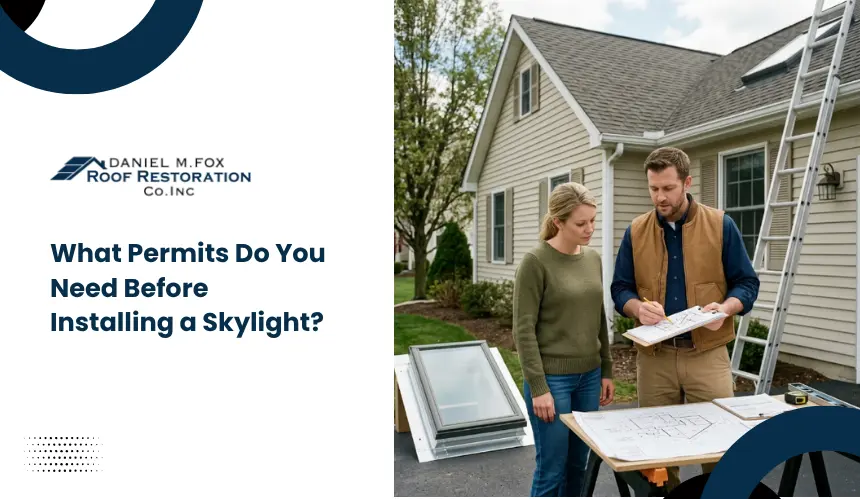
What Permits Do You Need Before Installing a Skylight?
Key Takeaways
|
Installing a skylight in Massachusetts often involves more than selecting the right window size or roof placement. Many homeowners discover permit requirements only after a contractor begins cutting into the roof structure, which can lead to inspection delays, code violations, or additional repair costs.
This article explains the permits commonly associated with skylight installation in MA, the factors that affect approval requirements, and the practical risks of proceeding without proper authorization.
Why Skylight Permits Matter Before Installation
Skylight installation changes the roof assembly, which places the project under building code review in many Massachusetts municipalities. Once a roof opening is created, inspectors may evaluate structural framing, weatherproofing methods, insulation performance, and water intrusion protection before approving the work.
Permits are primarily used to verify that the skylight installation meets state and local code requirements. This becomes especially important when rafters are modified, flashing systems are integrated into existing roofing materials, or electrical components are added to vented skylight systems. Improper installation can create long-term moisture problems inside the attic, ceiling cavity, or surrounding roof deck.
Massachusetts cities and towns may also apply different local enforcement standards. Some building departments require inspections for nearly all roof penetrations, while others evaluate permit needs based on project scope, skylight size, or structural impact. Historic districts and regulated residential zones can introduce additional approval requirements before installation begins.
Permit documentation also affects future property transactions. During home sales, buyers, inspectors, or insurance carriers may request records showing that the skylight installation passed municipal inspection. Unpermitted roof modifications can delay closings, trigger corrective inspections, or create liability concerns if water damage or structural issues appear later.
What Type of Permit Is Usually Required for a Skylight in MA?
Most skylight projects in Massachusetts fall under residential building permit requirements because the installation alters the roof system. The exact permit type depends on whether the work involves structural modifications, electrical connections, or additional local approvals tied to the property location.
Building Permits for Roof Modifications
A building permit is commonly required when a contractor cuts a new roof opening for a skylight. Local inspectors may review framing plans, roof load distribution, flashing integration, and weather barrier protection before approving the installation.
Projects involving rafter alterations, header installation, or structural reinforcement typically receive closer review because the roof framing system is being modified. Even smaller skylights can trigger permit requirements if the installation changes the original roof structure or affects drainage patterns around the opening.
In Massachusetts, permit applications are usually submitted through the local building department by the contractor or licensed installer before work begins.
Electrical Permits for Vented or Powered Skylights
Some skylights include powered ventilation systems, rain sensors, remote-control motors, or integrated lighting components. These features may require a separate electrical permit in addition to the primary building permit.
Electrical inspections help verify that wiring connections, switch installations, and circuit integration comply with Massachusetts electrical code requirements. In many cases, licensed electricians must complete or approve the electrical portion of the installation before final inspection sign-off is issued.
HOA or Historic District Approvals in Some Areas
Certain Massachusetts properties may require additional approvals outside the standard permit process. Homes located within historic districts, preservation zones, or regulated neighborhood associations can face design restrictions related to roof appearance, skylight visibility, or exterior alterations.
In parts of Newton, MA, such as Newton Centre, Chestnut Hill, and older residential neighborhoods near Commonwealth Avenue, historic preservation guidelines may influence where skylights can be positioned on the roof, particularly on street-facing elevations or historically styled homes.
Historic commissions may review skylight placement, glass visibility, roofline impact, and compatibility with existing architectural features before construction approval is granted. These requirements vary significantly by municipality and neighborhood regulations.
Factors That Can Affect Permit Requirements
Permit requirements for skylight installation are not always identical across projects. Massachusetts building departments often evaluate the scope of work, roof modifications, and system upgrades before determining what approvals or inspections are necessary during skylights installation in MA.
New Skylight Installation vs Replacement
Installing a new skylight generally involves more regulatory review than replacing an existing unit. New installations require contractors to create a roof opening, modify surrounding framing, and integrate new waterproofing systems into the roofing structure. These changes commonly trigger full building permit review.
Replacement projects may follow a simpler approval process if the skylight size, location, and structural opening remain unchanged. However, some municipalities still require permits for replacements because flashing systems, roof sealing, and insulation performance are being updated during the process.
Roof Structure and Framing Changes
Permit review often becomes more detailed when structural framing adjustments are involved. Cutting rafters, redistributing roof loads, or adding support headers can affect the roof’s structural integrity, especially on older Massachusetts homes with aging framing systems.
In communities such as Newton, MA, many residential properties include older roof framing layouts and layered roofing systems that may require closer municipal review before structural modifications are approved. Complex rooflines, steep slopes, or multiple skylight openings can also increase inspection requirements during skylights installation in MA.
Energy Code and Egress Considerations
Massachusetts energy codes may influence skylight approval requirements, particularly when the installation affects insulation continuity or thermal efficiency within the roof assembly. Some municipalities review glazing performance, energy ratings, and heat transfer characteristics during permit evaluation.
In certain situations, skylight placement can also intersect with ventilation or emergency egress considerations. This is more common in attic conversions, loft spaces, or finished upper-floor rooms where natural light openings interact with occupancy and safety regulations.
Who Is Responsible for Handling Skylight Permits in Massachusetts?
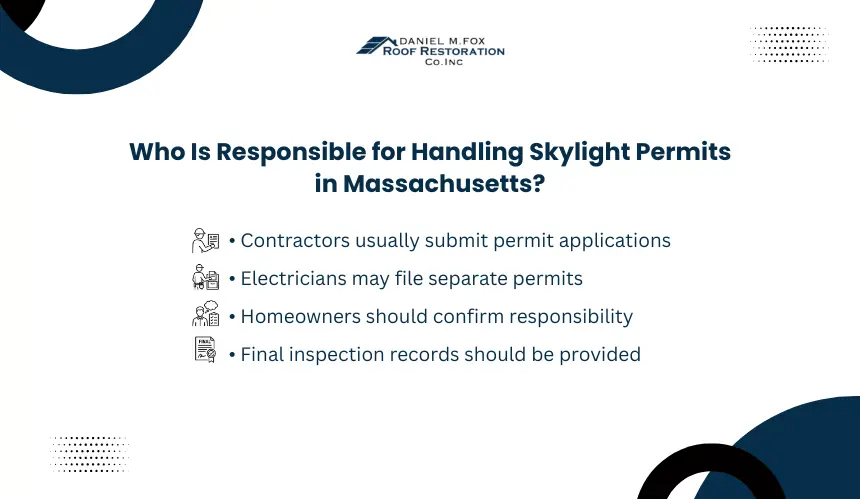
Permit responsibility varies by contractor, municipality, and project scope. In most Massachusetts skylight projects, the contractor manages permit submission and inspection coordination, but homeowners are still responsible for confirming that approvals are properly filed before construction begins.
Contractor-Submitted Permits
A Licensed roofing contractor and skylight installer in MA commonly submit permit applications directly to the local building department. The application may include project specifications, skylight dimensions, roof modification details, manufacturer documentation, and structural information required for code review.
When electrical components are involved, a separate licensed electrician may need to file electrical permit documentation independently. Some municipalities will not schedule final inspections until both building and electrical approvals are active within the permit system.
Professional contractors typically coordinate inspection timelines, communicate with municipal inspectors, and address any correction notices issued during review. This reduces the likelihood of incomplete documentation or code compliance issues during installation.
Questions Homeowners Should Ask Before Work Begins
Homeowners should verify permit responsibility before signing a roofing or skylight contract. Some contractors include permitting within the project scope, while others require the property owner to submit applications separately.
Key questions include:
- Who is responsible for filing the permit application?
- Will structural or electrical permits both be required?
- Has the installation timeline accounted for inspection scheduling?
- Will final inspection records be provided after project completion?
Clarifying these details early helps prevent delays, failed inspections, or incomplete municipal records after the skylight installation is finished.
What Happens If a Skylight Is Installed Without a Permit?
Unpermitted skylight installation can create compliance and financial issues long after the project is completed. If municipal inspectors discover unauthorized roof modifications, homeowners may face stop-work orders, retroactive permit applications, or mandatory corrective repairs.
Permit violations can also affect property sales and insurance reviews. Buyers, home inspectors, and insurance carriers may request proof that the skylight installation passed local inspection requirements. Missing permit records can delay transactions or raise liability concerns if leaks, structural movement, or roof damage appear later.
How to Check Skylight Permit Requirements in Your Massachusetts City
Permit requirements are typically managed through the local building department where the property is located. Most Massachusetts municipalities provide permit guidance through their official websites or permitting offices.
Before starting the project, homeowners should confirm whether the skylight installation involves structural review, electrical approval, or additional inspections. Contractors should also provide permit documentation, approved plans, and final inspection records once the work is completed.
Frequently Asked Questions
Do small skylights or sun tunnels need the same permit as larger skylights?
Small skylights, tubular skylights, and sun tunnels may still require permit review if they create a new roof penetration. The size alone does not determine approval needs. Building departments usually focus on whether roof framing, flashing, insulation, or waterproofing details are affected by the installation.
Can a homeowner apply for a skylight permit without hiring a contractor?
Homeowners may be able to apply for their own permit, but the process depends on local municipal rules and the scope of work. If structural cutting, electrical wiring, or code-sensitive roof modifications are involved, many homeowners choose a licensed contractor to reduce filing errors and inspection issues.
Is a permit needed if the skylight is being replaced with the same size?
A same-size skylight replacement may have fewer requirements, but it is not automatically exempt. Some Massachusetts building departments still require permits because the work can involve flashing replacement, roof sealing, curb adjustments, insulation changes, or manufacturer-specific installation standards that affect long-term water protection.
How long does skylight permit approval usually take in Massachusetts?
Approval time depends on the city or town, project complexity, and whether structural or electrical review is required. Simple residential applications may move faster, while projects involving roof framing changes, historic review, or missing documentation can take longer. Homeowners should confirm timing before scheduling installation.
What documents are usually needed for a skylight permit application?
Permit applications may require the skylight size, roof location, product specifications, installation method, contractor license details, and framing information. For powered skylights, electrical details may also be requested. Clear documentation helps the building department confirm code compliance before approving roof modifications.