
- danielfox
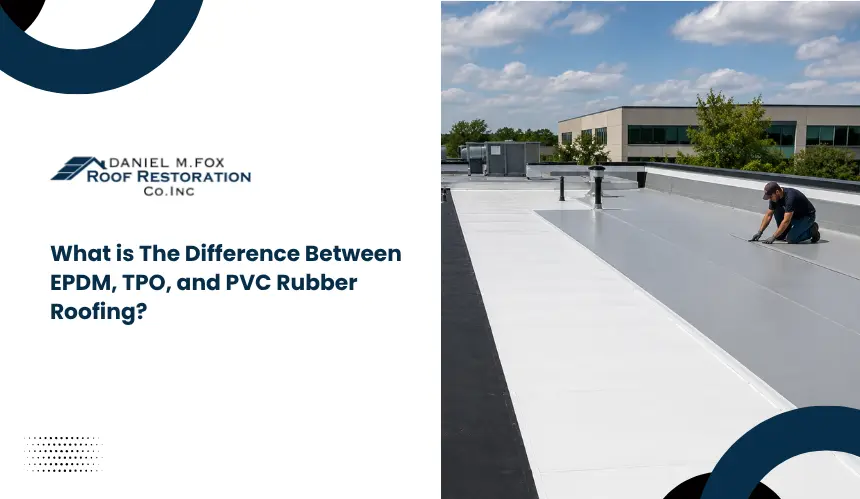
What is The Difference Between EPDM, TPO, and PVC Rubber Roofing?
Key Takeaways:
|
Selecting between EPDM, TPO, and PVC roofing becomes difficult when all three membranes are marketed as durable, energy-efficient, and suitable for flat roofing systems. In practice, their performance differs significantly in seam strength, weather resistance, chemical exposure tolerance, thermal efficiency, installation method, and long-term maintenance behavior.
This guide breaks down the real differences between EPDM, TPO, and PVC rubber roofing systems, including how each performs, where each works best, and which option aligns with specific commercial and residential roofing requirements.
Understanding How EPDM, TPO, and PVC Roofing Systems Differ
Flat and low-slope roofing systems rely heavily on membrane performance because water drainage, UV exposure, thermal movement, and seam integrity directly affect roof lifespan. EPDM, TPO, and PVC are all single-ply roofing membranes, but their material composition and installation behavior create major differences in durability, efficiency, and long-term performance.
What EPDM Roofing Is and How It Performs
EPDM roofing is a synthetic rubber membrane primarily made from ethylene propylene diene monomer. It is commonly installed in large sheets over commercial and residential low-slope roofs because the material remains flexible under wide temperature fluctuations. This flexibility reduces cracking risks in colder climates where roofing materials repeatedly expand and contract.
Most EPDM membranes are black, allowing them to absorb solar heat rather than reflect it. In colder regions, that heat absorption can reduce snow accumulation and support winter thermal retention. However, the same characteristic can increase rooftop surface temperatures in hotter climates.
EPDM systems typically use adhesive-applied seams or tape-based seam technology. While the membrane itself has strong puncture resistance and weather durability, seam quality becomes a critical performance factor over time because adhesives may degrade faster than heat-welded systems under prolonged UV exposure and standing water conditions.
What Makes TPO Roofing Different From Traditional Rubber Roofing
TPO roofing uses a thermoplastic polyolefin membrane engineered for heat-reflective performance and welded seam construction. Unlike EPDM, TPO membranes are usually white or light-colored, allowing them to reflect ultraviolet radiation and reduce rooftop heat absorption.
The membrane is installed using hot-air welded seams, creating fused joints instead of adhesive-bonded connections. This welding process strengthens waterproofing performance because the seams effectively become a continuous part of the membrane structure. As a result, TPO systems are widely used in energy-efficient commercial roofing applications where cooling cost reduction is a priority.
TPO also combines flexibility with moderate puncture resistance, making it suitable for buildings exposed to foot traffic, HVAC servicing, or rooftop equipment installations. However, membrane quality can vary between manufacturers because TPO formulations are not fully standardized across the roofing industry.
How PVC Roofing Is Engineered for Chemical and Moisture Resistance
PVC roofing is manufactured using a polyvinyl chloride membrane reinforced with additives and internal scrim layers that improve strength, chemical stability, and moisture resistance. Among the three systems, PVC is generally considered the most resistant to chemical exposure, grease contamination, and persistent ponding water.
This makes PVC particularly effective for restaurants, manufacturing facilities, airports, and industrial buildings where rooftop exhaust systems release oils or chemicals that can degrade standard roofing membranes. The material also resists bacterial growth and moisture infiltration more effectively in humid operating environments.
Like TPO, PVC uses heat-welded seams, which significantly improve waterproofing reliability around roof penetrations, flashing systems, and drainage areas. The membrane maintains structural stability under prolonged exposure to standing water, reducing the likelihood of seam separation or membrane deterioration in drainage-sensitive roofing systems.
Comparing the Durability, Weather Resistance, and Lifespan of EPDM, TPO, and PVC Roofing
Roofing membrane performance is largely determined by how the material reacts to environmental stress over time. UV radiation, thermal cycling, standing water, wind uplift, and seam movement all influence whether a roofing system maintains waterproof integrity or begins developing failure points years before its expected service life.
Which Roofing Membrane Handles Extreme Weather Best
EPDM performs exceptionally well in cold-weather environments because the rubber membrane remains flexible during freezing temperatures. This reduces cracking risks caused by repeated expansion and contraction cycles.
In Massachusetts, where winter conditions often bring snow accumulation, freeze-thaw cycles, and rapid temperature shifts, EPDM can maintain structural stability longer than more rigid membrane systems. This is particularly beneficial for properties in Newton that experience prolonged cold exposure and moisture-heavy weather patterns.
TPO performs effectively in hotter conditions due to its reflective surface and UV-resistant top layer. The membrane reduces rooftop heat absorption, helping stabilize indoor temperatures during warmer months across Massachusetts. However, lower-grade TPO membranes may experience faster surface aging if UV stabilization quality is poor.
PVC offers the strongest resistance to combined environmental stressors, including moisture, ponding water, high winds, and chemical exposure. Its reinforced structure and heat-welded seams improve waterproofing reliability during storms and heavy rainfall.
In Newton, MA, where roofs may face snowmelt, humidity, and seasonal storms throughout the year, PVC often delivers stronger long-term protection against moisture intrusion and seam failure.
WeatherSpark’s Newton climate profile shows a 5.3-month snowy period from early November to mid-April, with January averaging about 10.3 inches of snowfall, making membrane flexibility and drainage detailing especially important on local low-slope roofs. |
Seam Strength and Leak Prevention Differences
Seam performance is one of the most important distinctions between EPDM, TPO, and PVC roofing systems because most membrane failures originate at seam intersections rather than within the field membrane itself.
EPDM seams are typically bonded using adhesives or seam tape. While modern seam tapes have improved long-term reliability, adhesive-based systems remain more vulnerable to gradual degradation caused by UV exposure, moisture infiltration, and thermal movement. Over time, weakened seams can create entry points for water penetration if maintenance intervals are neglected.
TPO and PVC use heat-welded seams that fuse membrane sections together at high temperatures. Properly welded seams create a monolithic waterproof connection that is generally stronger than the membrane material surrounding it. This significantly reduces separation risks in areas exposed to ponding water, wind uplift pressure, or continuous expansion and contraction.
PVC seams often maintain welded integrity longer in chemically aggressive environments because the membrane itself resists oil saturation and contamination more effectively than TPO. In facilities with grease exhaust systems or industrial pollutants, the chemical resistance directly affects leak prevention performance over the roof’s lifespan.
Expected Lifespan and Maintenance Requirements
EPDM roofing systems commonly reach 20 to 30 years when properly maintained, particularly in climates where excessive UV exposure is less aggressive. Maintenance typically focuses on seam inspections, puncture monitoring, drainage performance, and adhesive condition assessments.
TPO roofing lifespan varies more significantly because membrane quality differs between manufacturers and installation standards. High-quality TPO systems installed correctly can perform for two decades or longer, but lower-grade membranes may experience premature surface wear, seam fatigue, or material shrinkage under prolonged heat exposure.
PVC roofing generally delivers the longest service life among the three systems in demanding commercial environments. Its resistance to moisture, chemicals, punctures, and seam deterioration lowers long-term maintenance frequency in high-exposure applications.
Although PVC carries a higher initial material cost, the reduced likelihood of major repair cycles can improve lifecycle value over time.
Comparing the Energy Efficiency and Building Performance of EPDM, TPO, and PVC Roofing
Roofing membranes directly affect rooftop heat transfer, indoor temperature stability, HVAC workload, and moisture control. The differences between EPDM, TPO, and PVC become more noticeable in buildings with large flat roofs, continuous HVAC usage, or year-round exposure to changing seasonal conditions.
Reflectivity and Heat Absorption Differences
EPDM membranes are typically black, which allows them to absorb solar heat instead of reflecting it. In colder regions, this can help reduce snow retention and support winter heat absorption. However, during warmer months, darker membranes can increase rooftop surface temperatures and place additional demand on cooling systems.
TPO and PVC membranes are usually manufactured in white or light-reflective colors that reduce solar heat gain. Their reflective surfaces help lower rooftop temperatures, making them more suitable for buildings focused on energy efficiency and cooling cost reduction.
On commercial properties in Newton, MA, with large exposed flat roofs, reflective membranes can help stabilize indoor temperatures during humid summer periods and prolonged sun exposure.
Insulation Compatibility and Moisture Management
All three membrane systems can be paired with polyisocyanurate insulation and other commercial roofing insulation boards, but moisture behavior differs significantly between them.
EPDM systems rely heavily on seam integrity because adhesive-based connections can become vulnerable if trapped moisture reaches insulation layers. TPO and PVC use heat-welded seams that create stronger waterproofing continuity around drains, flashing systems, and rooftop penetrations.
PVC performs particularly well in moisture-sensitive roofing assemblies because the membrane maintains dimensional stability under prolonged exposure to ponding water and humidity. This becomes relevant in older commercial structures around Newton, MA, where aging drainage systems may allow temporary water accumulation after snowmelt or heavy rainfall.
A 2025 PIMA State Energy Code Fact Sheet lists Massachusetts low-slope commercial roof insulation entirely above the deck at R-30ci, which means membrane choice should be evaluated alongside insulation design rather than surface material alone. |
How Roofing Choice Affects Long-Term Building Operating Costs
Roofing performance directly affects maintenance frequency, repair costs, and HVAC energy consumption over the life of the building. EPDM generally carries lower upfront material costs, but darker membranes may contribute to higher cooling demand in warmer seasons.
TPO offers a balance between installation cost and energy efficiency, which is why it is frequently selected for retail buildings, office properties, and warehouses seeking moderate lifecycle savings. PVC usually involves the highest initial investment, but its resistance to chemicals, moisture, and seam failure can reduce long-term repair exposure in high-demand commercial environments.
For property owners evaluating a professional rubber roofing service in Newton, MA, the most effective roofing system often depends on the building’s drainage design, rooftop equipment load, insulation strategy, and year-round weather exposure rather than material price alone.
Comparing the Installation Cost and Long-Term Value of EPDM, TPO, and PVC Roofing
Material pricing alone does not determine roofing value. Installation complexity, seam technology, labor requirements, repair frequency, and expected membrane lifespan all influence the total ownership cost of a commercial or residential flat roofing system.
Material and Installation Cost Comparison
EPDM is usually the most cost-effective membrane from an upfront pricing standpoint. The material itself is widely available, and installation procedures are generally less labor-intensive because seams are bonded using adhesives or seam tape rather than heat welding equipment. This makes EPDM a common choice for large low-slope roofs operating within tighter project budgets.
TPO falls into the mid-range pricing category. While the membrane costs more than EPDM in many cases, its reflective performance and welded seams can improve long-term operational efficiency. Installation requires trained technicians capable of maintaining consistent seam weld temperatures and membrane alignment during application.
PVC is typically the most expensive option because of its reinforced composition, chemical resistance, and specialized installation process. The membrane is commonly used in commercial environments where long-term waterproofing reliability outweighs higher initial installation costs.
Installation Methods and Project Complexity
EPDM systems are commonly installed using fully adhered, mechanically attached, or ballasted application methods. The flexibility of the membrane allows it to adapt well to roofs with irregular layouts, penetrations, or curved sections. However, adhesive curing conditions and seam preparation remain critical during installation.
TPO and PVC require hot-air welding to create watertight seams. Proper welding temperature, travel speed, and pressure directly affect seam integrity, making the installer’s experience more important for overall system performance. Incorrect weld calibration can create weak seam sections that become failure points under thermal stress or standing water exposure.
In areas like Newton, where winter freeze-thaw cycles and seasonal moisture exposure place continuous stress on flat roofing assemblies, seam consistency and drainage detailing become especially important during membrane installation.
Repairability and Long-Term Ownership Costs
EPDM membranes are generally easier to patch because repairs can often be completed using compatible rubber repair materials and seam tape systems. However, aging adhesive seams may require periodic maintenance as the roofing system ages.
TPO repairability depends heavily on membrane condition and manufacturer compatibility. Older TPO roofs can become more difficult to repair if membrane formulations have changed or surface weathering affects weld performance.
PVC systems often maintain repair compatibility longer because the membrane retains stronger dimensional stability over time. Their resistance to grease contamination, moisture saturation, and chemical exposure can reduce maintenance frequency in high-demand commercial environments such as restaurants, medical facilities, and mixed-use buildings.
How to Choose the Right Roofing System for Your Property
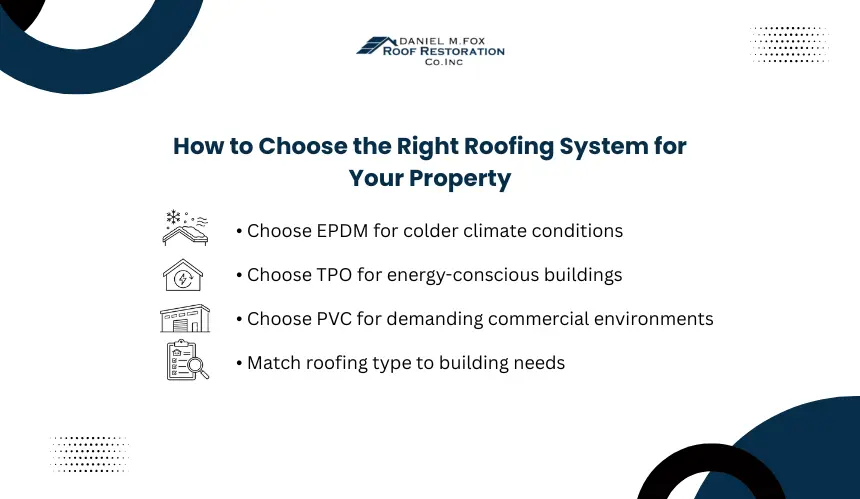
The best roofing membrane depends on how the building operates, how the roof handles drainage and temperature stress, and what type of long-term performance is expected. EPDM, TPO, and PVC each solve different operational challenges, which is why membrane selection should be based on building conditions rather than material popularity alone.
When EPDM Roofing Is the Better Option
EPDM is often the strongest choice for buildings located in colder climates where membrane flexibility is critical during freezing conditions. Its ability to expand and contract without becoming brittle makes it suitable for roofs exposed to repeated thermal cycling and winter weather stress.
The membrane also works well on buildings with simpler roof layouts and limited rooftop equipment because installation is generally less complex and more cost-efficient. Property owners prioritizing lower upfront investment often choose EPDM for large low-slope roofing areas where energy reflectivity is not the primary concern.
When TPO Roofing Makes the Most Sense
TPO is commonly selected for commercial buildings focused on energy efficiency and balanced lifecycle performance. Its reflective surface helps reduce rooftop heat absorption, making it suitable for office buildings, retail centers, and warehouses with high cooling demands during warmer months.
The membrane also performs well on buildings requiring strong seam protection without the higher material cost associated with PVC systems. In commercial areas around Newton, TPO is frequently used on flat roofing systems where reducing summer HVAC load and maintaining modern energy code compliance are operational priorities.
When PVC Roofing Is Worth the Higher Investment
PVC becomes the preferred option when the roofing system is exposed to grease, chemicals, moisture accumulation, or heavy rooftop activity. Restaurants, manufacturing facilities, medical buildings, and multi-unit commercial properties often benefit from PVC’s chemical resistance and long-term seam stability.
Its reinforced structure also makes it effective for roofs with complex penetrations, drainage-sensitive layouts, or frequent maintenance traffic. Although installation costs are higher, PVC can reduce long-term repair exposure in demanding environments where membrane failure would create operational disruption or interior moisture damage.
Choosing between EPDM, TPO, and PVC roofing requires more than comparing material prices. Daniel Fox Roofing helps property owners evaluate flat roofing systems based on real structural and environmental conditions, ensuring the roofing solution matches both performance goals and long-term durability requirements.
Frequently Asked Questions
Can EPDM, TPO, or PVC be installed over an existing flat roof?
A new membrane can sometimes be installed over an existing flat roof if the current system is dry, structurally sound, and code-compliant. Moisture scans, deck inspection, insulation condition, and roof load capacity should be checked first. Installing over trapped moisture can shorten membrane life and cause hidden substrate damage.
How can property owners tell which roofing membrane is already on their building?
EPDM usually has a black rubber-like surface, while TPO and PVC are often white or light-colored thermoplastic membranes. A contractor may confirm the material by checking membrane texture, seam type, manufacturer markings, patch compatibility, or weld behavior. Accurate identification matters because repair materials are not always interchangeable.
Which roofing membrane is better for roofs with frequent HVAC maintenance traffic?
PVC usually performs best under frequent rooftop traffic because its reinforced structure resists punctures, chemicals, and surface wear more effectively. TPO can also handle moderate traffic when walk pads are installed. EPDM is flexible but may need additional protection around service paths, mechanical units, and access points.
Does ponding water automatically mean the roof membrane will fail?
Ponding water does not always cause immediate failure, but it increases stress on seams, flashing, insulation, and drainage areas. PVC generally handles persistent moisture better than EPDM or lower-grade TPO. The real issue is whether water remains long enough to accelerate membrane aging or expose installation weaknesses.
Are white roofing membranes always better than black EPDM?
White membranes are better for reducing solar heat gain, but they are not automatically better for every building. In colder climates, black EPDM can support heat absorption during winter. The right choice depends on roof insulation, HVAC usage, sun exposure, energy goals, and whether cooling or cold-weather flexibility matters more.
Can rubber roofing be repaired during winter in Newton, MA?
Winter repairs are possible, but temperature, moisture, snow cover, and adhesive curing conditions affect the repair method. Heat-welded TPO and PVC repairs may be more predictable in cold weather than adhesive-based EPDM repairs. Emergency patches can stop active leaks, but permanent repairs often need dry, stable conditions.