
- danielfox
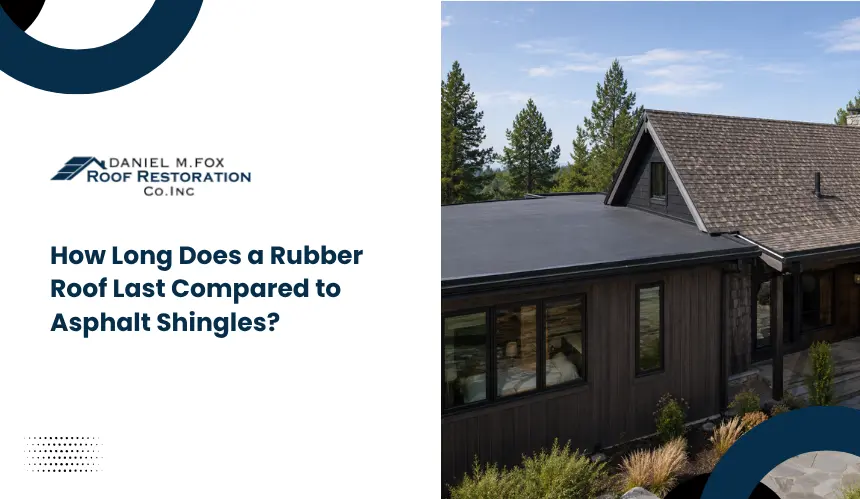
How Long Does a Rubber Roof Last Compared to Asphalt Shingles?
Key Takeaways:
|
A rubber roof may last decades longer in some environments, while asphalt shingles often perform better on steep residential roof systems with proper ventilation. This guide explains how both roofing materials age, what shortens or extends their lifespan, and which option delivers better long-term value under different conditions.
Quick Lifespan Comparison Between Rubber Roofing and Asphalt Shingles
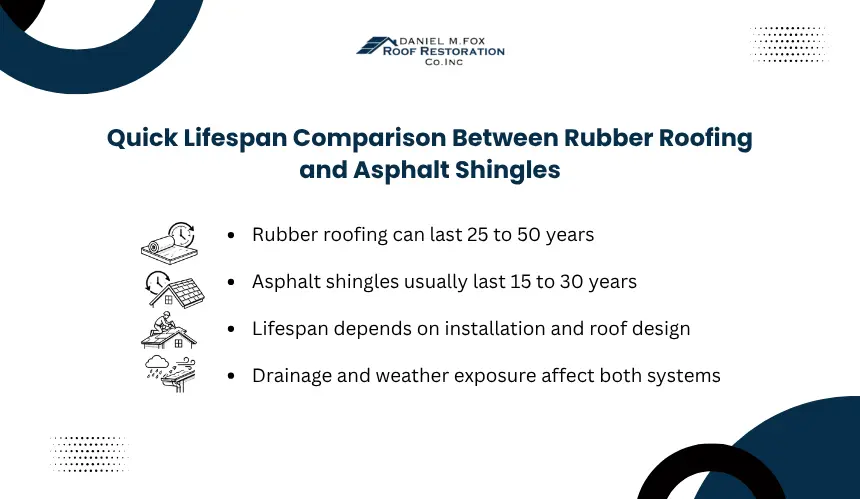
Roof lifespan varies based on material composition, roof design, climate exposure, and installation quality. Rubber roofing systems generally outperform asphalt shingles in total service life, but each material is engineered for different structural conditions and maintenance expectations.
Average Lifespan of a Rubber Roof
Most rubber roofing systems, particularly EPDM membranes, last between 25 and 50 years when installed correctly on low-slope or flat roofs. Thicker membranes typically resist punctures, seam separation, and UV degradation longer than thinner systems. Roof drainage also plays a major role because standing water accelerates membrane stress around seams, flashing, and penetrations.
Commercial buildings often achieve longer rubber roof lifespans because large flat surfaces allow continuous membrane installation with fewer transitions and weak points. Residential flat roofs can also perform well, but poor drainage design, foot traffic, or neglected maintenance can shorten service life significantly.
Average Lifespan of Asphalt Shingles
Standard 3-tab asphalt shingles usually last around 15 to 20 years, while architectural shingles often reach 25 to 30 years under stable weather conditions. Shingle lifespan depends heavily on attic ventilation, roof pitch, underlayment quality, and storm exposure.
Asphalt shingles deteriorate gradually through granule loss, thermal expansion, moisture penetration, and adhesive breakdown. In hotter climates, excessive heat can accelerate curling and brittleness. In colder regions, repeated freeze-thaw cycles may weaken shingle edges and increase cracking risk over time.
Why Rubber Roofs and Asphalt Shingles Age Differently
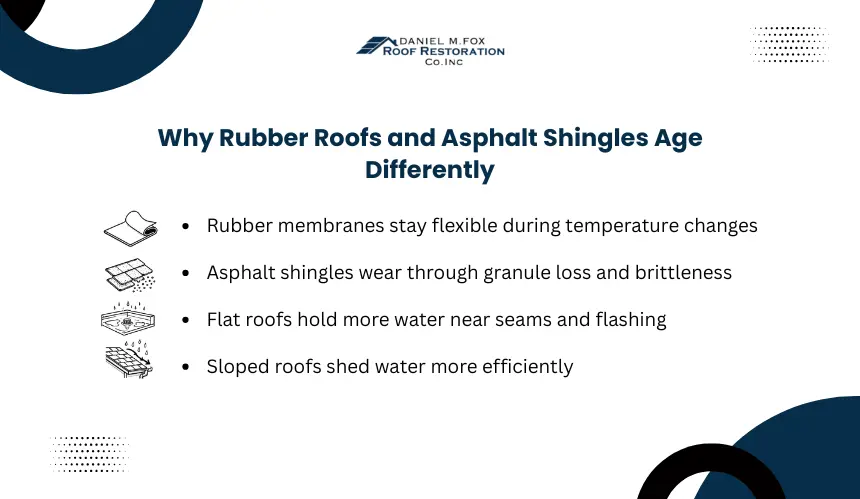
Rubber roofing and asphalt shingles fail through different mechanisms because their materials respond differently to heat, moisture, movement, and structural stress. Understanding how each system deteriorates explains why their lifespan ranges are not directly interchangeable.
Membrane Flexibility vs Layered Shingle Wear
Rubber roofing systems use a continuous membrane designed to expand and contract with temperature fluctuations. EPDM remains flexible for decades, which reduces the likelihood of surface cracking during seasonal movement. This flexibility is especially important on flat roofs where thermal expansion places constant stress on seams and flashing connections.
Asphalt shingles age through layered material breakdown. The asphalt binder gradually dries out under UV exposure, causing shingles to become brittle over time. Protective granules loosen and wash away, exposing the underlying asphalt to faster heat damage. Once shingles begin curling, cracking, or losing adhesion, wind uplift and water intrusion become more likely.
Flat Roof Exposure vs Sloped Roof Drainage
Rubber roofing is primarily installed on low-slope or flat roof structures where water drains more slowly. Because moisture remains on the surface longer, membrane seams, roof penetrations, and drainage points experience continuous exposure to standing water and debris accumulation. Poor drainage accelerates deterioration around weak transition areas rather than across the entire membrane evenly.
Asphalt shingles rely on roof pitch to function properly. Steeper slopes allow rainwater and debris to move off the surface quickly, reducing long-term moisture exposure. When shingles are installed on roofs with insufficient slope, water can move beneath overlapping layers and damage the underlayment or roof deck prematurely.
UV, Heat, Moisture, and Freeze-Thaw Effects
Sun exposure affects both roofing systems differently. Rubber membranes resist ultraviolet radiation more effectively because the material maintains elasticity even after prolonged heat exposure. However, excessive heat can still weaken seam adhesives and flashing materials over time.
Asphalt shingles absorb more heat and experience faster surface aging in high-temperature environments. Repeated expansion and contraction gradually weaken the shingle structure, especially around nail zones and edges.
In colder climates such as Newton, freeze-thaw cycles create additional stress as trapped moisture expands beneath damaged or aging shingles. Snow accumulation followed by daytime melting and nighttime refreezing often accelerates cracking, granule loss, and edge separation during winter conditions.
Flat rubber roofing systems in Newton, MA, also face seasonal drainage pressure because melting snow can remain on low-slope surfaces longer if drainage pathways become blocked.
Key Factors That Change Roof Lifespan
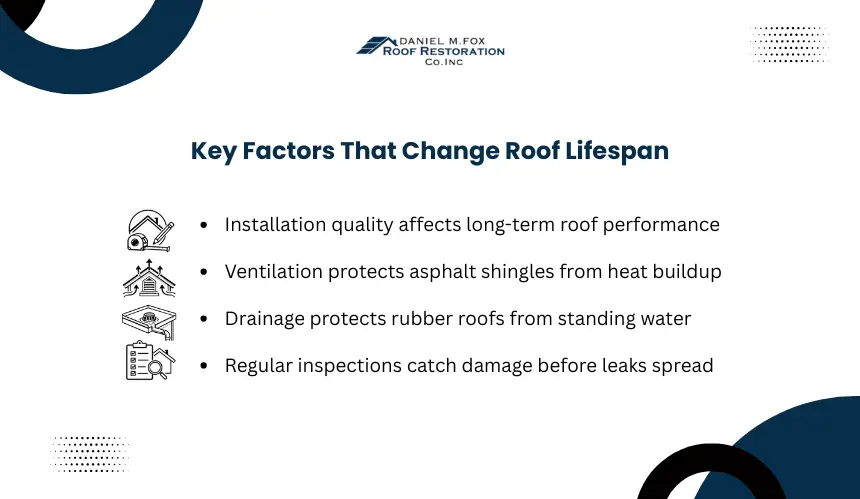
Actual roof lifespan rarely matches manufacturer estimates exactly because environmental conditions, installation accuracy, and maintenance habits create different stress patterns over time. Two roofs using the same material can age very differently depending on how the system was built and maintained.
Installation Quality and Roof Deck Preparation
Roofing lifespan often depends more on installation precision than the material itself. Rubber roofing systems require accurate seam alignment, proper adhesion, and secure flashing integration around penetrations such as vents, HVAC units, and skylights. Weak seam bonding or uneven membrane tension can create early leak points that spread moisture beneath the system.
Asphalt shingles depend heavily on correct nail placement, underlayment installation, and roof deck stability. Improper fastening patterns increase wind uplift risk, while uneven decking can create pressure points that distort shingle alignment over time.
Inadequate flashing installation around chimneys, valleys, and roof transitions also increases the likelihood of water intrusion beneath the shingles.
Ventilation, Drainage, and Moisture Control
Moisture management directly affects how quickly roofing materials deteriorate. Asphalt shingle systems require balanced attic ventilation to regulate heat and humidity beneath the roof deck. Poor airflow traps heat during summer and moisture during colder months, accelerating shingle aging and increasing the risk of deck rot.
Rubber roofing systems rely more heavily on drainage performance. Flat roofs that retain standing water place constant stress on seams, flashing edges, and membrane transitions. Blocked drains, sagging sections, or improper slope design often shorten membrane lifespan by allowing moisture to remain trapped on the surface for extended periods.
Material Grade and Thickness
Higher-grade roofing materials generally resist environmental stress longer because they use stronger reinforcement layers, thicker protective surfaces, and more durable adhesives. Premium EPDM membranes often include enhanced puncture resistance and better UV stability than thinner entry-level rubber roofing products.
Asphalt shingles also vary significantly by product category. Architectural shingles typically outlast standard 3-tab shingles because they contain thicker asphalt layers and stronger structural composition. Impact-resistant shingles may also perform better in hail-prone regions where surface damage accelerates long-term deterioration.
Maintenance Frequency and Inspection Timing
Small roofing issues often become major failures when inspections are delayed. Rubber roofs benefit from periodic seam checks, debris removal, drainage inspections, and flashing evaluations. Minor punctures or loose seams repaired early usually prevent widespread moisture infiltration beneath the membrane.
Professional roof maintenance services are often used to identify seam stress, drainage problems, and early membrane deterioration before leaks spread into the roof deck.
Asphalt shingles require monitoring for granule loss, cracked tabs, lifted edges, and storm-related damage. Regular gutter cleaning also reduces water backup near the roof edges. Roof systems that receive consistent inspections after severe weather events typically maintain structural performance longer than neglected systems with hidden moisture damage.
Cost, Replacement Timing, and Long-Term Value of Rubber Roofing vs Asphalt Shingles
Roof lifespan affects more than durability alone. Replacement frequency, repair patterns, labor intensity, and structural performance all influence the long-term financial value of a roofing system. A lower upfront installation cost does not always translate into lower lifetime ownership cost.
Upfront Cost vs Years of Service
Rubber roofing systems usually cost more initially because membrane installation requires specialized materials, adhesive systems, insulation compatibility, and seam preparation. However, the longer service life of EPDM and similar membranes often reduces the number of full roof replacements over the life of the building.
Asphalt shingles generally have lower installation costs and faster installation timelines, making them more accessible for many residential properties. The tradeoff is a shorter replacement cycle. A home may require multiple asphalt shingle replacements during the same period that a properly maintained rubber roof remains operational.
Repair Patterns Over Time
Rubber roofing repairs typically involve localized seam separation, punctures, flashing deterioration, or drainage-related stress points. Because the membrane system is continuous, smaller damaged areas can often be repaired without removing large roof sections. Early intervention is critical because trapped moisture beneath the membrane can spread laterally across insulation and decking.
Asphalt shingle repair patterns are usually more visible. Missing shingles, granule loss, curling edges, exposed fiberglass matting, and storm damage often appear gradually across different roof areas. Wind-driven rain can also penetrate beneath damaged shingles and affect underlayment layers before interior leaks become visible.
When Roof Replacement Makes More Sense Than Repair
Roof replacement becomes more practical when deterioration affects system-wide performance rather than isolated sections. On rubber roofs, recurring seam failures, saturated insulation, widespread membrane shrinkage, or repeated ponding water issues often indicate structural aging beyond cost-effective repair.
For asphalt shingles, replacement is usually recommended when granule loss becomes widespread, shingles lose structural flexibility, or recurring leaks appear across multiple roof slopes. Roof age also matters because older shingle systems often develop hidden underlayment and decking deterioration even when surface damage appears moderate.
Which Roof Type Performs Better for Homes in Areas Like Newton, MA?
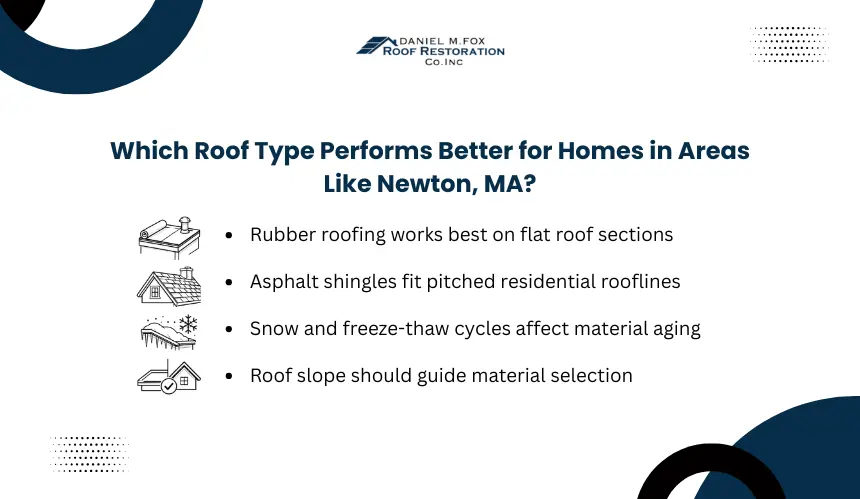
Roof performance depends heavily on roof slope, seasonal weather exposure, drainage behavior, and long-term maintenance expectations. In areas such as Newton, roofing systems must handle snow accumulation, freeze-thaw movement, heavy rain, humidity shifts, and fluctuating summer temperatures, which affect rubber roofing and asphalt shingles differently over time.
Best Use Cases for Rubber Roofing
Rubber roofing performs best on flat or low-slope structures where traditional shingles cannot shed water efficiently. Many properties with flat garage roofs, rear additions, covered porches, or commercial-style sections use EPDM membranes because the material tolerates standing moisture and temperature expansion better than layered shingle systems.
In colder Massachusetts winters, rubber roofing can also reduce cracking risks caused by repeated freeze-thaw movement. However, drainage design becomes critical because snowmelt that remains trapped on flat surfaces can place long-term stress on seams, flashing edges, and roof penetrations.
Best Use Cases for Asphalt Shingles
Asphalt shingles roofing is generally more effective on pitched residential roofs where gravity supports fast water runoff. Homes throughout Newton often feature steep rooflines, dormers, valleys, and traditional architectural styles that align well with asphalt shingle systems.
Architectural shingles also handle ice and snow shedding more effectively on sloped roofs when attic ventilation and underlayment systems are properly installed. In neighborhoods with mature trees, regular debris removal remains important because trapped leaves and moisture can accelerate granule deterioration and algae growth.
Final Decision Factors to Compare
The better roofing option depends less on material popularity and more on structural compatibility. Flat roof sections usually favor rubber membranes because they manage low-slope drainage conditions more effectively. Steeper residential roof systems often benefit more from asphalt shingles due to water-shedding efficiency and simpler repair accessibility.
Property owners should also compare expected occupancy length, maintenance tolerance, storm exposure, insulation performance, ventilation quality, and long-term replacement planning before selecting between rubber roofing and asphalt shingles.
When roof lifespan, drainage performance, or replacement timing becomes difficult to evaluate, accurate material assessment matters more than guesswork. Daniel Fox Roofing helps property owners compare rubber roofing and asphalt shingles based on roof structure, weather exposure, and long-term durability expectations before small aging issues turn into larger structural repairs.
Frequently Asked Questions
How can a homeowner tell if a rubber roof is near the end of its lifespan?
A rubber roof usually shows aging through membrane shrinkage, loose seams, surface cracking, soft insulation spots, repeated ponding water, or flashing separation around vents and roof edges. Interior ceiling stains may appear late, so exterior inspection is more reliable. Widespread seam movement often signals system-level deterioration rather than a simple patch issue.
Do asphalt shingles or rubber roofs need more frequent inspections?
Asphalt shingles usually need more frequent visual checks because wind, granule loss, cracked tabs, and lifted edges are easier to develop after storms. Rubber roofs need targeted inspections around seams, drains, flashing, and puncture-prone areas. In snowy climates, both systems should be checked after winter and after major wind or rain events.
Can asphalt shingles be used on a low-slope roof instead of rubber roofing?
Asphalt shingles are not ideal for low-slope roofs because they rely on overlapping layers and gravity-driven drainage. When the slope is too shallow, wind-driven rain or melting snow can move beneath the shingles. Rubber roofing is usually better for flat or low-slope sections because it creates a continuous waterproof membrane.
Does roof warranty length always match the actual lifespan?
Warranty length does not always equal real roof lifespan. Many warranties cover material defects, not damage from poor installation, blocked drainage, inadequate ventilation, storm impact, or neglected maintenance. A roof with a long product warranty can still fail early if the roof deck, flashing, fasteners, or moisture-control system performs poorly.
Which roofing material handles ice dams better in Massachusetts homes?
Ice dam performance depends more on attic insulation, ventilation, roof slope, and underlayment than on the surface material alone. Asphalt shingles can suffer edge leaks when ice blocks drainage at eaves. Rubber roofing handles moisture exposure better on low-slope sections, but blocked drains and refreezing snowmelt can still stress seams and flashing.
Is it worth repairing an older asphalt shingle roof before replacement?
Repairing an older asphalt shingle roof makes sense when damage is isolated, the shingles remain flexible, and the underlayment is still dry. Replacement becomes more practical when repairs keep recurring, granule loss is widespread, shingles are brittle, or leaks appear in multiple roof areas. Age and damage pattern should guide the decision.
Can roof coatings extend the life of rubber roofing?
Roof coatings can extend rubber roof performance when the membrane is still structurally sound, clean, dry, and properly prepared. Coatings may improve UV resistance and surface protection, but they cannot correct saturated insulation, failing seams, poor slope, or hidden deck damage. A roof inspection should confirm whether the coating is viable before application.