
- danielfox
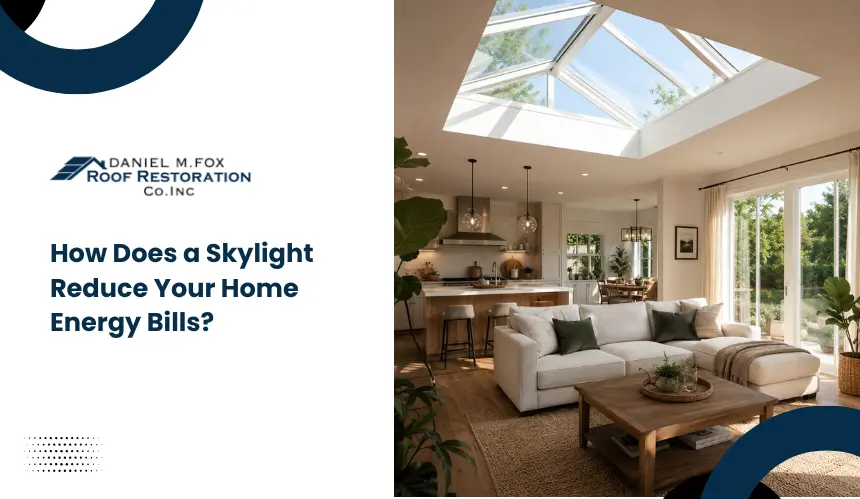
How Does a Skylight Reduce Your Home Energy Bills?
A properly designed skylight directly impacts how natural light, heat, and air move through interior spaces, which can reduce dependency on electrical and HVAC systems.
The actual savings depend on how effectively these systems are integrated into the home’s structure. This article explains the exact mechanisms and conditions under which skylights contribute to lower energy costs.
Important: A skylight should not be viewed as an automatic bill-cutting feature. The U.S. Department of Energy notes that properly selected and installed energy-efficient skylights can help reduce heating, cooling, and lighting costs, but roof placement can also create unwanted summer heat gain or winter heat loss when the system is poorly designed. |
What Energy-Saving Mechanisms Make Skylights Effective?
Energy reduction from skylights is not automatic. It depends on how efficiently the system controls light transmission, heat transfer, and air movement through material and design choices.
Daylighting Efficiency And Reduced Electrical Load
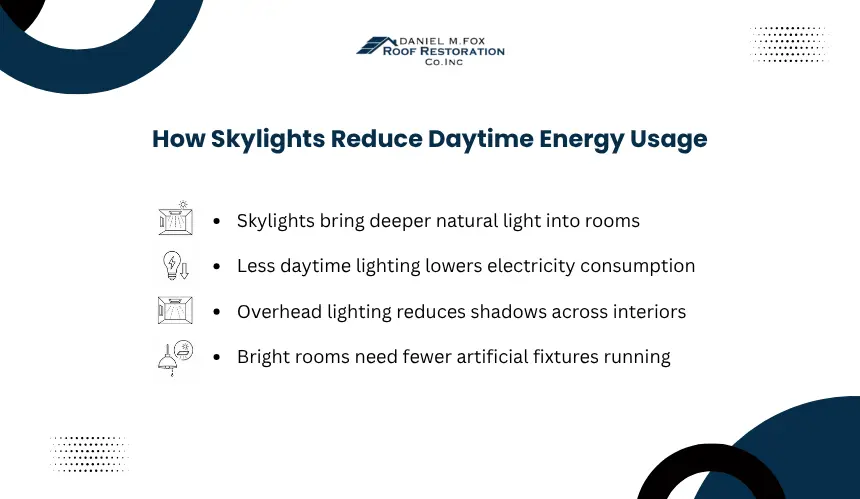
Skylights deliver higher lumen output per unit area because light enters from above at a steeper angle. This improves penetration depth and reduces shadow formation across the space.
Rooms that typically require multiple fixtures during the day can operate with minimal or no artificial lighting, cutting daytime electrical load and associated energy costs.
The savings potential from daylighting is tied to how much lighting energy a home actually uses. The U.S. Energy Information Administration reported that residential lighting accounted for about 6% of electricity use in U.S. homes in 2020, equal to 81 billion kWh. |
Thermal Performance Through Glazing Technology
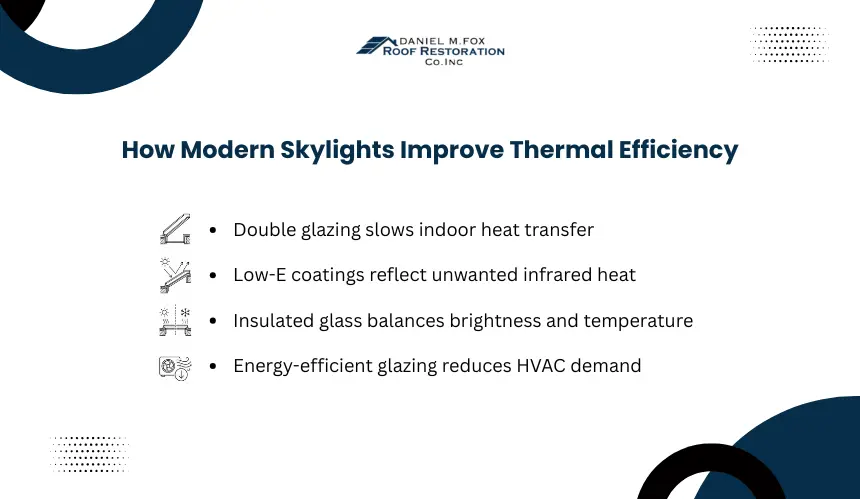
Modern skylights use insulated glazing units designed to regulate heat transfer. Double or triple glazing creates a barrier that slows conductive heat loss in winter and limits heat gain in summer.
Low-emissivity coatings reflect infrared radiation while allowing visible light to pass through, maintaining brightness without introducing excess heat. This balance directly reduces heating and cooling demand.
Ventilated Skylights And Cooling Load Reduction
Operable skylights leverage the stack effect to manage indoor temperature. As warm air rises, it exits through the skylight opening, reducing heat accumulation near the ceiling.
This passive exhaust lowers indoor temperature gradients and decreases the runtime of air conditioning systems, particularly during evening and transitional climate conditions.
What Factors Determine The Actual Energy Savings From Skylights?
Energy savings from skylights vary significantly based on design decisions and environmental conditions. Performance depends less on the presence of a skylight and more on how precisely it is positioned, built, and integrated into the home.
1. Placement, Orientation, And Roof Positioning
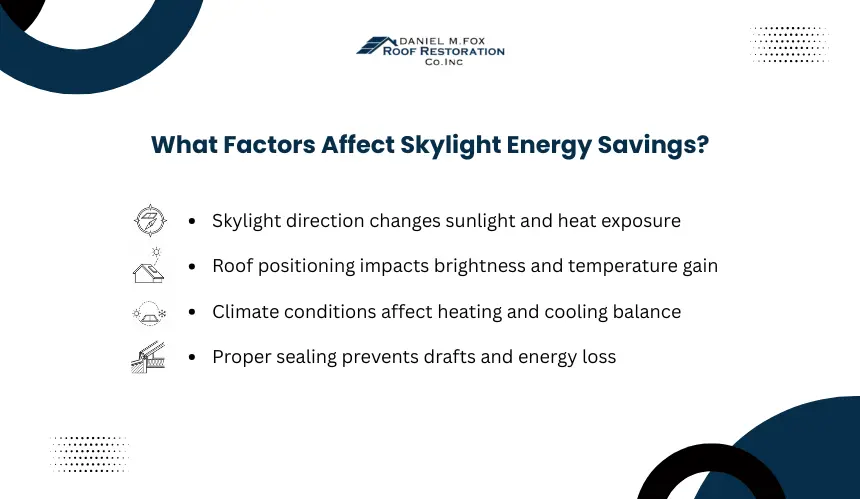
The direction a skylight faces directly affects solar exposure and heat behavior. South-facing skylights receive the highest sunlight intensity, increasing heat gain, while north-facing units provide consistent daylight with minimal thermal impact. Roof pitch also influences how sunlight enters, affecting both brightness levels and seasonal heat absorption patterns.
The Department of Energy recommends limiting skylight size to no more than 5% of floor area in rooms with many windows and no more than 15% in rooms with few windows. Oversized skylights can increase glare, heat gain, and temperature swings, which may offset lighting savings. |
2. Climate Conditions And Seasonal Variability
Local climate determines whether skylights contribute more to heating efficiency or cooling challenges. In colder regions, increased solar gain can offset heating demand during winter months. In hotter climates, excessive sunlight without proper glazing control can raise indoor temperatures, increasing cooling loads instead of reducing them.
3. Installation Quality And Air Sealing
Even high-performance skylights lose efficiency if installation is compromised. Poor sealing creates air leakage pathways that disrupt insulation performance and increase HVAC workload.
Proper flashing, insulation continuity, and airtight sealing prevent drafts and moisture intrusion, ensuring the skylight contributes to energy savings rather than energy loss.
EPA’s ENERGY STAR Most Efficient criteria for residential skylights estimate that qualifying skylights can deliver more than a 20% improvement in U-factor over conventional models across climate zones. |
How Do Skylights Compare To Windows And Artificial Lighting In Energy Efficiency?
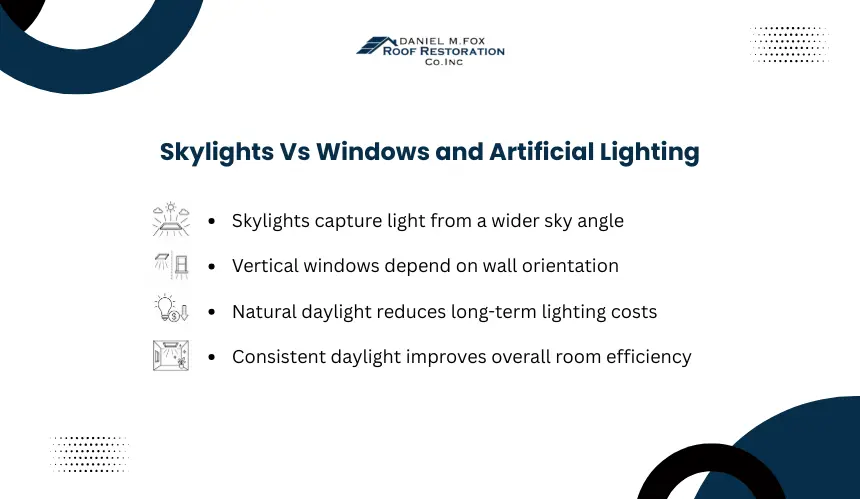
Evaluating skylights against other light sources clarifies where real savings come from and where trade-offs exist. The comparison is not just about brightness, but how efficiently light is delivered and how it impacts overall energy use.
Skylights Vs Vertical Windows In Light Efficiency
Skylights capture light from a wider portion of the sky dome, which increases illumination intensity and depth. Vertical windows depend on wall orientation and are often obstructed by nearby structures or shading elements. This makes skylights more effective at delivering consistent daylight across interior spaces, especially in rooms located away from exterior walls.
Skylights Vs Artificial Lighting Costs
Artificial lighting draws continuous electrical power regardless of the time of day, directly adding to energy bills. Skylights offset this demand by providing daylight during peak usage hours, particularly in frequently used spaces.
Over time, reduced dependence on electric fixtures lowers cumulative energy consumption and associated operating costs without affecting functional lighting levels.
Frequently Asked Questions
Can skylight shades or blinds improve energy efficiency?
Skylight shades can improve energy performance by controlling glare, solar heat gain, and nighttime heat loss. Light-filtering shades help maintain daylight while reducing excessive brightness, while blackout or cellular shades add insulation value. They are especially useful in bedrooms, south-facing roof areas, and climates with strong summer sun exposure.
Are tubular skylights better for lowering lighting costs?
Tubular skylights can be highly effective for reducing lighting use in compact spaces such as hallways, closets, bathrooms, and laundry rooms. They capture daylight through a rooftop dome and redirect it through a reflective tube. Their smaller size limits heat transfer, making them efficient where ventilation or large sky views are not needed.
Can an old skylight increase energy bills instead of lowering them?
An aging skylight can raise energy costs if the seal fails, glazing becomes inefficient, or the frame allows air leakage. Older acrylic domes and single-pane units often perform poorly compared to modern insulated glass skylights. Drafts, condensation, fading interiors, and temperature swings are signs that the unit may be reducing efficiency.
Is a fixed or vented skylight better for energy savings?
A fixed skylight usually performs better for insulation because it has fewer moving parts and fewer air leakage risks. A vented skylight can create stronger savings in warm or humid spaces by releasing trapped heat. The better choice depends on whether the room needs daylight only or both daylight and airflow control.
Should a skylight be added during roof replacement?
Installing a skylight during roof replacement is often more efficient because flashing, underlayment, insulation, and shingles can be integrated at the same time. This reduces labor overlap and lowers the risk of future leaks. It also allows better placement decisions based on roof pitch, rafter spacing, and sun exposure.
Do smart skylights help reduce energy waste?
Smart skylights can reduce energy waste by using sensors, timers, and automated controls to manage ventilation and shading. Rain sensors close vented units automatically, while solar-powered operation can improve airflow without wiring. Some systems also respond to indoor temperature, helping reduce cooling demand without relying fully on manual adjustments.